Substratos enzimáticos
Subcategorias de "Substratos enzimáticos"
Foram encontrados 1529 produtos de "Substratos enzimáticos"
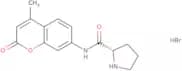
L-Proline 7-amido-4-methylcoumarin hydrobromide salt
CAS:L-Proline 7-amido-4-methylcoumarin hydrobromide salt is a fluorogenic peptide substrate for proline-specific peptidase. This AMC peptide substrate is normally used to rapidly profile the N-terminal specificity of proteases.Fórmula:C15H17BrN2O3Pureza:Min. 95%Cor e Forma:PowderPeso molecular:353.22 g/mol4-Nitrophenyl β-D-galactofuranoside
CAS:Chromogenic substrate for beta-galactofuranosidaseFórmula:C12H15NO8Pureza:Min. 98 Area-%Cor e Forma:White PowderPeso molecular:301.25 g/mol4-Methylumbelliferyl b-D-ribofuranoside
CAS:The 4-Methylumbelliferyl b-D-ribofuranoside is a top-notch fluorogenic substrate for glycosidase activity detection. Upon hydrolysis by enzymes, it generates a strongly fluorescent 4-methylumbelliferone molecule, enabling rapid assay results and real-time monitoring of enzymatic reactions. This product is suitable for many biological research applications, such as in vitro analysis, diagnostic testing, and drug discovery. With its high sensitivity and specificity, it delivers consistent and accurate results, making it an essential tool for scientists and researchers.Fórmula:C15H16O7Pureza:Min. 95%Cor e Forma:White PowderPeso molecular:308.28 g/mol4-Methylumbelliferyl 3-O-(N-acetylneuraminyl)-b-D-glucopyranoside
4-Methylumbelliferyl 3-O-(N-acetylneuraminyl)-b-D-glucopyranoside is a chromogenic substrate. It is used for the detection of glycoproteins and glycolipids in food testing, staining, environmental testing, and diagnostics. It can also be used as a fluorogenic substrate for the detection of glycoproteins and glycolipids in fluorescence microscopy. 4-methylumbelliferyl 3-O-(N-acetylneuraminyl)-b-D-glucopyranoside has been shown to be a ligand for the lectin receptor Galectin 9, which is involved in inflammation and cancer cell growth. 4-methylumbelliferyl 3-O-(N-acetylneuraminyl)-b-D-glucopyranoside has been shown to be an enzyme substrate for alkaline phosphatase, βPureza:Min. 95%4-Nitrophenyl-β-D-maltopyranoside
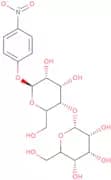
CAS:Chromogenic β-maltosidase substrate yielding a yellow solution upon cleavage.Fórmula:C18H25NO13Pureza:Min. 99.0 Area-%Peso molecular:463.40 g/molRef: 3D-N-4492
1gA consultar5gA consultar10gA consultar500mgA consultar2500mgA consultar-Unit-ggA consultar4-Nitrophenyl β-D-xylobioside
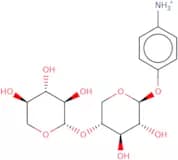
CAS:4-Nitrophenyl beta-D-xylobioside is a chromogenic substrate for xylanase. Upon hydrolysis, para-nitrophenol is released yielding a yellowish colour. 4-Nitrophenyl beta-D-xylobioside is used in different applications such as the Xylan degradation studies, paper/pulp industry applicationsFórmula:C16H21NO11Pureza:Min. 95%Cor e Forma:White PowderPeso molecular:403.34 g/molL-Ala-PAB-Resorufin
CAS:L-Ala-PAB-resorufin is a highly sensitive chromogenic and fluorogenic indicator for L-alanine aminopeptidase activity and related enzymes occurring in prokaryotic as well as eukaryotic organisms. After removal of the L-alanyl substructure by enzymatic hydrolysis and spontaneous elimination of the para-aminobenzyl spacer, the initially orange colored compound yields an intense pink color and red fluorescence.
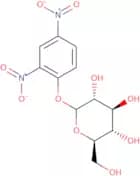
Fórmula:C22H19N3O4Pureza:Min. 70 Area-%Cor e Forma:PowderPeso molecular:389.4 g/mol2,4-Dinitrophenyl β-D-glucopyranoside
CAS:2,4-Dinitrophenyl-beta-D-glucopyranoside is a chromogenic substrate used to assay enzymes, such as glucosidases. These enzymes catalyze the hydrolysis of glycosidic bonds in sugars.Fórmula:C12H14N2O10Pureza:Min. 95%Cor e Forma:PowderPeso molecular:346.25 g/molResorufin b-D-glucopyranoside
CAS:Resorufin b-D-glucopyranoside is a stable red fluorogenic galactosidase substrate.
Pureza:Min. 95%Cor e Forma:Orange PowderPeso molecular:375.33 g/molL-Pro-PAB-Resorufin
L-Pro-PAB-Resorufin is a highly sensitive chromogenic and fluorogenic indicator for L-proline aminopeptidase activity and related enzymes occurring in prokaryotic as well as eukaryotic organisms. After removal of the L-proline amide substructure by enzymatic hydrolysis and spontaneous elimination of the para-amino-benzyl (PAB) spacer, the initially orange colored compound yields an intense pink color. In addition, the released chromophor is an excellent fluorophor showing red fluorescence at an emission wavelength of 580 to 600 nm when excited at 560 to 570 nm.
Fórmula:C24H21N3O4Pureza:Min. 70 Area-%Cor e Forma:PowderPeso molecular:415 g/mol2-Nitrophenyl b-D-arabinopyranoside
2-Nitrophenyl b-D-arabinopyranoside is a chemical compound that is used in the detection of ATP by chemiluminescence. It acts as a substrate for enzymes such as luciferase and catalase, which catalyze the oxidation of 2-nitrophenyl b-D-arabinopyranoside to phenol and carbon dioxide with the release of light. This reaction can be used in diagnostic applications such as detecting bacteria in culture media or diagnosing food spoilage. 2-Nitrophenyl b-D-arabinopyranoside can also be used as a conjugate to detect proteins or nucleic acids by fluorescence spectroscopy. The CAS number for this compound is 107772-06-1.
Pureza:Min. 95%Peso molecular:271.22 g/molLuciferin-β-D-galactoside
CAS:Luciferin-beta-D-galactoside is an acceptor in immunoassays. It is used as a label for specific antibodies and antigens, and the light emitted by this compound can be measured with a luminometer. Luciferin-beta-D-galactoside binds to the bacterial enzyme β-galactosidase, which catalyzes the hydrolysis of lactose to form glucose and galactose. Mammalian cells have been used as a source of β-galactosidase in order to measure luciferin-beta-D-galactoside activity. The substrate specificity of this enzyme has also been studied using mammalian tissue extracts.Fórmula:C17H18N2O8S2Pureza:Min. 95 Area-%Peso molecular:442.46 g/molRef: 3D-L-8121
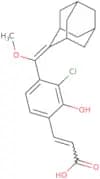
5mgA consultar10mgA consultar25mgA consultar50mgA consultar100mgA consultar-Unit-ggA consultarAquaSpark® 515 Singlet Oxygen Probe, Ramot at Tel-Aviv University Ltd. Patent family WO 2017/130191
CAS:Singlet Oxygen Chemiluminescence Probe, SOCLFórmula:C21H23ClO4Pureza:Min. 95 Area-%Cor e Forma:PowderPeso molecular:374.13 g/mol2-Naphthyl b-D-glucopyranoside monohydrate
CAS:2-Naphthyl-lpha-D-glucopyranoside is a substrate for α-glucosidase. 2-Naphthol is released upon hydrolyzation. By simultaneous coupling with a suitable staining reagent, such as hexazonium p-rosaniline, the corresponding reddish-brown azo-dye is formed. Naphthols can also be detected by fluorescence analysis.
Pureza:Min. 95%Cor e Forma:PowderPeso molecular:324.33 g/molLuc-coliforms Na
CAS:Luc-coliforms Na is a high quality, chromogenic substrate for the detection of coliforms. It is used widely in the food industry to detect whether coliforms are present in milk, cheese, and other dairy products. Luc-coliforms Na provides a color change from yellow to blue when it reacts with coliforms and has a high pH range of 4.0-8.0. Luc-coliforms Na has a CAS number of 93824-43-4.Pureza:Min. 95%D-Psicose 6-phosphate sodium
CAS:D-Psicose 6-phosphate sodium is an analog from D-psicose, a rare, natural monosaccharide with 70% the sweetness of sucrose. It is used as a low-calorie sweetener in food industry. In research, it is used to investigate its effects on metabolism, diabetes, and other health conditions.Fórmula:C6H13O9P•NaPureza:90%MinCor e Forma:PowderPeso molecular:283.14 g/molOstazin brilliant red H-3B galactomannan
Ostazin Brilliant Red H-3B Galactomannan is a chemiluminescent substrate used for the detection of β-1,4-galactomannans. It reacts with the glucose residues on the mannan backbone to produce a red fluorescent product. This product can be detected by spectrophotometry at an excitation wavelength of 395 nm and emission wavelength of 510 nm. The Ostazin Brilliant Red H-3B Galactomannan substrate is useful in detecting Staphylococcus aureus, Streptococcus pyogenes, Streptococcus pneumoniae, Group A streptococci, Group B streptococci, Group D streptococci, Group G streptococci, and Group C streptococci.
Pureza:Min. 95%4-Methylumbelliferyl α-D-xylopyranoside
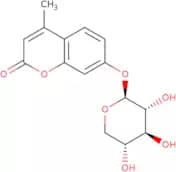
CAS:4-Methylumbelliferyl alpha-D-xylopyranoside is a fluorogenic substrate for alpha-xylosidase. After enzymatic cleaveage, free 4-methylumbelliferone (also known as hymecromone) is released, exhibiting blue fluorescence upon excitation with UV light. The strongest fluorescence of 4-methylumbelliferone requires deprotonation of the hydroxyl group (thus requires alkaline pH), with a maximal fluorescence intensity obtained with excitation at 350 to 370 nm and emission at 440 to 470 nm. The use of 4-methylumbelliferyl alpha-D-xylopyranosideas a substrate for measuring the alpha-xylosidase activity is used for oligosaccharidosis monitoring and other lysosomal storage disorder diagnosis.Fórmula:C15H16O7Pureza:Min. 98 Area-%Cor e Forma:White PowderPeso molecular:308.28 g/mol4-Methylumbelliferyl 2-acetamido-2-deoxy-β-D-glucopyranoside-6-sulfate potassium salt
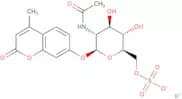
CAS:4-Methylumbelliferyl 2-acetamido-2-deoxy-beta-D-glucopyranoside-6-sulfate potassium salt is a fluorogenic substrate for beta-N-acetylglucosaminidase. After enzymatic cleaveage, free 4-methylumbelliferone (also known as hymecromone) is released, exhibiting blue fluorescence upon excitation with UV light. The strongest fluorescence of 4-methylumbelliferone requires deprotonation of the hydroxyl group (thus requires alkaline pH), with a maximal fluorescence intensity obtained with excitation at 350 to 370 nm and emission at 440 to 470 nm. The use of 4-methylumbelliferyl 2-acetamido-2-deoxy-beta-D-glucopyranoside-6-sulfate potassium saltas a substrate for measuring the beta-N-acetylglucosaminidase activity is used for diagnosis of Mucopolysaccharidosis IIIB (MPS IIIB) (a rare lysosomal storage disorder) and Sanfilippo B syndrome screening.
Fórmula:C18H20KNO11SPureza:Min. 95%Cor e Forma:White Off-White PowderPeso molecular:497.52 g/molLuciferin-alpha-D-galactoside, sodium salt
Luciferin-alpha-D-galactoside, sodium salt is a fluorogenic substrate for use in food testing and environmental testing. It can be used as a chromogenic substrate for the detection of conjugates of bile acids and cholesterol. This product is also used in diagnostic medical tests, such as ligand binding assays, chemiluminescence, and bioluminescence.Pureza:Min. 95%