Substratos enzimáticos
Subcategorias de "Substratos enzimáticos"
Foram encontrados 1529 produtos de "Substratos enzimáticos"
4-Methylumbelliferyl lignocerate
CAS:This botanical is a download for the Floral Database.
Fórmula:C34H54O4Pureza:Min. 95 Area-%Peso molecular:526.81 g/molRef: 3D-M-5720
1gA consultar5gA consultar250mgA consultar500mgA consultar2500mgA consultar-Unit-ggA consultar4-Methylumbelliferyl-beta-D-mannopyranoside
CAS:Fluorogenic substrate for detection of β-D-mannosidase.Fórmula:C16H18O8Pureza:Min. 99.0 Area-%Peso molecular:338.31 g/mol5-Bromo-4-chloro-3-indoxyl-alpha-D-N-acetylneuraminic acid, cyclohexylammonium salt
5-Bromo-4-chloro-3-indoxyl-alpha-D-N-acetylneuraminic acid, cyclohexylammonium salt is a chemiluminescent substrate that provides a significant increase in light emission. It has a CAS number of 59820-92-0 and is supplied in high purity and high quality. This product is used for the detection of various biological reactions, including diagnostics, enzyme substrates, food testing, and more.Pureza:Min. 95%4-Methylumbelliferyl b-D-cellopentoside
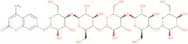
CAS:A fluorogenic MOSCERDAM® substrate targeting cellulasesFórmula:C40H58O28Pureza:Min. 95%Cor e Forma:White To Off-White SolidPeso molecular:986.89 g/molResorufin β-D-cellobioside
CAS:Resorufin beta-D-cellobioside is a fluorogenic substrate for the enzyme beta-glucosidase. It is soluble in water and can be used as a chromogenic substrate for beta-galactosidase. Resorufin beta-D-cellobioside is also used as a ligand to study protein interactions, such as those between lectins and glycoproteins. This product is of high purity and quality, with CAS No. 1000404-48-7.Fórmula:C24H27NO13Pureza:Min. 95 Area-%Peso molecular:537.47 g/molRef: 3D-R-2056
10mgA consultar25mgA consultar50mgA consultar100mgA consultar250mgA consultar-Unit-ggA consultarD-Luciferin Firefly, potassium salt - endotoxin free
CAS:Water soluble substrate for firefly luciferase. Used for imaging the expression of the LUC marker gene and luciferase-fusion conjugates in living cells, tissues and organisms. Extensively utilized in reporter gene assays, immunoassays and hygiene monitoring. Endotoxin free product.
Fórmula:C11H7KN2O3S2Pureza:Min. 95%Cor e Forma:PowderPeso molecular:318.42 g/mol4-Methylumbelliferyl-2-O-(a-L-fucopyranosyl)-a-L-fucopyranoside
4-Methylumbelliferyl-2-O-(alpha-L-fucopyranosyl)-alpha-L-fucopyranoside is a fluorogenic substrate for alpha-L-fucosidase. After enzymatic cleaveage, free 4-methylumbelliferone (also known as hymecromone) is released, exhibiting blue fluorescence upon excitation with UV light. The strongest fluorescence of 4-methylumbelliferone requires deprotonation of the hydroxyl group (thus requires alkaline pH), with a maximal fluorescence intensity obtained with excitation at 350 to 370 nm and emission at 440 to 470 nm. The use of 4-methylumbelliferyl-2-O-(alpha-L-fucopyranosyl)-alpha-L-fucopyranosideas a substrate for measuring the alpha-L-fucosidase activity is used for fucosidosis diagnosis.
Pureza:Min. 95%Cor e Forma:White PowderPeso molecular:468.45 g/mol4-Methylumbelliferyl sulfate potassium salt
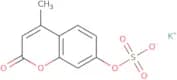
CAS:4-Methylumbelliferyl sulfate potassium salt serves as a superior fluorogenic substrate in enzyme detection assays. Upon enzymatic hydrolysis, it releases a highly fluorescent 4-methylumbelliferone moiety, enabling real-time analysis and quantification of enzyme activities. This product is ideal for a variety of biological assay applications, including in vitro diagnostics, drug discovery, and research purposes. Its excellent sensitivity, specificity, and performance ensure accurate and consistent results every time.Fórmula:C10H7KO6SPureza:Min. 98 Area-%Cor e Forma:White PowderPeso molecular:294.32 g/mol4-Nitrophenyl-beta-D-lactopyranoside
CAS:Chromogenic substrate for cellobiohydrolase and endoglucanase.Fórmula:C18H25NO13Pureza:Min. 99.0 Area-%Peso molecular:463.40 g/mol1-Methyl 2-(4-methyl-2-oxo-2H-1-benzopyran-7-yl)ethanedioate
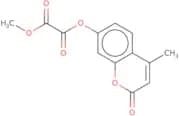
CAS:Inorganic phosphate targeted colorimetric probe
Fórmula:C13H10O6Pureza:Min. 95%Peso molecular:822.35 g/mol4-Nitrophenyl 2-acetamido-6-O-(2-acetamido-2-deoxy-b-D-glucopyranosyl)-3-O-(b-D-galactopyranosyl)-2-deoxy-a-D-galactopyranoside
CAS:4-Nitrophenyl 2-acetamido-6-O-(2-acetamido-2-deoxy-b-D-glucopyranosyl)-3-O-(b-D-galactopyranosyl)-2-deoxy-a-D-galactopyranoside is a specific chromogenic substrate designed for the highly sensitive and accurate detection of glycosidase enzyme activity. Glycosidases are responsible for the cleavage of glycosidic bonds between saccharide units in various carbohydrates. The hydrolysis of this substrate by glycosidase enzymes produces 4-nitrophenol, a yellow-colored compound that can be easily monitored through spectrophotometric measurements due to its strong absorbance at 405 nm. This chromogenic substrate is widely used in the analysis of glycosidase activity in various biological samples, including bacterial, fungal, and plant tissues, as well as in environmental samples and biotechnological applications.Fórmula:C28H41N3O18Pureza:Min. 95 Area-%Cor e Forma:White PowderPeso molecular:707.63 g/mol5-Bromo-4-chloro-3-indoxyl-alpha-D-galactopyranoside
CAS:Chromogenic substrate for α-galactosidase yielding a blue precipitate. Used for species differentiation within the family Enterobacteriaceae and differentiation of Bifido bacteria species from Lactobacillus species.
Fórmula:C14H15BrClNO6Pureza:Min. 99 Area-%Peso molecular:408.64 g/mol4-Nitrophenyl b-D-glucopyranoside-6-phosphate
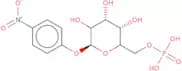
CAS:4-Nitrophenyl beta-D-glucopyranoside-6-phosphate is a chromogenic substrate for glucose-6-phosphatase. Upon hydrolysis, para-nitrophenol is released yielding a yellowish colour. 4-Nitrophenyl beta-D-glucopyranoside-6-phosphate is used in different applications such as the Glycogen storage disease diagnosis (e.g., von Gierke disease)
Fórmula:C12H16NO11PPureza:Min. 98 Area-%Cor e Forma:PowderPeso molecular:381.23 g/molResorufin-β-D-glucuronic acid, sodium salt
CAS:Resorufin-beta-D-glucuronic acid, sodium salt is a fluorogenic substrate that can be used in diagnostic applications. It is a conjugate of resorufin and beta-D-glucuronic acid. The enzyme substrate reacts with the enzyme luciferase to produce light. The high purity and quality of this product make it ideal for use in the detection of the presence of glucose in urine, which can be used to diagnose diabetes mellitus.Fórmula:C18H14NNaO9Pureza:Min. 90.0 Area-%Peso molecular:411.30 g/molRef: 3D-R-2150
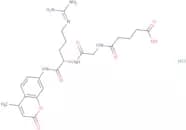
2mgA consultar5mgA consultar10mgA consultar25mgA consultar50mgA consultar-Unit-ggA consultarGlutaryl-glycyl-L-arginine 7-amido-4-methylcoumarin hydrochloride
CAS:Glutaryl-glycyl-L-arginine 7-amido-4-methylcoumarin hydrochloride is a synthetic peptide substrate used as a fluorogenic substrate for aminopeptidase.
Fórmula:C23H30N6O7·HClPureza:Min. 95%Cor e Forma:PowderPeso molecular:538.98 g/mol5-Bromo-4-chloro-3-indolyl a-L-arabinofuranoside
5-Bromo-4-chloro-3-indolyl a-L-arabinofuranoside is a chromogenic substrate used to detect the specific enzymatic activity of alpha-L-arabinofuranosidase. After cleavage, 5-bromo-4-chloro-indoxyl is released, resulting in a blue to blue-green color change in bacterial colonies or media. 5-Bromo-4-chloro-3-indolyl a-L-arabinofuranoside is used in bacterial arabinan degradation assays (e.g. Bacillus spp.).Fórmula:C13H13BrClNO5Pureza:Min. 98.0 Area-%Cor e Forma:PowderPeso molecular:378.6 g/molNaphthol AS-OL
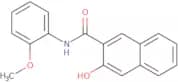
CAS:Naphthol AS-OL is a widely used chromogenic enzyme substrate that forms a colored product upon reaction with specific enzymes. It is commonly employed in histochemical and cytochemical staining techniques to visualize enzyme activity in cells and tissues. Naphthol AS-OL is particularly useful for detecting the presence of enzymes such as alkaline phosphatase, acid phosphatase, and esterases. The resulting colored product can be easily observed under a microscope, allowing researchers to study the distribution and localization of these enzymes in various biological samples.
Fórmula:C18H15NO3Pureza:Min. 95%Cor e Forma:PowderPeso molecular:293.32 g/molAldol® 455 alpha-D-glucopyranoside - Biosynth Patent: EP 2427431 and US 8940909
Aldol® 455 alpha-D-glucopyranoside is a high quality, environmentally tested, staining, and ligand for bioluminescent assays. It has been shown to be a chromogenic substrate for diagnostics and a fluorogenic substrate for enzymes such as alpha-glucosidase, producing a yellow/green-orange color. Aldol® 455 alpha-D-glucopyranoside is also used in culture media and food testing.
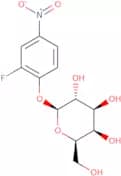
Fórmula:C27H24ClNO7Pureza:Min. 95 Area-%Cor e Forma:PowderPeso molecular:509.93 g/mol2-Fluoro-4-nitrophenyl b-D-galactopyranoside
CAS:2-Fluoro-4-nitrophenyl b-D-galactopyranoside is a chromogenic substrate in enzymatic assays with β-galactosidase. Commonly abbreviated as PFONPG, it is a hydrophilic compound that can be dissolved in saline and blood samples, which makes it a suitable candidate for diagnostic applications as a gene reporter probe by simple analytic methodologies. 2-Fluoro-4-nitrophenyl b-D-galactopyranoside have been used to detect and monitor the growth of prostate tumor cells.Pureza:Min. 95%Cor e Forma:PowderPeso molecular:319.24 g/molEthyl umbelliferone-3-carboxylate-α-D-glucopyranoside
Ethyl umbelliferone-3-carboxylate-a-D-glucopyranoside is a fluorogenic substrate used for detecting alpha-glucosidase activity in enzymatic assays. When alpha-glucosidase cleaves , the glycosidic bond, umbelliferone-3-carboxylate is released, which exhibits strong fluorescence. This substrate is commonly utilized in glycobiology research, diagnostic tests, and high-throughput screening of enzyme inhibitors.
Fórmula:C18H20O10Pureza:Min. 95%Cor e Forma:Off-white to yellow solid.Peso molecular:396.35 g/mol