Sort by
Boron oxide, 99.999% (metals basis)
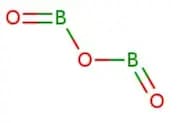
CAS:Controlled ProductBoron oxide is used as a flux, an acid catalyst and a chemical intermediate in the production of boron halides, esters, carbide, nitride and metallic borides. Boron oxide has shown a promising effect on glycerol hydrogenolysis to 1,2-propanediol. It is also an essential material for the preparationFormula:B2O3Purity:99.999%Color and Shape:Crystals or powder or crystalline powder, WhiteMolecular weight:69.62Boron oxide, 99.98% (metals basis)
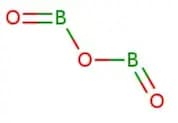
CAS:Controlled ProductBoron oxide is used as a flux, an acid catalyst and a chemical intermediate in the production of boron halides, esters, carbide, nitride and metallic borides. Boron oxide has shown a promising effect on glycerol hydrogenolysis to 1,2-propanediol. It is also an essential material for the preparationFormula:B2O3Purity:99.98%Molecular weight:69.62Boron oxide, 98%
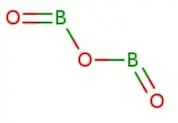
CAS:Controlled ProductBoron oxide is used as a flux, an acid catalyst and a chemical intermediate in production of boron halides, esters, carbide, nitride and metallic borides. Boron oxide has shown a promising effect on glycerol hydrogenolysis to 1,2-propanediol. It is also an essential material for the preparation of cFormula:B2O3Purity:98%Color and Shape:White, Crystals or powder or crystalline powderMolecular weight:69.62Nickel(II) chloride, anhydrous, 98%
CAS:Nickel(II) chloride is a mild Lewis acid used for the regioselective isomerization of dienols and selective reduction of alkenes to alkanes in presence of Lithium aluminum hydride. It is used as a precursor to nickel boride, finely divided nickel. It acts as a catalyst to prepare dialkyl arylphosphoFormula:Cl2NiPurity:98%Color and Shape:Yellow to pale orange to orange, PowderMolecular weight:129.59Rhodium(III) sulfate aqueous solution, 5% Rhodium content
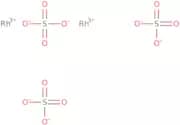
CAS:Rhodium(III) sulfate solution is a chemical reagent that belongs to the group of catalysts. It is used as an oxidation catalyst for organic reactions and as a reducing agent in metal surface analysis. Rhodium(III) sulfate solution has been shown to be reactive with hydroxyl groups, carbonyl groups, and nitro-containing compounds. The particle size is between 2-5 micrometers and it can be used in powder diffraction analysis as well as solid catalysis. Rhodium(III) sulfate solution reacts with chloride ions to form rhodium chloride, which precipitates out of solution. It also reacts with boron nitride to form rhodium boride, which can be separated by filtration or centrifugation.Formula:Rh2•(H2SO4)3Color and Shape:Clear LiquidMolecular weight:500.05 g/molBoron carbide
CAS:Controlled ProductBoron carbide is a chemical compound that belongs to the group of borides. It is used as a solid catalyst in wastewater treatment, which can remove organic contaminants and heavy metals from water. Boron carbide has shown chemical stability when exposed to sodium citrate and it has a low thermal expansion coefficient. The surface properties of this material are characterized by high surface area and high reactivity, which make it suitable for sample preparation and transport. Boron carbide is also resistant to radiation and exhibits good structural stability in particle form. This material has been shown to catalyze reactions with zirconium oxide, but its reaction mechanism is not yet well understood.Formula:B4CPurity:Min. 95%Molecular weight:55.25 g/molAluminum Diboride
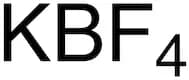
CAS:Aluminum DiborideFormula:AlB2Purity:99%, 1-3μmColor and Shape:SolidMolecular weight:48.6Potassium Tetrafluoroborate
CAS:Formula:KBF4Purity:>95.0%(T)Color and Shape:White to Almost white powder to crystalMolecular weight:125.90Boric acid, Puratronic™, 99.9995% (metals basis)
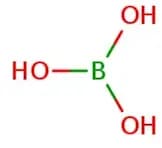
CAS:It is used as a primary or adjunct buffer in swimming pools, flame retardant, neutron absorber in nuclear power plants, colorant to make flame green, preservative in urine samples, welding flux in combination with borax, or precursor to other chemical compounds. It is used to prevent/remove existinFormula:BH3O3Purity:99.9995%Color and Shape:Crystals or powder, WhiteMolecular weight:61.83Potassium tetrafluoroborate, 99%
CAS:Potassium tetrafluoroborate is used as an active filler in the preparation of resin-bonded abrasives. It is also used for extraction, refining and processing of metals in the chemical industry. It finds application as an additive in the alloying industry and welding agent. Further, it is used in theFormula:BF4KPurity:99%Color and Shape:White, Crystalline powder or chunksMolecular weight:125.90Boric acid, 99.8%
CAS:Boric acid is a precursor material for other boron compounds. A dilute water solution of boric acid is usually employed as a mild antiseptic and eyewash. Boric acid is employed in leather manufacture, electroplating and cosmetics. It is involved in the production of monofilament fiberglass which finFormula:BH3O3Purity:99.8%Molecular weight:61.83