CAS 10030-90-7
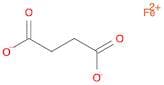
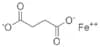
:Iron(2+) succinate
Description:
Iron(2+) succinate, also known as ferrous succinate, is a coordination compound formed from iron in its +2 oxidation state and succinic acid, a dicarboxylic acid. This compound typically appears as a solid and is characterized by its ability to act as a source of iron, which is essential for various biological processes, including oxygen transport and electron transfer in living organisms. Iron(2+) succinate is often used in nutritional supplements due to its bioavailability and role in addressing iron deficiency. It is soluble in water, which enhances its absorption in biological systems. The compound exhibits chelation properties, allowing it to form stable complexes with other molecules, which can influence its reactivity and stability. Additionally, it may display antioxidant properties, contributing to its potential health benefits. Safety data indicates that while it is generally regarded as safe when used appropriately, excessive intake can lead to iron overload, which may have adverse health effects. Overall, Iron(2+) succinate serves both nutritional and therapeutic roles in various applications.
Formula:C4H6O4·Fe
InChI:InChI=1S/C4H6O4.Fe/c5-3(6)1-2-4(7)8;/h1-2H2,(H,5,6)(H,7,8);
InChI key:InChIKey=VAMMNAAZSNNEDJ-UHFFFAOYSA-N
SMILES:C(CC(O)=O)C(O)=O.[Fe]
Synonyms:- Butanedioic Acid, Iron(2+) Salt (1:1)
- Cerevon
- Eisen(II)-succinat
- Ferrlecit 2
- Ferromyn
- Ferrous succinate
- Ferroussuccinate,18.5%,Powder
- Iron succinate (Fe(O<sub>4</sub>C<sub>4</sub>H<sub>4</sub>))
- Iron(2+) Butanedioate
- Iron(2+) succinate
- Iron(II)-succinate
- Succinic acid, iron(2+) salt (1:1)
- See more synonyms
Sort by
Purity (%)
0
100
|
0
|
50
|
90
|
95
|
100
Found 2 products.
Butanedioic acid, iron(2+) salt (1:1)
CAS:Formula:C4H4FeO4Purity:98%Color and Shape:SolidMolecular weight:171.9172