CAS 101512-21-4
:3-Pyridinecarboxamide,5-hydroxy-(9CI)
Description:
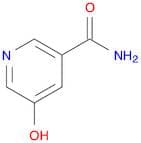
3-Pyridinecarboxamide, 5-hydroxy- (9CI), with the CAS number 101512-21-4, is a chemical compound characterized by its pyridine ring structure, which is a six-membered aromatic ring containing one nitrogen atom. This compound features a carboxamide functional group and a hydroxyl group, contributing to its potential as a biologically active molecule. The presence of the hydroxyl group suggests that it may exhibit hydrogen bonding capabilities, influencing its solubility and reactivity. Typically, compounds like this can be involved in various biological processes, potentially acting as intermediates in synthetic pathways or as pharmacological agents. The specific arrangement of substituents on the pyridine ring can affect the compound's properties, including its polarity, acidity, and interaction with biological targets. As with many nitrogen-containing heterocycles, 3-Pyridinecarboxamide, 5-hydroxy- may also exhibit interesting electronic properties, making it a subject of interest in medicinal chemistry and material science. Further studies would be necessary to fully elucidate its applications and mechanisms of action.
Formula:C6H6N2O2
InChI:InChI=1/C6H6N2O2/c7-6(10)4-1-5(9)3-8-2-4/h1-3,9H,(H2,7,10)
SMILES:c1c(cncc1O)C(=N)O
Synonyms:- 3-Pyridinecarboxamide, 5-hydroxy-
- 5-Hydroxy-3-pyridinecarboxylic acid
- 5-Hydroxynicotinamide
- Brn 5499772
- 5-Hydroxypyridine-3-Carboxamide
Sort by
Purity (%)
0
100
|
0
|
50
|
90
|
95
|
100
Found 4 products.
3-Pyridinecarboxamide, 5-hydroxy-
CAS:Formula:C6H6N2O2Purity:%Color and Shape:SolidMolecular weight:138.12405-Hydroxynicotinamide
CAS:5-Hydroxynicotinamide is a plant-derived compound that has been shown to have antiplasmodial and antimalarial activities. It has been demonstrated to be an inhibitor of tumor cells, in particular leishmania and plasmodium. The leaves of the plant from which 5-hydroxynicotinamide is derived are used as a traditional medicine for the treatment of fever, malaria, and other diseases. The structure of 5-hydroxynicotinamide was determined by spectroscopic data and chemical analysis. Hypoxic tumor cells were found to be more susceptible than normoxic tumor cells to the antitumor activity of 5-hydroxynicotinamide. A potential synergistic effect between 5-hydroxynicotinamide and nicotinamide was also observed; both compounds were found to inhibit proliferation in hypoxic tumor cells.Formula:C6H6N2O2Purity:Min. 95%Molecular weight:138.13 g/mol