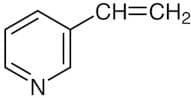
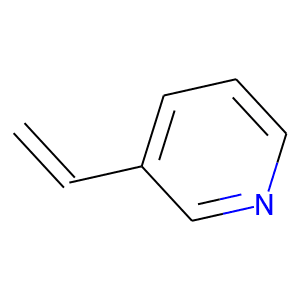
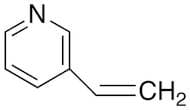
CAS 1121-55-7
:3-Vinylpyridine
- Ai3-18209
- Ccris 5239
- Pyridine, 3-ethenyl-
- 3-Ethenylpyridine
- 3-Vinyl-pyridine
3-Vinylpyridine (stabilized with TBC)
CAS:Formula:C7H7NPurity:>96.0%(GC)(T)Color and Shape:Colorless to Yellow clear liquidMolecular weight:105.143-Vinylpyridine
CAS:3-VinylpyridineFormula:C7H7NPurity:≥95%Color and Shape:Pale yellow Liquid-OilMolecular weight:105.137183-Vinylpyridine (>90%)
CAS:Controlled ProductFormula:C7H7NPurity:>90%Color and Shape:NeatMolecular weight:105.143-Vinylpyridine
CAS:3-VinylpyridineFormula:C7H7NPurity:98% (stabilized with TBC)Molecular weight:105.143-Vinylpyridine (stabilised with TBC)
CAS:Formula:C7H7NPurity:98% (stabilized with TBC)Color and Shape:LiquidMolecular weight:105.143-Vinylpyridine
CAS:3-Vinylpyridine, also known as vinylpyridine, is a colorless, crystalline solid that forms hydroxide solutions. It has been shown to have antifungal activity in the presence of fatty acids and can be used for the treatment of urinary tract infections caused by Candida albicans. The chemical ionization technique was used to analyze 3-vinylpyridine in urine samples from nonsmokers and smokers. Long-term exposure to 3-vinylpyridine may lead to surface-enhanced Raman spectroscopy signals on the surface of metal oxides due to alkoxy radical formation. The crystallization process of 3-vinylpyridine can take place at a temperature range between 135°C and 150°C with an addition of polyethylene glycol or sulfuric acid. Reaction intermediates are formed during this process which are important for the formation of 3-vinylpyridinium ions.
Formula:C7H7NPurity:Min. 95%Molecular weight:105.14 g/mol