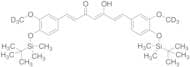
CAS 1134639-23-8
:Di-(tert-Butyl-dimethylsilyl) Curcumin-d6
CAS:Controlled ProductFormula:C33D6H42O6Si2Color and Shape:NeatMolecular weight:602.939Di-(tert-Butyl-dimethylsilyl) Curcumin
CAS:Controlled ProductApplications Protected Curcumin (C838500). A natural phenolic compound. Potent anti-tumor agent having anti-inflammatory and anti-oxidant properties. Induces apoptosis in cancer cells and inhibits phorbol ester-induced protein kinase C (PKC) activity. Reported to inhibit production of inflammatory cytokines by peripheral blood monocytes and alveolar macrophages. Potent inhibitor of EGFR tyrosine kinase and IκB kinase. Inhibits inducible nitric oxide synthase (iNOS), cycloxygenase and lipoxygenase. Easily penetrates into the cytoplasm of cells, accumulating in membranous structures such as plasma membrane, endoplasmic reticulum and nuclear envelope.
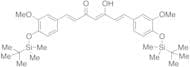
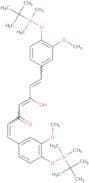
References Srinivasan, et al.: J. Pharm. Pharmacol., 5, 448 (1953), Tu, B., et al.: J .Cell Biol., 164, 341 (2004), Xu, G., et al.: Biochemistry, 44, 9817 (2005), Johnson, J., et al.: Cancer Lett., 255, 170 (2007),Formula:C33H48O6Si2Color and Shape:NeatMolecular weight:596.9Di-(tert-butyl-dimethylsilyl) curcumin
CAS:Di-(tert-butyl-dimethylsilyl) curcumin is a research tool that is used in the study of cell biology, pharmacology, and ion channels. It is an inhibitor of ligand or receptor interactions. Di-(tert-butyl-dimethylsilyl) curcumin has been shown to have a high purity and is suitable for use in life science experiments. This chemical is also an activator of ion channels and has been used as a reagent to study protein interactions.Formula:C33H48O6Si2Purity:Min. 95%Molecular weight:596.9 g/mol