CAS 12135-22-7
:Palladium hydroxide
Description:
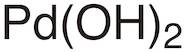
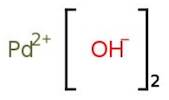
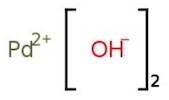
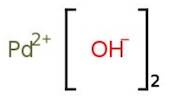
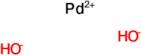
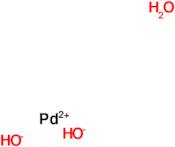
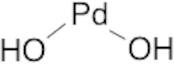
Palladium hydroxide, with the CAS number 12135-22-7, is an inorganic compound composed of palladium, oxygen, and hydrogen. It typically appears as a dark brown to black solid and is known for its catalytic properties, particularly in hydrogenation reactions and as a catalyst in organic synthesis. Palladium hydroxide is often used in the production of palladium catalysts and in electrochemical applications, such as fuel cells and batteries. It is relatively stable under ambient conditions but can decompose upon heating, releasing water and forming palladium metal. The compound is soluble in strong acids and can be converted to palladium salts through various chemical reactions. Due to its reactivity and ability to absorb hydrogen, palladium hydroxide plays a significant role in various industrial processes, including the purification of hydrogen and the synthesis of fine chemicals. Safety precautions should be taken when handling this compound, as it can pose health risks if inhaled or ingested.
Formula:H2O2Pd
InChI:InChI=1/2H2O.Pd/h2*1H2;/q;;+2/p-2
InChI key:InChIKey=NXJCBFBQEVOTOW-UHFFFAOYSA-L
SMILES:[Pd](O)O
Synonyms:- Escat 1951
- Palladium Dihydrate
- Palladium dihydroxide
- Palladium hydroxide (Pd(OH)2)
- Palladium hydroxide (Pd(OH)<sub>2</sub>)
- Palladium(2+) Dihydroxide
- Palladium(II) Hydroxide
- Pearlman's catalyst
- Pearlmans Catalyst
- ESCAT 1421
- ESCAT 1431
- ESCAT TM 1621
- ESCAT TM 1951
- ESCAT 1471
- ESCAT 1621
- ESCAT TM 1421
- ESCAT TM 1431
- PALLADIUM-ACTIVATED CARBON
- ESCAT 1921
- ESCAT 1931
- ESCAT(TM) 1911B
- PALLADIUM CARBON
- ESCAT(TM) 1921
- ESCAT(TM) 1971
- ESCAT(TM) 1961
- ESCAT(TM) 1471
- ESCAT(TM) 1941
- See more synonyms
Filter by
Purity percentage
0
100
|
0
|
50
|
90
|
95
|
100
Found 11 products.
- Lower prices
- Higher prices
- Lower purities
- Higher purities
- Faster estimated delivery
Palladium Hydroxide (contains Pd, PdO) on Carbon (wetted with ca. 50% Water)
CAS:Formula:Pd(OH)2Color and Shape:Black powder to crystalMolecular weight:140.43Palladium hydroxide, Pd 5% on carbon powder, Type A403002-5, nominally 50% water
CAS:This Thermo Scientific Chemicals brand product was originally part of the Alfa Aesar product portfolio. Some documentation and label information may refer to the legacy brand. The original Alfa Aesar product / item code or SKU reference has not changed as a part of the brand transition to Thermo SciFormula:H2O2PdMolecular weight:140.43Palladium hydroxide, Pd 20% on carbon, nominally 50% water, Pearlman's Catalyst
CAS:Hydrogenolysis of benzyl-nitrogen bondsPalladium hydroxide, Pd 20% on carbon, nominally 50% water is used as a catalyst for hydrogenolysis of benzyl groups and epoxides. It is used to reduce nitro compounds to amines. It acts as a dehydrogenation reagent as well as a useful reagent for debenzylationFormula:H2O2PdMolecular weight:140.43Palladium hydroxide, 99%
CAS:Acts as a catalyst for arylation reactions. It is employed in hydrogenolysis of benzyl-nitrogen bonds. This Thermo Scientific Chemicals brand product was originally part of the Alfa Aesar product portfolio. Some documentation and label information may refer to the legacy brand. The original Alfa AesFormula:H2O2PdPurity:99%Molecular weight:140.43Palladium(II) hydroxide on carbon, 20% Pd, wet support, powder
CAS:Palladium(II) hydroxide on carbon, 20% Pd, wet support, powderFormula:·Pd·2OHPurity:95%Color and Shape:Black Solid-PowderMolecular weight:140.43468Palladium hydroxide on carbon 5%
CAS:Formula:H2O2PdPurity:95.0%Color and Shape:SolidMolecular weight:140.43Palladium hydroxide on activated carbon(10%)(wetted with ca. 55% Water)
CAS:Color and Shape:SolidMolecular weight:139.91Palladium hydroxide on carbon(20%)
CAS:Palladium hydroxide on carbonFormula:H2O2PdMolecular weight:140.43Palladium hydroxide on carbon, 20 wt.% 50% water
CAS:Formula:H4O3PdPurity:95.0%Color and Shape:SolidMolecular weight:158.45Palladium Hydroxide (20% on Carbon) (~50% water by weight)
CAS:Controlled ProductApplications Palladium Hydroxide is a catalyst for hydrogenation reactions as well as in the synthesis of glycopeptides used in obtaining antibodies from autoimmune diseases.
References Bonache, M. et al.: Adv. Exp. med. Bio., 611, 411 (2009); Dzhardimalieva, G. et al.: Russ. Chem. Bull., 58, 2070 (2009);Formula:H2O2PdColor and Shape:NeatMolecular weight:140.43