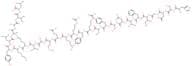
CAS 127317-03-7
:pituitary adenylate cyclase activating*polypeptid
Description:
Pituitary adenylate cyclase-activating polypeptide (PACAP) is a neuropeptide that plays a crucial role in various physiological processes, including neuroprotection, neurotransmission, and hormone secretion. It is characterized by its ability to activate adenylate cyclase, leading to increased levels of cyclic AMP (cAMP) in target cells. PACAP is known for its diverse biological functions, including modulation of circadian rhythms, regulation of stress responses, and involvement in reproductive functions. The peptide exhibits high affinity for specific receptors, namely PACAP receptors (PAC1, VPAC1, and VPAC2), which mediate its effects across different tissues. Additionally, PACAP is implicated in various pathophysiological conditions, including neurodegenerative diseases and metabolic disorders. Its structure consists of a sequence of amino acids that contribute to its stability and activity, and it is often studied for its potential therapeutic applications in neurology and endocrinology. Overall, PACAP is a significant molecule in both basic and clinical research, highlighting its importance in understanding complex biological systems.
Formula:C142H224N40O39S
Synonyms:- Pituitary Adenylate Cyclase Activating Polypeptide (1-27) amide (human, ovine, rat)
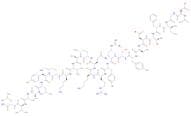
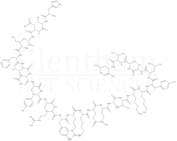
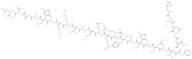
- H-His-Ser-Asp-Gly-Ile-Phe-Thr-Asp-Ser-Tyr-Ser-Arg-Tyr-Arg-Lys-Gln-Met-Ala-Val-Lys-Lys-Tyr-Leu-Ala-Ala-Val-Leu-NH2
- PACAP 27 Amide, Ovine
Sort by
Purity (%)
0
100
|
0
|
50
|
90
|
95
|
100
Found 9 products.
PACAP (1-27), Human, Ovine, Rat
CAS:For cellular and molecular biology applicationsFormula:C142H224N40O39SMolecular weight:3147.64PACAP-27 (human, mouse, ovine, porcine, rat)
CAS:PACAP-38 and its N-terminal fragment PACAP-27 are neuropeptides originally isolated from ovine hypothalamus, but also found in humans and rats. Both PACAP-27, which shows considerable homology with vasoactive intestinal polypeptide (VIP), and PACAP-38 stimulate adenylate cyclase much more potently than VIP. Specific PACAP receptors have been identified in different tissues and cell lines.Kojro et al. observed that the PAC1 agonists PACAP-27 and PACAP-38 strongly increased the activity of α-secretase, thus promoting the non-amyloidogenic processing of amyloid precursor protein.Formula:C142H224N40O39SPurity:≥ 97%Color and Shape:WhiteMolecular weight:3147.65H-HIS-SER-ASP-GLY-ILE-PHE-THR-ASP-SER-TYR-SER-ARG-TYR-ARG-LYS-GLN-MET-ALA-VAL-LYS-LYS-TYR-LEU-ALA-ALA-VAL-LEU-NH2
CAS:Formula:C142H224N40O39SPurity:95%Molecular weight:3147.6076Pituitary adenylate cyclase activating polypeptide-27 ovine
CAS:Formula:C142H224N40O39SMolecular weight:3147.64PACAP (1-27), human, ovine, rat
CAS:PACAP (1-27) (the N-terminal fragment of PACAP-38) is a novel neuropeptides originally isolated from bovine hypothalamus, also found in humans and rats.Formula:C142H224N40O39SPurity:98%Color and Shape:SolidMolecular weight:3147.66PACAP-27 (human, mouse, ovine, porcine, rat)
CAS:PACAP 1-27 (Pituitary adenylate cyclase-activating polypeptide 27) is a potent stimulator of adenylyl cyclase and increases cAMP levels.Formula:C142H224N40O39SMolecular weight:3,147.65 g/molPACAP-27 (human, mouse, ovine, porcine, rat)
CAS:Custom research peptide; min purity 95%.
Formula:C142H224N40O39SPurity:Min. 95%Molecular weight:3,147.68 g/molPACAP27 (Human, 1-27 Amide)
CAS:PACAP27 is a peptide that is used as a research tool. PACAP27 binds to the receptor for pituitary adenylate cyclase-activating polypeptide (PACAP). The binding of PACAP27 to the receptor leads to activation of adenylyl cyclase, which increases intracellular levels of cAMP. This increase in cAMP may lead to cellular responses such as increased ion channel activity and increased protein synthesis.Formula:C142H224N40O39SPurity:Min. 95%Molecular weight:3,147.6 g/molPACAP-27 (human, mouse, ovine, porcine, rat) trifluoroacetate salt
CAS:Trifluoroacetate saltFormula:C142H224N40O39SPurity:Min. 95%Molecular weight:3,147.61 g/mol