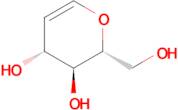
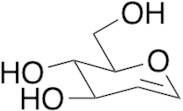
CAS 13265-84-4
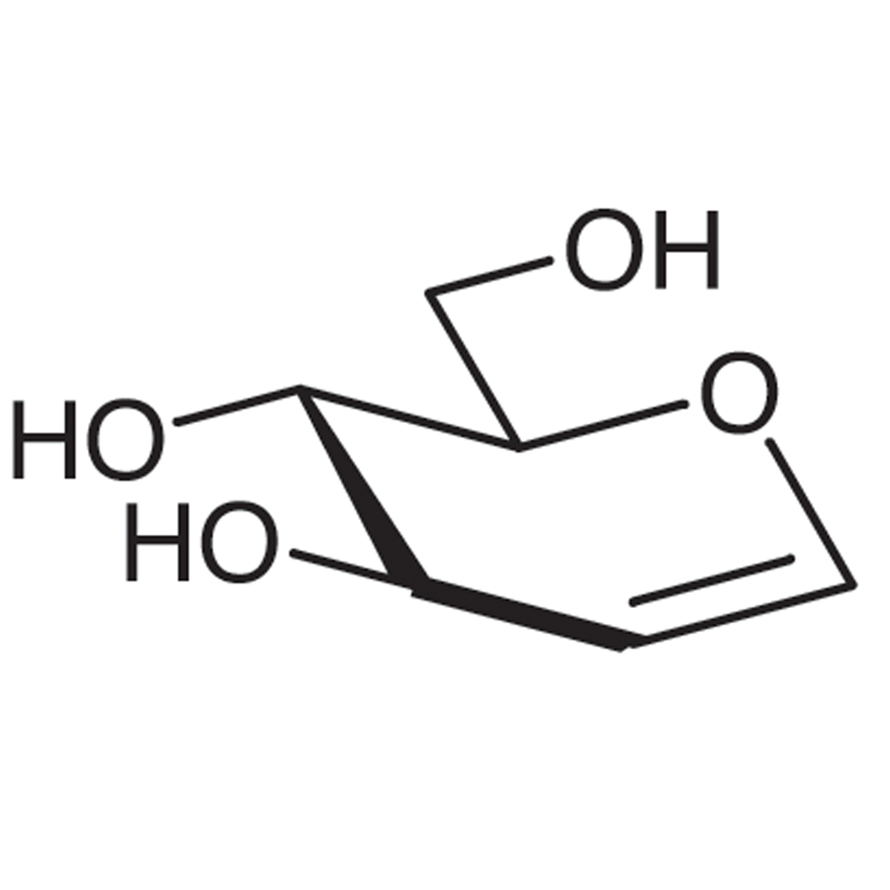
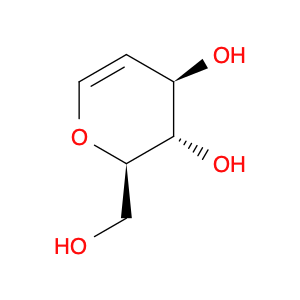
:D-glucal
Description:
D-glucal, with the CAS number 13265-84-4, is an organic compound classified as an aldohexose and is a derivative of glucose. It is characterized by its open-chain structure, which features a carbonyl group (aldehyde) at one end and multiple hydroxyl groups along the carbon chain. D-glucal is typically a white to off-white solid and is soluble in water due to its polar functional groups. This compound is known for its reactivity, particularly in glycosylation reactions, making it valuable in organic synthesis and carbohydrate chemistry. D-glucal can undergo various transformations, including oxidation and reduction, and can participate in cyclization reactions to form glycosides. Its structural features contribute to its biological significance, as it can serve as a precursor for more complex carbohydrates. Additionally, D-glucal's properties make it a subject of interest in research related to glycoproteins and other biomolecules.
Formula:C6H10O4
InChI:InChI=1/C6H10O4/c7-3-5-6(9)4(8)1-2-10-5/h1-2,4-9H,3H2/t4-,5-,6+/m1/s1
InChI key:InChIKey=YVECGMZCTULTIS-PBXRRBTRSA-N
SMILES:C(O)[C@@H]1[C@@H](O)[C@H](O)C=CO1
Synonyms:- (4xi)-1,5-anhydro-2-deoxy-D-threo-hex-1-enitol
- 1,5-Anhydro-2-deoxy-<span class="text-smallcaps">D</span>-arabino-hex-1-enitol
- 1,5-Anhydro-2-deoxy-D-arabino-hex-1-enitol
- <span class="text-smallcaps">D</span>-(+)-Glucal
- <span class="text-smallcaps">D</span>-arabino-Hex-1-enitol, 1,5-anhydro-2-deoxy-
- <span class="text-smallcaps">D</span>-arabino-Hex-1-enopyranose, 1,2-dideoxy-
- D-arabino-Hex-1-enitol, 1,5-anhydro-2-deoxy-
- Glucal
- D-Glucal
- D-arabino-Hex-1-enopyranose, 1,2-dideoxy-
- (2R,3S,4R)-2-(hydroxymethyl)-3,4-dihydro-2H-pyran-3,4-diol
- (2R)-3β,4α-Dihydroxy-3,4-dihydro-2H-pyran-2α-methanol
- (2R)-3,4-Dihydro-2α-(hydroxymethyl)-2H-pyran-3β,4α-diol
- 1,2-Didehydro-1,2-dideoxy-D-glucopyranose
- P-GLUCAL
- 1,5-Anhydro-2-deoxy-D-arabino-hexa-1-enitol
- 1,5-anhydro-2-deoxy-d-arabino-hex-1-enito
- See more synonyms
Filter by
Purity percentage
0
100
|
0
|
50
|
90
|
95
|
100
Found 9 products.
- Lower prices
- Higher prices
- Lower purities
- Higher purities
- Faster estimated delivery
D-Glucal
CAS:Formula:C6H10O4Purity:>97.0%(GC)Color and Shape:White to Almost white powder to crystalMolecular weight:146.14D-Glucal
CAS:D-Glucal is an organic compound belonging to the family of aldohexoses, which are monosaccharides containing an aldehyde functional group. It features a six-carbon structure and is derived from glucose by oxidizing the primary alcohol group at carbon 1 to an aldehyde group. D-Glucal appears as a white crystalline solid, soluble in water, and has a sweet taste. It serves as a crucial intermediate in the chemical synthesis of various compounds, including pharmaceuticals, agrochemicals, and natural products. D-Glucal can be converted into other carbohydrate derivatives, such as glycosides, glycoconjugates, and amino sugars. Additionally, it plays a role in carbohydrate chemistry research and is used as a chiral component for synthesizing complex structures.Formula:C6H10O4Molecular weight:146.1412D-Glucal
CAS:Formula:C6H10O4Purity:≥ 98.0%Color and Shape:White to off-white or beige powderMolecular weight:146.14D-Glucal
CAS:D-Glucal is a protonated d-glucal, which is a simple sugar. It reacts with the electron acceptor oxygen to form an oxidized product. This product can be reduced back to the original molecule by using a reducing agent, such as sodium borohydride or sodium dithionite. D-Glucal has been shown to inhibit the growth of tumor cells in mice that are resistant to other anticancer drugs. D-Glucal inhibits transcription and replication of DNA by binding to the DNA-dependent RNA polymerase and blocking its ability to transcribe messenger RNA (mRNA). The enzyme is also inhibited by glycosidic bond architectures that prevent it from binding to the DNA template strand. D-Glucal also has an effect on protein synthesis because it binds to proteins and prevents them from performing their normal functions. D-Glucal has been used as a model system for studying cellular processes in mammalian cells, such as oxidationFormula:C6H10O4Purity:Min. 98 Area-%Color and Shape:White Off-White PowderMolecular weight:146.14 g/mol(2R,3S,4R)-2-(Hydroxymethyl)-3,4-dihydro-2H-pyran-3,4-diol
CAS:Formula:C6H10O4Purity:98%Color and Shape:SolidMolecular weight:146.142D-Glucal
CAS:(2R,3S,4R)-2-(Hydroxymethyl)-3,4-dihydro-2H-pyran-3,4-diolFormula:C6H10O4Purity:98%Molecular weight:146.14D-Glucal
CAS:Controlled ProductApplications D-Glucal is an important building block for both solution- and solid-phase synthesis of oligosaccharides.
References Gilkes, N., et al.: J. Biol. Chem., 259, 10455 (1984), Street, I., et al.: Biochemistry, 31, 9970 (1992), Crout, D., et al.: Curr. Opin. Chem. Biol., 2, 98 (1998),Formula:C6H10O4Color and Shape:NeatMolecular weight:146.14