CAS 135247-95-9
:Pulchinenoside B
Description:
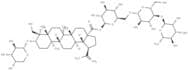
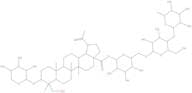
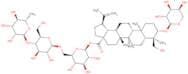
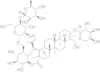
Pulchinenoside B is a natural glycoside compound primarily derived from the plant species Pulchranthus, which is known for its medicinal properties. This compound belongs to the class of saponins, characterized by their ability to form stable foams in aqueous solutions due to their amphiphilic nature. Pulchinenoside B exhibits a range of biological activities, including anti-inflammatory, antioxidant, and potential anticancer effects, making it of interest in pharmacological research. Its structure typically consists of a sugar moiety linked to a steroid or triterpenoid aglycone, which contributes to its bioactivity. The compound is often studied for its effects on various cellular pathways and its potential therapeutic applications. Additionally, Pulchinenoside B may interact with cell membranes and influence membrane fluidity, further impacting its biological functions. As with many natural products, the extraction and purification processes are crucial for obtaining this compound in sufficient purity for research and potential therapeutic use.
Formula:C53H86O22
Synonyms:- Anemoside B
- Lup-20(29)-en-28-oic acid, 3-(α-L-arabinopyranosyloxy)-23-hydroxy-, O-6-deoxy-α-L-mannopyranosyl-(1→4)-O-β-D-glucopyranosyl-(1→6)-β-D-glucopyranosyl ester, (3β,4α)-
- Pulchinenoside B
Sort by
Purity (%)
0
100
|
0
|
50
|
90
|
95
|
100
Found 3 products.
Pulchinenoside B
CAS:Compound T2S0062 is a natural product for research related to life sciences. The catalog number is T2S0062 and the CAS number is 135247-95-9.Formula:C59H96O26Color and Shape:SolidMolecular weight:1221.39Pulchinenoside B
CAS:Pulchinenoside B is a type of triterpenoid saponin, which is a naturally occurring compound found primarily in certain plant species, specifically within the genus Pulsatilla. These saponins are glycosides that consist of a sugar moiety linked to a triterpene structure, and they play a role in the plant's defensive mechanisms.
Formula:C59H96O26Purity:Min. 95%Molecular weight:1,221.38 g/mol