CAS 138-52-3
:Salicin
Description:
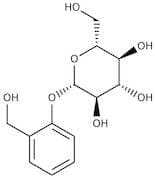
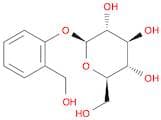
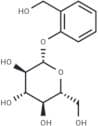
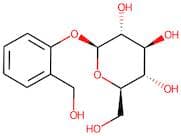
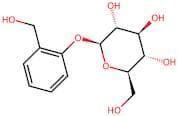
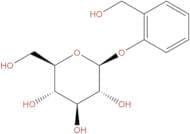
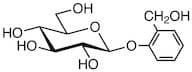
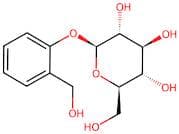
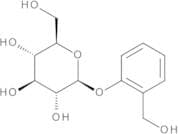
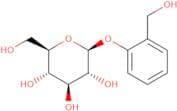
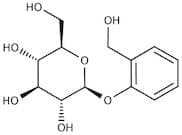
Salicin is a naturally occurring compound classified as a phenolic glycoside, primarily found in the bark of willow trees and other plants. Its chemical structure consists of a glucose molecule linked to salicyl alcohol, which contributes to its medicinal properties. Salicin is known for its analgesic and anti-inflammatory effects, making it a precursor to the synthesis of salicylic acid, a key ingredient in aspirin. The substance is typically a white, crystalline powder that is soluble in water and alcohol, with a slightly bitter taste. Salicin is often used in herbal medicine and has been studied for its potential benefits in treating conditions such as pain and fever. Additionally, it has antioxidant properties, which may contribute to its therapeutic effects. While generally considered safe in moderate amounts, excessive consumption can lead to side effects similar to those of salicylates, including gastrointestinal discomfort. Overall, salicin represents an important compound in both traditional and modern pharmacology.
Formula:C13H18O7
InChI:InChI=1S/C13H18O7/c14-5-7-3-1-2-4-8(7)19-13-12(18)11(17)10(16)9(6-15)20-13/h1-4,9-18H,5-6H2/t9-,10-,11+,12-,13-/m1/s1
InChI key:InChIKey=NGFMICBWJRZIBI-UJPOAAIJSA-N
SMILES:O([C@@H]1O[C@H](CO)[C@@H](O)[C@H](O)[C@H]1O)C2=C(CO)C=CC=C2
Synonyms:- 1-β-<span class="text-smallcaps">D</span>-Glucosyloxy-2-hydroxymethylbenzene
- 1-β-D-Glucosyloxy-2-hydroxymethylbenzene
- 2-(Hydroxymethyl)Phenyl Hexopyranoside
- 2-(Hydroxymethyl)phenyl β-<span class="text-smallcaps">D</span>-glucopyranoside
- 2-(Hydroxymethyl)phenyl-β-D-glucopyranoside
- 2-(hydroxymethyl)phenyl beta-D-altropyranoside
- 2-(hydroxymethyl)phenyl beta-D-glucopyranoside
- 2-(hydroxymethyl)phenyl beta-L-glucopyranoside
- <span class="text-smallcaps">D</span>-Salicin
- D-Salicin (1.05055)
- Nsc 5751
- Salicin
- Salicine
- Salicoside
- Salicyl alcohol glucoside
- Saligenin β-<span class="text-smallcaps">D</span>-glucopyranoside
- Saligenin β-D-glucopyranoside
- White Willow Bark Extract
- White Willow Bark P.E.
- alpha-hydroxy-o-tolyl beta-D-glucopyranoside
- o-(Hydroxymethyl)phenyl β-<span class="text-smallcaps">D</span>-glucopyranoside
- o-(Hydroxymethyl)phenyl β-D-glucopyranoside
- α-Hydroxy-o-tolyl-β-D-glucopyranosid
- α-hydroxy-o-tolyl β-D-glucopyranoside
- β-<span class="text-smallcaps">D</span>-Glucopyranoside, 2-(hydroxymethyl)phenyl
- β-D-Glucopyranoside d'α-hydroxy-o-tolyle
- β-D-Glucopyranoside, 2-(hydroxymethyl)phenyl
- β-D-glucopiranosido de α-hidroxi-o-tolilo
- See more synonyms
Sort by
Purity (%)
0
100
|
0
|
50
|
90
|
95
|
100
Found 20 products.
D-(-)-Salicin, 99%
CAS:Salicin is used as an analgesic and antipyretic. It is also used as a substrate for beta-glucosidase and an inhibitor of Cox. It finds application as an anti-inflammatory agent. It is involved in antipyretic action without causing gastric injury. This Thermo Scientific Chemicals brand product was orFormula:C13H18O7Purity:99%Color and Shape:Crystals or powder or crystalline powder, White to pale creamMolecular weight:286.28D-(-)-Salicin
CAS:D-(-)-Salicin analytical standard provided with w/w absolute assay, to be used for quantitative titration.Formula:C13H18O7Purity:(HPLC) ≥99%Color and Shape:PowderMolecular weight:286.28SALICIN CRS
CAS:SALICIN CRSFormula:C13H18O7Color and Shape:Crystalline Powder. White. Powder.Molecular weight:286.2778D-Salicin
CAS:Other glycosides, natural or reproduced by synthesis, and their salts, ethers, esters and other derivativesFormula:C13H18O7Color and Shape:White Off-White PowderMolecular weight:286.10525β-D-Glucopyranoside, 2-(hydroxymethyl)phenyl
CAS:Formula:C13H18O7Purity:98%Color and Shape:SolidMolecular weight:286.2778Salicin
CAS:Salicin (Salicine), a phenol β-glycoside produced from willow bark, shows anti-inflammatory functions.Formula:C13H18O7Purity:98.2% - 99.86%Color and Shape:White Crystals Or PowderMolecular weight:286.28D-Salicin
CAS:Formula:C13H18O7Purity:≥ 98.0%Color and Shape:White to off-white powder or crystalsMolecular weight:286.28Salicin
CAS:Formula:C13H18O7Purity:>98.0%(HPLC)Color and Shape:White to Almost white powder to crystalMolecular weight:286.28Salicin
CAS:Natural glycosideFormula:C13H18O7Purity:≥ 98.0 % (HPLC)Color and Shape:PowderMolecular weight:286.28D-Salicin
CAS:Applications Salicin is an anti-inflammatory agent produced by the bark of a willow tree. Analgesic.
References Schmid, B. et al.: Eur J Pharmacol., 57, 387 (2001);Formula:C13H18O7Color and Shape:WhiteMolecular weight:286.28D-Salicin
CAS:D-Salicin is a naturally occurring compound, classified as a biologically active glycoside. It is acquired from the bark of willow trees, primarily species within the genus Salix. The primary mode of action of D-Salicin involves its metabolic conversion into salicylic acid within the human body. This conversion occurs in the gastrointestinal tract and bloodstream, ultimately displaying effects similar to non-steroidal anti-inflammatory drugs (NSAIDs).Formula:C13H18O7Purity:Min. 98 Area-%Color and Shape:White Off-White PowderMolecular weight:286.28 g/molD-Salicin, natural
CAS:D-Salicin is a naturally occurring anti-inflammatory compound, which is derived from the bark of willow trees, primarily of the genus Salix. As a prodrug, D-Salicin is metabolized into salicylic acid in the body, where it acts by inhibiting the cyclooxygenase (COX) enzymes. This inhibition leads to a reduction in the synthesis of pro-inflammatory prostaglandins and thromboxanes, thereby exerting its anti-inflammatory and analgesic effects.
Formula:C13H18O7Purity:Min. 90.0 Area-%Molecular weight:286.28 g/molRef: 3D-S-1498
-Unit-kgkgTo inquire1kgTo inquire5kgTo inquire250gTo inquire500gTo inquire2500gTo inquireD-(-)-Salicin extrapure
CAS:Formula:C13H18O7Color and Shape:White, Crystalline powder, Clear, ColourlessMolecular weight:286.28(2R,3S,4S,5R,6S)-2-(Hydroxymethyl)-6-(2-(hydroxymethyl)phenoxy)tetrahydro-2H-pyran-3,4,5-triol
CAS:Formula:C13H18O7Purity:95.0%Color and Shape:Solid, White to grey powderMolecular weight:286.28