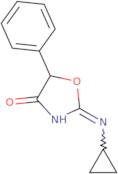
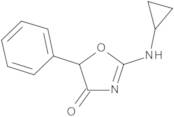
CAS 14461-91-7
:Cyclazodone
Description:
Cyclazodone, with the CAS number 14461-91-7, is a chemical compound that belongs to the class of stimulants. It is structurally related to other psychoactive substances and is known for its potential effects on the central nervous system. Cyclazodone is characterized by its ability to enhance alertness and cognitive function, making it of interest in both research and potential therapeutic applications. The compound exhibits a unique chemical structure that contributes to its pharmacological properties, including its interaction with neurotransmitter systems. While it has been studied for its stimulant effects, the safety profile, long-term effects, and potential for abuse are important considerations in its evaluation. Cyclazodone is not widely used in clinical practice, and its legal status may vary by region, reflecting concerns about its safety and efficacy. As with many psychoactive substances, further research is necessary to fully understand its mechanisms of action and potential therapeutic uses.
Formula:C12H12N2O2
InChI:InChI=1S/C12H12N2O2/c15-11-10(8-4-2-1-3-5-8)16-12(14-11)13-9-6-7-9/h1-5,9-10H,6-7H2,(H,13,14,15)
InChI key:InChIKey=DNRKTAYPGADPGW-UHFFFAOYSA-N
SMILES:O=C1C(OC(NC2CC2)=N1)C3=CC=CC=C3
Synonyms:- 2-(Cyclopropylamino)-4,5-dihydro-5-phenyl-4-oxazolon
- 2-(Cyclopropylamino)-5-phenyl-2-oxazolin-4-one
- 2-(Cyclopropylamino)-5-phenyl-4(5H)-oxazolone
- 2-(cyclopropylamino)-5-phenyl-1,3-oxazol-4(5H)-one
- 2-Oxazolin-4-one, 2-(cyclopropylamino)-5-phenyl-
- 4(5H)-Oxazolone, 2-(cyclopropylamino)-5-phenyl-
- 4(5H)-Oxazolone, 2-(cyclopropylamino)-5-phenyl- (9CI)
- Brn 3959190
- Ciclazodona
- Ciclazodona [INN-Spanish]
- Cyclazodone [INN:DCF]
- Cyclazodonum
- Cyclazodonum [INN-Latin]
- Cyclopropylpemoline
- Ld 3695
- Phenyl-5 cyclopropylamino-2 oxazolinone-4
- Unii-O8U55Zrl9K
- See more synonyms
Sort by
Purity (%)
0
100
|
0
|
50
|
90
|
95
|
100
Found 2 products.
Cyclopropyl pemoline
CAS:Cyclopropyl pemoline is a drug that has been used as an anabolic agent. It was first synthesized in the 1930s and was found to have stimulant properties. Cyclopropyl pemoline has been found to be a substrate for hepatic microsomal enzymes and can undergo oxidation, hydroxylation, or conjugation reactions. The most common route of administration is oral ingestion. The pharmacokinetics of cyclopropyl pemoline are not well understood due to its limited availability, but it is thought to be metabolized by the liver. This drug has been shown to increase blood pressure in rats and may contribute to cardiovascular problems in humans. Cyclopropyl pemoline does not bind covalently with proteins and is excreted unchanged in urine.END>Formula:C12H12N2O2Purity:Min. 95%Color and Shape:PowderMolecular weight:216.24 g/molCyclopropyl Pemoline
CAS:Controlled ProductApplications Pemoline (P220100) and Cyclopropylpemoline seem to be basically central stimulants with a mechanism of action similar to that of d-Amphetamine.
Not a dangerous good if item is equal to or less than 1g/ml and there is less than 100g/ml in the package
References Politi, L., et al.: Clin. Chim. Acta., 386, 46 (2007), Thevis, M., et al.: Anal. Bioanal. Chem., 388, 1351 (2007), Kuuranne, T., et al.: Drug Metab. Dispos., 36, 571 (2008),Formula:C12H12N2O2Color and Shape:NeatMolecular weight:216.24