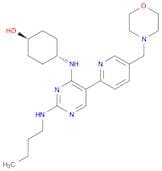
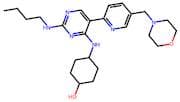
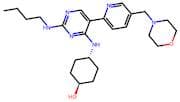
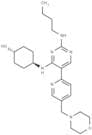
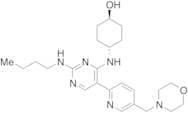
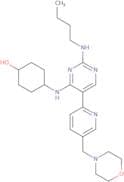
CAS 1493694-70-4
:UNC2250
Description:
UNC2250, with the CAS number 1493694-70-4, is a chemical compound that has garnered attention in the field of medicinal chemistry, particularly for its potential applications in cancer research. It is classified as a small molecule inhibitor, specifically targeting certain protein interactions that are crucial for tumor growth and proliferation. The compound exhibits a unique structure that allows it to interact selectively with its biological targets, which may lead to the modulation of signaling pathways involved in cancer progression. UNC2250 has been studied for its efficacy in preclinical models, demonstrating promising results in inhibiting the growth of various cancer cell lines. Its pharmacokinetic properties, including solubility and stability, are also important for its development as a therapeutic agent. Ongoing research aims to further elucidate its mechanism of action, optimize its chemical properties, and evaluate its safety and effectiveness in clinical settings. Overall, UNC2250 represents a significant advancement in the search for targeted cancer therapies.
Sort by
Purity (%)
0
100
|
0
|
50
|
90
|
95
|
100
Found 6 products.
Trans-4-((2-(Butylamino)-5-(5-(Morpholinomethyl)Pyridin-2-Yl)Pyrimidin-4-Yl)Amino)Cyclohexanol
CAS:Trans-4-((2-(Butylamino)-5-(5-(Morpholinomethyl)Pyridin-2-Yl)Pyrimidin-4-Yl)Amino)CyclohexanolPurity:99%Molecular weight:440.58g/molUNC2250
CAS:UNC2250 is an effective and specific Mer inhibitor (IC50=1.7 nM).Formula:C24H36N6O2Purity:98.57% - 99.87%Color and Shape:SolidMolecular weight:440.58(1r,4r)-4-((2-(Butylamino)-5-(5-(morpholinomethyl)pyridin-2-yl)pyrimidin-4-yl)amino)cyclohexanol
CAS:Controlled ProductApplications (1r,4r)-4-((2-(Butylamino)-5-(5-(morpholinomethyl)pyridin-2-yl)pyrimidin-4-yl)amino)cyclohexanol inhibits steady-state phosphorylation of endogenous Mer and blocks ligand-stimulated activation of a chimeric EGFR-Mer protein. (1r,4r)-4-((2-(Butylamino)-5-(5-(morpholinomethyl)pyridin-2-yl)pyrimidin-4-yl)amino)cyclohexanol also decreases colony-forming potential in rhabdoid and NSCLC tumor cells.
References Zhang, W., et. al.: J. Med. Chem., 56, 9683 (2013)Formula:C24H36N6O2Color and Shape:NeatMolecular weight:440.58UNC2250
CAS:UNC2250 is a monoclonal antibody that binds to the death protein, which is involved in apoptosis. It has been shown to be a potent inhibitor of colony-stimulating factor (CSF) and has a novel mechanism of action. UNC2250 binds to the intramolecular hydrogen in the death protein, preventing it from binding to other proteins and inhibiting their activity. This leads to inhibition of cell proliferation and apoptosis induction. UNC2250 also prevents platelet aggregation by inhibiting ADP-induced activation of phospholipase A2. UNC2250 has pharmacokinetic properties that are similar to those of erythropoietin because they both bind to the same receptor on cells. The hydroxyl group on UNC2250 allows it to form hydrogen bonds with water molecules, while the hydrogen bond between UNC2250 and erythropoietin prevents the latter from forming hydrogen bonds with water molecules.Formula:C24H36N6O2Purity:Min. 95%Molecular weight:440.58 g/mol