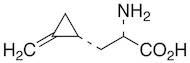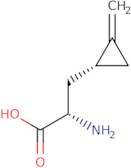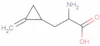
CAS 156-56-9
:Hypoglycin A
- (2S,4R)-Hypoglycin A
- (αS,1R)-α-Amino-2-methylenecyclopropanepropanoic acid
- 3-(2-Methylidenecyclopropyl)Alanine
- 3-[(1S)-2-methylidenecyclopropyl]-L-alanine
- <span class="text-smallcaps">L</span>-α-Amino-β-methylenecyclopropanepropionic acid
- Cyclopropanealanine, 2-methylene-
- Cyclopropanepropanoic acid, α-amino-2-methylene-, (αS,1R)-
- Cyclopropanepropanoic acid, α-amino-2-methylene-, [S-(R*,S*)]-
- Cyclopropanepropionic acid, α-amino-2-methylene-, <span class="text-smallcaps">L</span>-(+)-
- Hypoglycin
- Hypoglycin A
- Hypoglycine
- NSC 303803
- hypoglycine A
- α-Amino-2-methylenecyclopropanepropionic acid
- α-Amino-β-(2-methylenecyclopropyl)propionic acid
- β-(Methylenecyclopropyl)alanine
- See more synonyms
Hypoglycine A (85%)
CAS:Controlled ProductFormula:C7H11NO2Purity:85%Color and Shape:NeatMolecular weight:141.17Hypoglycine
CAS:Hypoglycine is an anti-diabetic drug that belongs to the class of hypoglycin. It has been shown to have a high bioavailability in vivo and can be used for the treatment of diabetic neuropathy. Hypoglycine inhibits fatty acid synthesis and also has physiological effects on liver cells, which may be due to its ability to inhibit ATP production. This drug also has an effect on epidermal growth factor, which may account for its effect on skin diseases such as psoriasis. Hypoglycine is used in the analytical method for measuring the concentration of glucose in blood samples by using a linear calibration curve. The sample preparation involves adding acid complex to the sample and then adding enzymes inhibitors. The enzyme inhibitors are added to prevent any interference with the measurement of glucose levels by preventing any other compounds from binding to the glucose molecules.
Formula:C7H11NO2Purity:Min. 95%Color and Shape:PowderMolecular weight:141.17 g/mol