CAS 1621-56-3
:7-Methoxyisoflavone
Description:
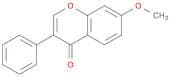
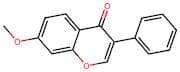
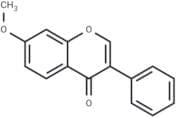
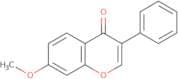
7-Methoxyisoflavone, with the CAS number 1621-56-3, is a synthetic isoflavone derivative known for its potential biological activities. It is characterized by a methoxy group (-OCH3) attached to the 7-position of the isoflavone structure, which is a class of compounds commonly found in legumes and other plants. This modification can influence its solubility, bioavailability, and interaction with biological targets. 7-Methoxyisoflavone has garnered interest in the fields of pharmacology and nutrition due to its reported effects, including antioxidant properties, potential anti-inflammatory activity, and possible roles in muscle growth and fat loss. It is often studied for its effects on hormone modulation, particularly in relation to estrogenic activity, making it of interest in both health and fitness contexts. As with many compounds, the specific effects and mechanisms of action can vary based on dosage, formulation, and individual biological factors. Further research is ongoing to fully elucidate its pharmacological profile and therapeutic potential.
Formula:C16H12O3
InChI:InChI=1S/C16H12O3/c1-18-12-7-8-13-15(9-12)19-10-14(16(13)17)11-5-3-2-4-6-11/h2-10H,1H3
InChI key:InChIKey=IECSQLKWZBEUGA-UHFFFAOYSA-N
SMILES:O=C1C=2C(=CC(OC)=CC2)OC=C1C3=CC=CC=C3
Synonyms:- 3-Phenyl-7-methoxy-4H-1-benzopyran-4-one
- 4H-1-benzopyran-4-one, 7-methoxy-3-phenyl-
- 7-Methoxy Isoflavone
- 7-Methoxy-3-phenyl-4H-1-benzopyran-4-one
- 7-Methoxyisoflavone
- Aurora 15641
- Isoflavone, 7-methoxy-
- 7-Methoxy-3-phenyl-4H-chromen-4-one
Sort by
Purity (%)
0
100
|
0
|
50
|
90
|
95
|
100
Found 5 products.
4H-1-Benzopyran-4-one, 7-methoxy-3-phenyl-
CAS:Formula:C16H12O3Purity:98%Color and Shape:SolidMolecular weight:252.26477-Methoxyisoflavone
CAS:7-Methoxyisoflavone is an activator of adenosine monophosphate-activated protein kinase (AMPK).Formula:C16H12O3Purity:99.93% - 99.94%Color and Shape:SolidMolecular weight:252.267-Methoxyisoflavone
CAS:7-Methoxyisoflavone is a synthetic isoflavone, which is a type of flavonoid compound typically found in plants. This compound, however, is artificially synthesized in laboratories, differentiating it from naturally occurring isoflavones found in sources like soy and other legumes. Its structure allows it to act as a non-hormonal anabolic agent, meaning it purportedly enhances anabolic processes without directly interacting with hormonal pathways, such as those involving testosterone or other steroids.Formula:C16H12O3Purity:Min. 95%Molecular weight:252.26 g/mol