CAS 1643-39-6
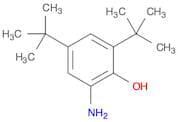
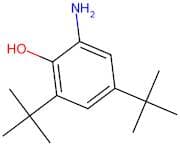
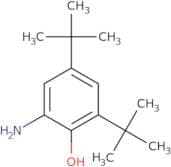
:Phenol, 2-amino-4,6-bis(1,1-dimethylethyl)-
Phenol, 2-amino-4,6-bis(1,1-dimethylethyl)-
CAS:Formula:C14H23NOPurity:98%Color and Shape:SolidMolecular weight:221.33852-Amino-4,6-di-tert-butylphenol
CAS:2-Amino-4,6-di-tert-butylphenolPurity:98%Molecular weight:221.344g/mol2-Amino-4,6-di-tert-butylphenol
CAS:Formula:C14H23NOPurity:98%Color and Shape:No data available.Molecular weight:221.3442-Amino-4,6-di-tert-butylphenol
CAS:2-Amino-4,6-di-tert-butylphenol is a phenolic compound that has antiviral properties. It reacts with nucleophiles to form 2-amino-4,6-di-(tertiary butyl)phenoxide and 2,4,6-triaminophenol. The functional theory for the antiviral activity of 2-amino-4,6-di-(tertiary butyl)phenol is based on its ability to react with nucleophiles and form products that inhibit viral replication. This agent has been shown to be effective against Mycobacterium tuberculosis and Mycobacterium avium complex in cell culture studies. 2AAP inhibits the growth of human cancer cells in vitro by blocking the synthesis of DNA and RNA. It also inhibits protein synthesis by binding to methylamine groups in proteins and inhibiting the release of aminoacyl adenosine triphosphate (ATP
Formula:C14H23NOPurity:Min. 95%Molecular weight:221.34 g/mol