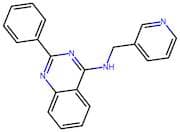
CAS 166039-38-9
:4-Quinazolinamine, 2-phenyl-N-(3-pyridinylmethyl)-
Description:
4-Quinazolinamine, 2-phenyl-N-(3-pyridinylmethyl)-, identified by CAS number 166039-38-9, is a chemical compound that belongs to the class of quinazolinamines, which are characterized by a fused bicyclic structure containing a quinazoline moiety. This compound features a phenyl group and a pyridinylmethyl substituent, contributing to its potential biological activity. Typically, quinazolinamine derivatives exhibit a range of pharmacological properties, including anti-cancer, anti-inflammatory, and antimicrobial activities. The presence of the pyridine ring may enhance its interaction with biological targets, such as enzymes or receptors. The compound's solubility, stability, and reactivity can vary based on its substituents and the overall molecular structure. As with many organic compounds, its synthesis may involve multi-step reactions, and it may be characterized using techniques such as NMR spectroscopy, mass spectrometry, and X-ray crystallography. Understanding its properties and behavior in biological systems is crucial for exploring its potential applications in medicinal chemistry and drug development.
Formula:C20H16N4
Synonyms:- 2-Phenyl-N-(pyridin-3-ylmethyl)quinazolin-4-amine
- 4-Quinazolinamine, 2-phenyl-N-(3-pyridinylmethyl)-
- WAY-321002
Sort by
Purity (%)
0
100
|
0
|
50
|
90
|
95
|
100
Found 2 products.
2-Phenyl-N-(pyridin-3-ylmethyl)quinazolin-4-amine
CAS:2-Phenyl-N-(pyridin-3-ylmethyl)quinazolin-4-aminePurity:98%Molecular weight:312.38g/molEGFR-IN-146
CAS:EGFR-IN-146 is an EGFR inhibitor that suppresses the EGFR signaling pathway and improves insulin sensitivity by activating the AMPK pathway. It effectively reduces blood glucose levels and body weight, showing great potential in the study of diabetes and obesity.Formula:C20H16N4Color and Shape:SolidMolecular weight:312.368