CAS 179324-22-2
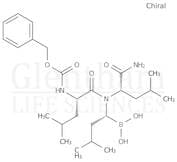
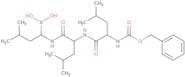
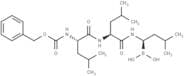
:Z-Leu-Leu-Leu-B(OH)2 (MG262)
- L-Leucinamide, N-[(phenylmethoxy)carbonyl]-L-leucyl-N-[(1R)-1-borono-3-methylbutyl]-
- [(1R)-3-methyl-1-[[(2S)-4-methyl-2-[[(2S)-4-methyl-2-(phenylmethoxycarbonylamino)pentanoyl]amino]pentanoyl]amino]butyl]boronic acid
- Proteasome Inhibitor III - Calbiochem
- Z-Leu-Leu-Leu-B(OH)2 (MG262)
Proteasome Inhibitor III
CAS:Proteasome Inhibitor III (PI3) is a natural compound that has been shown to have cytotoxic activity against tumor cells. PI3 inhibits the protease activity of the 26S proteasome, which leads to the accumulation of oxidized proteins and DNA damage. PI3 also induces autophagy and mitophagy, which are cellular processes that help protect against oxidative injury. PI3 also interferes with signal pathways such as the p38/JNK pathway and the STAT-3 pathway, leading to increased levels of c-jun phosphorylation and colony-stimulating factor (CSF), respectively. PI3 is also able to inhibit k562 cells proliferation in vitro by blocking cell cycle progression at G2/M phase. The molecular pathogenesis of prostate cancer is not well understood; however, it may be due in part to increased levels of reactive oxygen species within mitochondria.
Formula:C25H42BN3O6Purity:Min. 95%Molecular weight:491.43 g/molMG-262
CAS:MG-262 is a reversible proteasome inhibitor with multiple biological activities [1] [2] [3].Formula:C25H42BN3O6Color and Shape:SolidMolecular weight:491.43