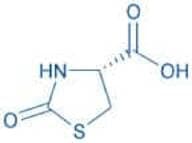
CAS 19771-63-2
:Procysteine
Description:
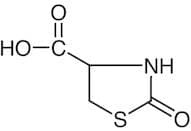
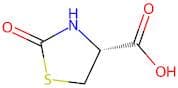
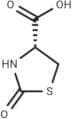
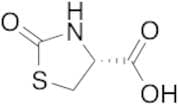
Procysteine, with the CAS number 19771-63-2, is a synthetic amino acid derivative of cysteine. It is characterized by the presence of a thiol (-SH) group, which is crucial for its biochemical properties, particularly in redox reactions and protein structure stabilization. Procysteine is known for its potential antioxidant properties, as it can help in the neutralization of free radicals. This compound is often studied for its role in cellular processes, including protein synthesis and detoxification pathways. Additionally, procysteine may have implications in therapeutic applications, particularly in conditions related to oxidative stress. Its solubility in water and ability to form disulfide bonds further enhance its biological relevance. As with many amino acids, procysteine can participate in various metabolic pathways, making it a subject of interest in both biochemical research and pharmaceutical development. However, specific applications and effects can vary, and ongoing research continues to explore its full potential in health and disease contexts.
Formula:C4H5NO3S
InChI:InChI=1S/C4H5NO3S/c6-3(7)2-1-9-4(8)5-2/h2H,1H2,(H,5,8)(H,6,7)/t2-/m0/s1
InChI key:InChIKey=BMLMGCPTLHPWPY-REOHCLBHSA-N
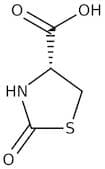
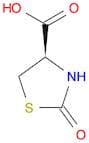
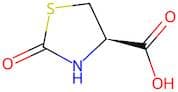
SMILES:C(O)(=O)[C@H]1NC(=O)SC1
Synonyms:- (-)-2-Oxo-4-thiazolidinecarboxylic acid
- (4R)-2-Oxo-1,3-thiazolidine-4-carboxylic acid
- (4R)-2-Oxo-4-thiazolidinecarboxylic acid
- (4R)-2-Oxothiazolidine-4-carboxylic acid
- (R)-(-)-2-Oxothiazolidine-4-carboxylic acid
- 2-Oxo-<span class="text-smallcaps">L</span>-thiazolidine-4-carboxylic acid
- 4-Thiazolidinecarboxylic acid, 2-oxo-, (4R)-
- 4-Thiazolidinecarboxylic acid, 2-oxo-, (R)-
- 4-Thiazolidinecarboxylic acid, 2-oxo-, <span class="text-smallcaps">L</span>-
- <span class="text-smallcaps">L</span>-2-Oxo-4-thiazolidinecarboxylic acid
- L-(-)-2-Oxo-4-thiazolidinecarboxylic Acid
- L-2-Thiazolidinone-4-carboxylic acid
- R-2-Oxo-1,3-thiazolidine-4-carboxylic acid
- See more synonyms
Sort by
Purity (%)
0
100
|
0
|
50
|
90
|
95
|
100
Found 10 products.
L-2-Thiazolidinone-4-carboxylic Acid
CAS:Formula:C4H5NO3SPurity:>97.0%(T)(HPLC)Color and Shape:White to Almost white powder to crystalMolecular weight:147.15(R)-(-)-2-Oxothiazolidine-4-carboxylic acid
CAS:Reagent for hepatic glutathione studiesFormula:C4H5NO3SColor and Shape:White, Crystals or crystalline powderMolecular weight:147.154-Thiazolidinecarboxylic acid, 2-oxo-, (4R)-
CAS:Formula:C4H5NO3SPurity:95%Color and Shape:SolidMolecular weight:147.1524Oxothiazolidinecarboxylic acid
CAS:Oxothiazolidinecarboxylic acidPurity:≥95%Molecular weight:147.15g/mol(R)-2-Oxothiazolidine-4-Carboxylic Acid
CAS:(R)-2-Oxothiazolidine-4-Carboxylic AcidPurity:98%Molecular weight:147.15g/molOxothiazolidinecarboxylic acid
CAS:Oxothiazolidinecarboxylic acid (Procysteine) is a precursor to glutathione (GSH) which is an important antioxidant in plants, animals, and fungi.Formula:C4H5NO3SPurity:98.33% - 98.8%Color and Shape:White To Off-White PowderMolecular weight:147.15(4R)-2-oxo-1,3-thiazolidine-4-carboxylic acid
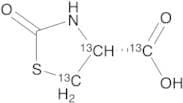
CAS:Formula:C4H5NO3SPurity:95%Color and Shape:SolidMolecular weight:147.15(R)-(-)-2-Oxothiazolidine-4-carboxylic-13C3 Acid
CAS:Controlled ProductApplications Isotope labelled (R)-(-)-2-Oxothiazolidine-4-carboxylic Acid (O870505), a precursor to glutathione (GSH) which is an important antioxidant in plants, animals and fungi.
References Meister, A., et al,: J. Am. Coll. Nutr., 5, 137 (1986);Formula:C3CH5NO3SColor and Shape:NeatMolecular weight:150.13(R)-(-)-2-Oxothiazolidine-4-carboxylic Acid
CAS:Controlled ProductFormula:C4H5NO3SColor and Shape:NeatMolecular weight:147.15L-2-Oxothiazolidine-4-carboxylic acid
CAS:A strong antioxidant and a cysteine prodrug. OTC, a 5-oxoproline analog, is metabolized by 5-oxoprolinase and converted to cysteine, the rate-limiting amino acid for glutathione synthesis. It may therefore be useful in restoring depleted glutathione stores in HIV-1-infected persons, which may in turn inhibit the progression of HIV disease. OTC may be inserted in place of Pyr. The chemical behaviour of OTC was studied by MacLaren. OTC was employed in the total synthesis of Latrunculin A.
Formula:C4H5NO3SPurity:> 99%Color and Shape:White PowderMolecular weight:147.16