CAS 2002-44-0
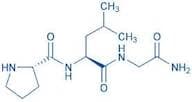
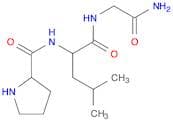
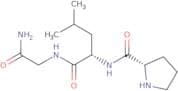
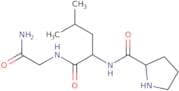
:L-Prolyl-L-leucylglycinamide
- 2-Pyrrolidinecarboxamide, N-[1-[(carbamoylmethyl)carbamoyl]-3-methylbutyl]-
- 26: PN: US6093797 PAGE: 15 claimed protein
- 27: PN: US6093797 PAGE: 15 claimed protein
- 2: PN: WO2009039992 PAGE: 107 claimed protein
- 7-9-Oxytocin
- <span class="text-smallcaps">L</smallcap>-Proline-<smallcap>L</span>-leucine-glycine-amide
- <span class="text-smallcaps">L</smallcap>-Prolyl-<smallcap>L</span>-leucyl-glycine amide
- <span class="text-smallcaps">L</smallcap>-Prolyl-<smallcap>L</span>-leucylglycinamide
- <span class="text-smallcaps">L</smallcap>-Prolyl-<smallcap>L</span>-leucylglycylamide
- Glycinamide, <span class="text-smallcaps">L</smallcap>-prolyl-<smallcap>L</span>-leucyl-
- H-Pro-Leu-Gly-NH2
- H-Pro-Leu-Gly-NH<sub>2</sub>
- L-Prolyl-L-leucylglycinamide, hemihydrate
- L-prolyl-L-leucylglycinamide
- MSH-release inhibiting factor I
- Melanocyte-Stimulating Hormone-Release Inhibiting Factor
- Melanocyte-stimulating hormone release-inhibiting factor 1
- Melanocyte-stimulating hormone release-inhibiting factor I
- Melanocyte-stimulating hormone release-inhibiting factor I (ox)
- Melanostatin I (ox)
- Mif-1
- Mif-I
- Oxytocin C-terminal tripeptide
- Pro-Leu-Gly-NH<sub>2</sub>
- Prolyleucyl-glycinamide
- Prolylleucylglycine amide
- Pro-Leu-Gly-NH2
- Glycinamide, L-prolyl-L-leucyl-
- L-Proline-L-leucine-glycine-amide
- Melanocyte-stimulati
- (2S)-N-[(1S)-1-[(2-amino-2-keto-ethyl)carbamoyl]-3-methyl-butyl]pyrrolidine-2-carboxamide
- Melanostatin, MIF-I, Oxytocin fragment 7-9
- MIF, AMIDE
- MELANOCYTE STIMULATING HORMONE RELEASE INHIBITING FACTOR, AMIDE
- (2S)-N-[(2S)-1-[(2-amino-2-oxoethyl)amino]-4-methyl-1-oxopentan-2-yl]pyrrolidine-2-carboxamide
- MSH RELEASE INHIBITING FACTOR, AMIDE
- MELANOCYTE STIMULATING HORMONE RELEASING FACTOR
- PLG-NH2
- (2S)-N-[(2S)-1-[(2-azanyl-2-oxo-ethyl)amino]-4-methyl-1-oxo-pentan-2-yl]pyrrolidine-2-carboxamide
- PRO-LEU-GLY AMIDE;MIF-I;OXYTOCIN FRAGMENT 7-9
- MSH-RELEASE INHIBITING FACTOR
- MELANOSTATIN
- (S)-N-((S)-1-((2-Amino-2-oxoethyl)amino)-4-methyl-1-oxopentan-2-yl)pyrrolidine-2-carboxamide
- MSH-R-IF
- Melanostatin I
- MIF-I, Melanostatin, Melanotropin Release-Inhibiting Factor
- PRO-LEU-GLY AMIDE
- See more synonyms
Melanocyte-Stimulating Hormone-Release Inhibiting Factor
CAS:MIF-I, the C-terminal tripeptide of oxytocin, has been shown to be active in numerous behavioral tests and clinical situations.Formula:C13H24N4O3Purity:> 99%Color and Shape:WhiteMolecular weight:284.36(S)-N-((S)-1-((2-Amino-2-oxoethyl)amino)-4-methyl-1-oxopentan-2-yl)pyrrolidine-2-carboxamide
CAS:Formula:C13H24N4O3Purity:95.0%Molecular weight:284.36Melanocyte-Stimulating Hormone-Release Inhibiting Factor
CAS:Melanocyte-Stimulating Hormone-Release Inhibiting Factor (MSH-RF) is a synthetic peptide that inhibits the release of melanin from melanocytes. MSH-RF has been shown to be a useful treatment for melatonin deficiency, which may be related to immune system disorders such as infectious diseases and autoimmune diseases. It has also been shown to have significant interactions with other hormones such as dopamine, affecting locomotor activity and the ph optimum, among other biological properties. The structure of MSH-RF has been determined using X-ray crystallography on an amide bond. This peptide hormone is found in human serum and is involved in regulating camp levels.
Formula:C13H24N4O3Purity:Min. 95%Molecular weight:284.35 g/molMSH-Release Inhibiting Factor
CAS:MSH-Release Inhibiting Factor (MRIF) has been shown to be a potent inhibitor of the release of proinflammatory cytokines. It is derived from the acid methyl ester of mouse serum, and has been shown to inhibit the release of tumor necrosis factor-α (TNF-α) in animal studies. MRIF has also been shown to have anti-diabetic effects in mice. MRIF inhibits the production of inflammatory cytokines by blocking TNF-α at a molecular level. This protein binds to progesterone receptor and prevents it from interacting with its ligand, which is necessary for cancer cell growth. The expression system for this protein is E. coli, and it can be used as an immunosuppressant in animal studies.
MRIF also blocks TNF-α activity by inhibiting transcriptional activation of NFκB and AP-1, which are proteins that regulate gene expression.Formula:C13H24N4O3H2OPurity:Min. 95%Molecular weight:293.36 g/mol