CAS 20274-69-5
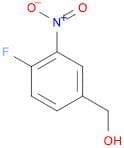
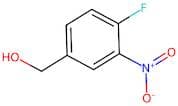
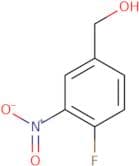
:(4-Fluoro-3-nitrophenyl)methanol
Description:
(4-Fluoro-3-nitrophenyl)methanol is an organic compound characterized by the presence of a phenolic structure with both a fluorine and a nitro group substituted on the aromatic ring. The compound features a hydroxymethyl group (-CH2OH) attached to the aromatic system, which contributes to its reactivity and potential applications in various chemical reactions. The fluorine atom, being electronegative, can influence the compound's electronic properties, potentially enhancing its reactivity in nucleophilic substitution reactions. The nitro group, known for its electron-withdrawing properties, can further modify the compound's reactivity and stability. This compound may be utilized in the synthesis of pharmaceuticals, agrochemicals, or as an intermediate in organic synthesis. Its physical properties, such as solubility and melting point, would depend on the specific interactions of the functional groups present. Safety data should be consulted for handling, as compounds with nitro groups can be sensitive and potentially hazardous. Overall, (4-Fluoro-3-nitrophenyl)methanol is a versatile compound with significant implications in chemical research and industry.
Formula:C7H6FNO3
InChI:InChI=1/C7H6FNO3/c8-6-2-1-5(4-10)3-7(6)9(11)12/h1-3,10H,4H2
SMILES:c1cc(c(cc1CO)N(=O)=O)F
Synonyms:- (4-Fluor-3-nitrophenyl)methanol
- Benzenemethanol, 4-fluoro-3-nitro-
- 4-Fluoro-3-nitrobenzyl alcohol
Sort by
Purity (%)
0
100
|
0
|
50
|
90
|
95
|
100
Found 4 products.
Benzenemethanol, 4-fluoro-3-nitro-
CAS:Formula:C7H6FNO3Purity:97%Color and Shape:SolidMolecular weight:171.12584-Fluoro-3-nitrobenzyl alcohol
CAS:4-Fluoro-3-nitrobenzyl alcoholPurity:98%Molecular weight:171.13g/mol4-Fluoro-3-nitro-benzyl alcohol
CAS:Formula:C7H6FNO3Purity:97%Color and Shape:SolidMolecular weight:171.1274-Fluoro-3-nitrobenzyl alcohol
CAS:4-Fluoro-3-nitrobenzyl alcohol (4FNA) is a potent, orally bioavailable, and selective inhibitor of the tyrosine kinase AXL. 4FNA binds to the ATP binding site on AXL and blocks phosphorylation of its tyrosine kinase domain. This binding leads to a conformational change in the AXL protein that prevents it from interacting with downstream signaling molecules, inhibiting T cell activation.Formula:C7H6FNO3Purity:Min. 95%Molecular weight:171.13 g/mol