CAS 2149-76-0
:5-aminouridine
Description:
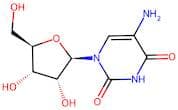
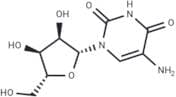
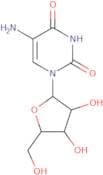
5-Aminouridine is a nucleoside analog characterized by the presence of an amino group at the 5-position of the uridine structure. It is a pyrimidine nucleoside, which consists of a ribose sugar linked to a uracil base. This compound is notable for its potential biological activity, particularly in antiviral and anticancer research, as it can interfere with nucleic acid synthesis. The amino group enhances its ability to form hydrogen bonds, which may influence its interaction with enzymes and other biomolecules. 5-Aminouridine is soluble in water, making it suitable for various biochemical applications. Its structural modifications compared to standard uridine may lead to altered pharmacokinetics and pharmacodynamics, making it a subject of interest in medicinal chemistry. Additionally, its CAS number, 2149-76-0, allows for precise identification in chemical databases and literature. Overall, 5-aminouridine serves as a valuable compound in the study of nucleoside analogs and their therapeutic potential.
Formula:C9H13N3O6
InChI:InChI=1/C9H13N3O6/c10-3-1-12(9(17)11-7(3)16)8-6(15)5(14)4(2-13)18-8/h1,4-6,8,13-15H,2,10H2,(H,11,16,17)
Synonyms:- 5-amino-1-pentofuranosylpyrimidine-2,4(1H,3H)-dione
Sort by
Purity (%)
0
100
|
0
|
50
|
90
|
95
|
100
Found 3 products.
5-Aminouridine
CAS:5-Aminouridine (4-Chloro-2-isopropyl-5-methylphenol(chlorothymol)) modifies nucleobases and is incorporated into the target DNA.Formula:C9H13N3O6Purity:99.53%Color and Shape:SolidMolecular weight:259.225-Aminouridine
CAS:5-Aminouridine is an analog of uridine that is used in the synthesis of RNA. It inhibits the synthesis of RNA by viruses, and it may also inhibit the synthesis of RNA by cells, including muscle cells. 5-Aminouridine has been shown to inhibit protein synthesis in muscle cells incubated with orotic acid. The drug may also interact with other drugs metabolized by UDP-glucose pyrophosphorylase, such as carbamazepine and phenytoin. This interaction may lead to decreased serum levels of these drugs following treatment with 5-aminouridine.
Formula:C9H13N3O6Purity:Min. 90 Area-%Color and Shape:PowderMolecular weight:259.22 g/molRef: 3D-NA163143
Discontinued product