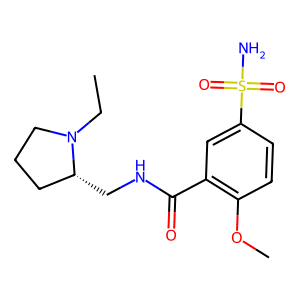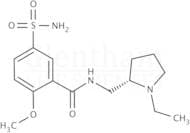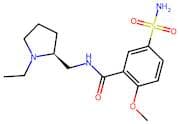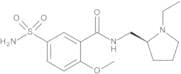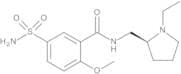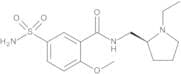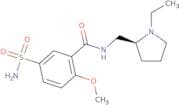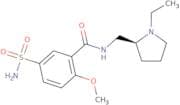
CAS 23672-07-3
:Levosulpiride
- (-)-5-Aminosulfonyl-N-[(1-Ethyl-2-Pyrrolidinyl)Methyl]-2-Methoxy-Benzamide
- (-)-N-1-[Ethylpyrrolidin-2-Ylmethyl]-2-Methoxy-5-Sulfamoylbenzamide
- (-)-Sulpiride
- (S)-(-)-5-(aminosulfonyl)-N-[(1-ethyl-2-pyrrolinyl)methyl]
- (S)-(-)-5-Aminosulfonyl-N-[(1-Ethyl-2-Pyrrolidinyl)Methyl]-2-Methoxybenzamide
- (S)-(-)-N-((1-Ethyl-2-Pyrrolidinyl)Methyl)-5-Sulfamoyl-O-Anisamide
- (S)-(-)-N-((1-Ethyl-2-Pyrrolidinyl)Methyl)-5-Sulfamoyl-O-Anisamide 5-(Aminosulfonyl)-N-((1-Ethyl-2-Pyrrolidinyl)Methyl)-2-Methoxy-Benzamid ( S-(-)-Benzamid
- (S)-(-)-Sulpiride
- (S)-(-)-Sulpiride, Vetranal
- 5-(Aminosulfonyl)-N-[[(2S)-1-ethyl-2-pyrrolidinyl]methyl]-2-methoxybenzamide
- <span class="text-smallcaps">L</span>-Sulpiride
- Benzamide, 5-(aminosulfonyl)-N-[(1-ethyl-2-pyrrolidinyl)methyl]-2-methoxy-, (S)-
- Benzamide, 5-(aminosulfonyl)-N-[[(2S)-1-ethyl-2-pyrrolidinyl]methyl]-2-methoxy-
- Lesuride
- Levobren
- Levopraid
- Levopride
- Levosulpride
- N-{[(2S)-1-ethylpyrrolidin-2-yl]methyl}-2-methoxy-5-sulfamoylbenzamide
- Rv-12309
- Rv-12309 S-(-)-N-(1-Ethyl-2-Pyrrolidinomethyl)-2-Methoxy-5-Sulfamoylebenzamide
- S(-)-Sulpiride Dopamine D1 Antagonis
- S-(-)-N-(1-Ethyl-2-Pyrrolidinomethyl)-2-Methoxy-5-Sulfamoylebenzamide
- Sulpid
- l-Sulpiride
- o-Anisamide, N-[(1-ethyl-2-pyrrolidinyl)methyl]-5-sulfamoyl-, (-)-
- s-(-)-sulpiride (S)-5-Aminosulfonyl-N-[(1-ethylpyrrolidin-2-yl)methyl]-2-methoxybenzamide
- LEVOSULPIRIDE/LEVOSULPRIDE
- (s)-(-)-o-anisamid
- LEVOSULPIRIDE
- Benzamide, 5-(aminosulfonyl)-N-[[(2S)-1-ethyl-2-pyrrolidinyl]methyl]-2-methoxy-(9CI)
- See more synonyms
(S)-(-)-Sulpiride
CAS:Formula:C15H23N3O4SPurity:>98.0%(T)(HPLC)Color and Shape:White to Light yellow powder to crystalMolecular weight:341.43N-{[(2S)-1-ethylpyrrolidin-2-yl]methyl}-2-methoxy-5-sulfamoylbenzamide
CAS:Formula:C15H23N3O4SPurity:98%Color and Shape:SolidMolecular weight:341.4258Levosulpiride
CAS:Levosulpiride (S-(-)-Sulpiride) is the (S)-enantiomer of sulpiride, which is a D2 receptor antagonist, an atypical antipsychotic drug of the benzamide class.Formula:C15H23N3O4SPurity:98.20% - 99.88%Color and Shape:White Crystalline PowderMolecular weight:341.43Levosulpiride
CAS:Formula:C15H23N3O4SPurity:98.0 - 102.0 %Color and Shape:White to off-white powderMolecular weight:341.43S-(-)-Sulpiride
CAS:Controlled ProductApplications Dopamine D2 and D3-receptor antagonist. Antipsychotic; antidepressant; antiemetic.
References Pitre, D., et al.: Anal. Profiles Drug Subs., 17, 607 (1988), Wagstaff, A.J., et al.: CNS Drugs, 2, 313 (1994),Formula:C15H23N3O4SColor and Shape:WhiteMolecular weight:341.43Levopride
CAS:Applications Antipsychotic; antidepressant; antiemetic.
References Karolidis, D., et al.: Med. Chem., 6, 259 (2010), Cummings, D., et al.: J. Pharmacol. Exper. Ther., 335, 518 (2010),Formula:C15H23N3O4SColor and Shape:WhiteMolecular weight:341.43Levosulpiride
CAS:Controlled ProductLevosulpiride is a pharmacological agent which binds to dopamine (D2) receptors in the brain and gastrointestinal tract. It is used both to treat conditions that cause abnormal movements for e.g. Parkinson's disease and tardive dyskinesia, and also as an antiemetic and to treat certain gastric disorders. Additional to acting as a dopamine receptor antagonist, Levosulpiride also binds to α1-acid glycoprotein and has been shown to have a concentration-dependent effect on serum prolactin levels, with higher doses leading to increased levels, as well as an effect on basic fibroblasts.Formula:C15H23N3O4SPurity:Min. 95%Color and Shape:PowderMolecular weight:341.43 g/molLevosulpiride - Bio-X ™
CAS:Controlled ProductLevosulpiride is a pharmacological agent which binds to dopamine (D2) receptors in the brain and gastrointestinal tract. It is used both to treat conditions that cause abnormal movements for e.g. Parkinson's disease and tardive dyskinesia, and also as an antiemetic and to treat certain gastric disorders. Additional to acting as a dopamine receptor antagonist, Levosulpiride also binds to α1-acid glycoprotein and has been shown to have a concentration-dependent effect on serum prolactin levels, with higher doses leading to increased levels, as well as an effect on basic fibroblasts.
Formula:C15H23N3O4SPurity:(%) Min. 95%Color and Shape:PowderMolecular weight:341.43 g/mol




![N-{[(2S)-1-ethylpyrrolidin-2-yl]methyl}-2-methoxy-5-sulfamoylbenzamide](/_next/image/?url=https%3A%2Fstatic.cymitquimica.com%2Fproducts%2FIN%2Fthumb%2FDA002O30.jpg&w=3840&q=75)