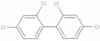
CAS 2437-79-8
:PCB 47
Description:
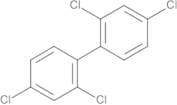
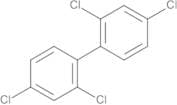
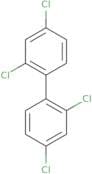
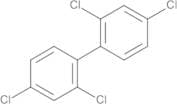
PCB 47, also known by its Chemical Abstracts Service (CAS) number 2437-79-8, is a polychlorinated biphenyl (PCB) compound. PCBs are a group of synthetic organic chemicals that consist of carbon, hydrogen, and chlorine atoms. PCB 47 is characterized by its biphenyl structure, where two benzene rings are connected by a single bond, with chlorine atoms substituted at specific positions on the rings. This compound is typically colorless to light yellow and is known for its hydrophobic nature, making it insoluble in water but soluble in organic solvents. PCBs, including PCB 47, are known for their stability and resistance to degradation, which has led to their widespread historical use in electrical equipment, heat transfer fluids, and other industrial applications. However, due to their environmental persistence and potential health risks, including carcinogenic effects and endocrine disruption, PCBs have been banned or heavily regulated in many countries. PCB 47, like other PCBs, poses challenges for environmental remediation and public health.
Formula:C12H6Cl4
InChI:InChI=1S/C12H6Cl4/c13-7-1-3-9(11(15)5-7)10-4-2-8(14)6-12(10)16/h1-6H
InChI key:InChIKey=QORAVNMWUNPXAO-UHFFFAOYSA-N
SMILES:ClC1=C(C=CC(Cl)=C1)C2=C(Cl)C=C(Cl)C=C2
Synonyms:- 1,1'-Biphenyl, 2,2',4,4'-tetrachloro-
- 1,1′-Biphenyl, 2,2′,4,4′-tetrachloro-
- 2,2',4,4'-Tetrachlorbiphenyl
- 2,2',4,4'-Tetrachlorobiphenyle
- 2,2',4,4'-Tetrachlorodiphenyl
- 2,2',4,4'-Tetraclorobifenilo
- 2,2′,4,4′-Tetrachloro-1,1′-biphenyl
- 2,2′,4,4′-Tetrachlorobiphenyl
- 2,2′,4,4′-Tetrachlorodiphenyl
- 2,4,2',4'-Tetrachlorobiphenyl
- Biphenyl, 2,2',4,4'-tetrachloro-
- Biphenyl, 2,2′,4,4′-tetrachloro-
- Cb 47
- Pcb 47
- See more synonyms
Sort by
Purity (%)
0
100
|
0
|
50
|
90
|
95
|
100
Found 9 products.
EPA Method 525.2 PCB Congeners Mixture 500 µg/mL in Acetone
CAS:Controlled ProductColor and Shape:MixtureSVOC Mixture 1002 100-400 µg/mL in Acetone
CAS:Controlled Product- 103-23-1
- 117-81-7
- 118-74-1
- 120-12-7
- 121-14-2
- 129-00-0
- 131-11-3
- 15862-07-4
- 16605-91-7
- 191-24-2
- 193-39-5
- 205-99-2
- 2051-60-7
- 207-08-9
- 208-96-8
- 218-01-9
- 2437-79-8
- 40186-71-8
- 50-32-8
- 52663-71-5
- 53-70-3
- 56-55-3
- 60145-22-4
- 60233-25-2
- 606-20-2
- 77-47-4
- 78-59-1
- 84-66-2
- 84-74-2
- 85-01-8
- 85-68-7
- 86-73-7
- 87-86-5
Formula:C7H6N2O4Color and Shape:MixtureMolecular weight:182.13PCB No. 47 10 µg/mL in Isooctane
CAS:Controlled ProductFormula:C12H6Cl4Color and Shape:Single SolutionMolecular weight:291.99Dry Color Manufacturer's Association (DCMA) Mixture 5-100 µg/mL in Hexane
CAS:Controlled ProductFormula:C12H6Cl4Color and Shape:MixtureMolecular weight:291.992,2',4,4'-Tetrachlorobiphenyl
CAS:Controlled Product2,2',4,4'-Tetrachlorobiphenyl is a congener of bisphenol A that has been shown to cause skin papillomas in rats. 2,2',4,4'-Tetrachlorobiphenyl has been found to enhance the effects of other substances such as phenyl groups in an interactive manner. This compound is metabolized by cytochrome P450 enzymes and interacts with the cox-2 gene to produce inflammatory mediators. 2,2',4,4'-Tetrachlorobiphenyl can be absorbed through the skin and can be detected in serum levels.br>br> The mechanisms of action for 2,2',4,4'-tetrachlorobiphenyl are not well understood. However it has been shown that this compound may interact with the cox-2 gene to produce inflammatory mediators. 2,2',4,4'-tetrachlorobFormula:C12H6Cl4Purity:Min. 95%Molecular weight:291.99 g/molPCB No. 47 100 µg/mL in Isooctane
CAS:Controlled ProductFormula:C12H6Cl4Color and Shape:Single SolutionMolecular weight:291.99