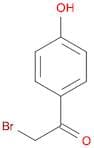
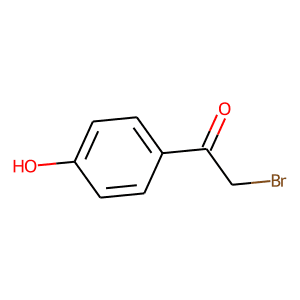
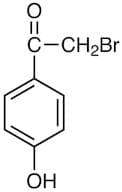
CAS 2491-38-5
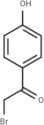
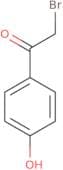
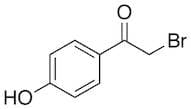
:2-Bromo-1-(4-hydroxyphenyl)ethanone
- 1-(4-Hydroxyphenyl)-2-bromoethanone
- 2-Bromo-1-(4-Hydroxyphenyl)Ethanone
- 2-Bromo-1-(4-hydroxyphenyl)ethan-1-one
- 2-Bromo-4'-Hydroxy Acetophenone
- 2-Bromo-4'-Hydroxyacetophenone
- 4-Hydroxyphenacyl bromide
- 4′-Hydroxy-2-bromoacetophenone
- Acetophenone, 2-bromo-4′-hydroxy-
- Busan 1130
- Busan 90
- Butrol 1130
- Ethanone, 2-bromo-1-(4-hydroxyphenyl)-
- p-Hydroxyphenacyl bromide
- Α-Bromo-Hydroxyacetophenone
- α-Bromo-1-(4-hydroxyphenyl)-ethanone
- α-Bromo-4-Hydroxy Acetophenone
- α-Bromo-4′-hydroxyacetophenone
- α-Bromo-p-hydroxyacetophenone
- See more synonyms
Ethanone, 2-bromo-1-(4-hydroxyphenyl)-
CAS:Formula:C8H7BrO2Purity:98%Color and Shape:SolidMolecular weight:215.0440Ref: IN-DA002PUF
5kgTo inquire10kgTo inquire5g29.00€10g42.00€25g45.00€100g111.00€500g301.00€1kg504.00€2-Bromo-4'-hydroxyacetophenone
CAS:2-Bromo-4'-hydroxyacetophenonePurity:≥98%Molecular weight:215.04g/mol4-Hydroxyphenacyl bromide
CAS:4-Hydroxyphenacyl bromideFormula:C8H7BrO2Purity:97%Color and Shape: off white to faint brown powderMolecular weight:215.04398g/mol2-Bromo-4'-hydroxyacetophenone
CAS:Formula:C8H7BrO2Purity:>98.0%(T)(HPLC)Color and Shape:White to Light yellow to Light orange powder to crystalMolecular weight:215.052-Bromo-4'-hydroxyacetophenone
CAS:2-Bromo-4'-hydroxyacetophenone(PTP Inhibitor I) is a cell-permeable, PTP inhibitor that covalently blocks the catalytic domain of the SHP-1(ΔSH2).Formula:C8H7BrO2Purity:98.64%Color and Shape:Clear Colorless To Light Yellow LiquidMolecular weight:215.042-Bromo-4-hydroxyacetophenone
CAS:2-Bromo-4-hydroxyacetophenone is a membrane permeable inhibitor of monoamine oxidase (MAO) that has been shown to inhibit the enzyme's activity with an IC50 of 10 μM. It is used as a research tool in biological studies and has been shown to be active against MAO A, MAO B, and MAO C. 2-Bromo-4-hydroxyacetophenone has also been shown to inhibit the growth of carcinoma cells in vitro. This molecule is also a β-unsaturated ketone that binds to catalytic domains and forms covalent bonds with chloride ions. 2-Bromo-4-hydroxyacetophenone can be used as an industrial process catalyst for chemical reactions involving chloride.
2-Bromo-4-hydroxyacetophenone synergistically inhibits the growth of cancer cells when combined with other compounds such as trifluoroacetic acid or dichlorometFormula:C8H7BrO2Purity:(%) Min. 85%Color and Shape:PowderMolecular weight:215.04 g/mol2-Bromo-4′-hydroxyacetophenone
CAS:Formula:C8H7BrO2Purity:95.0%Color and Shape:SolidMolecular weight:215.0462-Bromo-4'-hydroxyacetophenone
CAS:Controlled ProductStability Hygroscopic
Applications A covalent inhibitor of protein tyrosine phosphatases (PTPs)
References Taing, M., et al.: Biochem., 38, 3793 1999, Arabaci, G., et al.: Bioorg. Med. Chem. Lett., 12, 3047 (2002),Formula:C8H7BrO2Color and Shape:NeatMolecular weight:215.04