CAS 26543-89-5
:Hinokinin
Description:
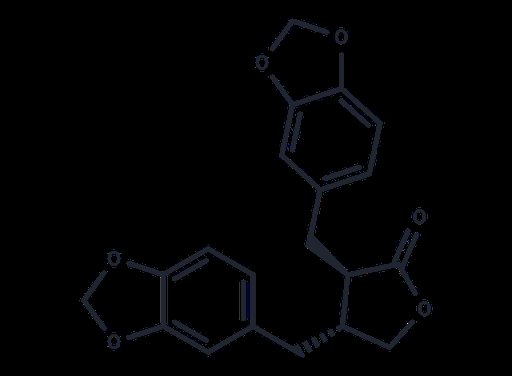
Hinokinin, with the CAS number 26543-89-5, is a naturally occurring compound primarily derived from the wood of certain trees, particularly those in the Cupressaceae family, such as hinoki cypress. It is classified as a lignan, a type of polyphenolic compound known for its diverse biological activities. Hinokinin exhibits antioxidant properties, which contribute to its potential health benefits, including anti-inflammatory and antimicrobial effects. The compound has garnered interest in various fields, including pharmacology and cosmetics, due to its ability to scavenge free radicals and protect cellular components from oxidative damage. Additionally, hinokinin has been studied for its potential role in cancer prevention and treatment, as it may influence cell signaling pathways. Its solubility characteristics typically indicate that it is more soluble in organic solvents than in water, which is common for many lignans. Overall, hinokinin represents a fascinating area of study within natural products chemistry, with implications for health and wellness.
Formula:C20H18O6
InChI:InChI=1S/C20H18O6/c21-20-15(6-13-2-4-17-19(8-13)26-11-24-17)14(9-22-20)5-12-1-3-16-18(7-12)25-10-23-16/h1-4,7-8,14-15H,5-6,9-11H2/t14-,15+/m0/s1
InChI key:InChIKey=DDWGQGZPYDSYEL-LSDHHAIUSA-N
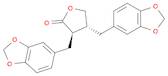
SMILES:C([C@@H]1[C@@H](CC=2C=C3C(=CC2)OCO3)C(=O)OC1)C=4C=C5C(=CC4)OCO5
Synonyms:- (-)-Hinokinin
- (3R,4R)-3,4-Bis(1,3-benzodioxol-5-ylmethyl)dihydro-2(3H)-furanone
- 2(3H)-Furanone, 3,4-bis(1,3-benzodioxol-5-ylmethyl)dihydro-, (3R-trans)-
- 2(3H)-Furanone, dihydro-3,4-dipiperonyl-, trans-(-)-
- 2(3H)-furanone, 3,4-bis(1,3-benzodioxol-5-ylmethyl)dihydro-, (3R,4R)-
- Cubebinolide
- Dihydroisohibalactone
- Hinoquinin
- (3R,4R)-3,4-Bis(1,3-benzodioxol-5-ylmethyl)dihydrofuran-2(3H)-one
Filter by
Purity percentage
0
100
|
0
|
50
|
90
|
95
|
100
Found 7 products.
- Lower prices
- Higher prices
- Lower purities
- Higher purities
- Faster estimated delivery
(3R,4R)-3,4-Bis(benzo[d][1,3]dioxol-5-ylmethyl)dihydrofuran-2(3H)-one
CAS:(3R,4R)-3,4-Bis(benzo[d][1,3]dioxol-5-ylmethyl)dihydrofuran-2(3H)-oneFormula:C20H18O6Purity:99%Molecular weight:354.35Hinokinin (Standard)
CAS:Hinokinin (Standard) is a reference standard for research and analysis in studies involving Hinokinin. Hinokinin (Cubebinolide), a bioactive lignan, exhibits a broad spectrum of pharmacological activities.Formula:C20H18O6Color and Shape:SolidMolecular weight:354.3533(3R,4R)-3,4-Bis(benzo[d][1,3]dioxol-5-ylmethyl)dihydrofuran-2(3H)-one
CAS:Formula:C20H18O6Purity:99%Molecular weight:354.3533Hinokinin
CAS:LactoneFormula:C20H18O6Purity:≥ 95.0 % (HPLC)Color and Shape:GelatinousMolecular weight:354.35(-)-Hinokinin
CAS:(-)-Hinokinin is a lignan, which is a type of polyphenolic compound. It is naturally derived from the heartwood of Chamaecyparis obtusa, commonly known as the Japanese cypress. The mode of action of (-)-Hinokinin involves various biochemical pathways, primarily through the modulation of cellular signaling pathways involved in inflammation and oxidative stress.Formula:C20H18O6Purity:Min. 95%Molecular weight:354.4 g/molHinokinin
CAS:Hinokinin is a bioactive lignan isolated from plants such as Linum corymbulosum and Piper cubeba. It functions through multiple mechanisms, including potent inhibition of dopamine transporter (DAT) activity to reduce methamphetamine-induced hyperlocomotion, and induction of apoptosis in MCF-7 breast cancer cells via reactive oxygen species-mediated mitochondrial dysfunction at 10 µM concentration. In diabetic models, hinokinin at 20–40 mg/kg modulates oxidative stress, inflammation, and apoptosis through Nrf2/Keap1 and TLR4/MyD88/NF-κB pathways. Research applications include studies on metabolic disorders, neurodegenerative conditions, and cancer cell biology.Formula:C20H18O6Color and Shape:SolidMolecular weight:354.3533