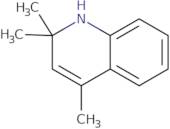
CAS 26780-96-1
:2,2,4-Trimethyl-1,2-dihydroquinoline polymer
Description:
2,2,4-Trimethyl-1,2-dihydroquinoline polymer, identified by CAS number 26780-96-1, is a synthetic polymer characterized by its unique structure derived from the polymerization of 2,2,4-trimethyl-1,2-dihydroquinoline monomers. This polymer exhibits notable thermal stability and resistance to oxidation, making it suitable for applications in various industrial sectors, particularly in the formulation of rubber and plastics. Its chemical structure contributes to its ability to enhance the mechanical properties of materials, providing improved durability and flexibility. Additionally, the polymer may possess antioxidant properties, which can help in prolonging the lifespan of products by preventing degradation due to environmental factors. The material is typically processed through standard polymer fabrication techniques, and its performance can be influenced by factors such as molecular weight and processing conditions. Overall, 2,2,4-trimethyl-1,2-dihydroquinoline polymer is valued for its versatility and effectiveness in enhancing the properties of composite materials.
Formula:(C12H15N)x
InChI:InChI=1S/C12H15N/c1-9-8-12(2,3)13-11-7-5-4-6-10(9)11/h4-8,13H,1-3H3
InChI key:InChIKey=ZNRLMGFXSPUZNR-UHFFFAOYSA-N
SMILES:CC=1C=2C(NC(C)(C)C1)=CC=CC2
Synonyms:- 1,2-Dihydro-2,2,4-Trimethyl-Quinolinhomopolymer
- 1,2-Dihydro-2,2,4-Trimethylquinoline Homopolymer
- 1,2-Dihydro-2,2,4-Trimethylquinoline Oligomers
- 1,2-Dihydro-2,2,4-Trimethylquinoline Polymer
- 2,2,4-Trimethyl-1,2 Dihydroquinoline (Polymerized)
- 2,2,4-Trimethyl-1,2,3,7-Tetrahydroquinoline
- 2,2,4-Trimethyl-1,2-Dihydroquinoline, Polymer
- 2,2,4-Trimethyl-1,2-Dihydroquinollne,Polymer
- Acetonanil
- Acetonanil N
- Acetonanil Polymer
- Acetonanil R
- Acetone anil P
- Additin RC 7010
- AgeRite D
- AgeRite TMQ
- Agerite Ma
- Agerite Resin D
- Akos 90239
- Anox HB
- Anox HPG
- Antage RD
- Antage RD-G
- Antigene RD
- Antigene RD-G
- Antigene RDF
- Antigenerdf
- Antioxidan
- Antioxidant 212
- Antioxidant 224
- Antioxidant FR
- Antioxidant HPG
- Antioxidant HS
- Antioxidant HSL
- Antioxidant Rd
- Antioxidant Tmq
- Antioxidant Tmq(Rd)
- Aquanox TMQ
- Banox H
- Flectol Flakes
- Flectol H
- Flectol TMQ
- Flectol(R) Pastilles
- Flectol(R) Powder
- Forte RD
- HS (antioxidant)
- HSL antioxidant
- Iflab-Bb F1974-0002
- Lowinox ACP
- Luvomaxx TMQ
- Matoflex TMA
- Naugard Q
- Naugard Super Q
- Naugard TMQ
- Nocrac 224
- Nocrac 224S
- Nocrac RD
- Nonflex QS
- Nonflex RD
- Nonflex RD-S
- Orox PK
- P 824729
- Permanax 45
- Permanax TQ
- Polnoks R
- Poly(1,2-Dihydro-2,2,4-Trimethylquinoline)
- Poly(2,2,4-trimethyl-1,2-dihydroquinoline)
- Poly(2,2,4-trimethyl-1,2-dihydroquinone)
- Polymerized 1,2-Dihydro-2,2,4-Trimethylquinoline
- Quinoline, 1,2-dihydro-2,2,4-trimethyl-, homopolymer
- Quinoline, 1,2-dihydro-2,2,4-trimethyl-, polymers
- RD (additive)
- RD Antiaging Agent
- RD Antioxidant
- Ralox Tmq
- Rubber Antioxidant RD
- Rubber Antioxidant TMQ
- Ryphosan S
- S-Tmq
- Trimethyldihydroquinoline Pol Ymer
- Trimethyldihydroquinoline polymer
- Ultranox 254
- Vanlube RD
- Vanlube(R) Rd
- Vulkanox HS
- Vulkanox HS-LG
- Vulkanox HSL
- See more synonyms
Filter by
Purity percentage
0
100
|
0
|
50
|
90
|
95
|
100
Found 6 products.
- Lower prices
- Higher prices
- Lower purities
- Higher purities
- Faster estimated delivery
Poly(1,2-Dihydro-2,2,4-Trimethylquinoline)
CAS:Poly(1,2-Dihydro-2,2,4-Trimethylquinoline)Formula:(C12H15N)xPurity:Softening point 80-100℃Color and Shape:SolidMolecular weight:519.76TMQ
CAS:TMQ is an antioxidant. It induces epidermal hyperplasia at the application site, but when administered at a dose of 100 mg/kg daily for two consecutive years, it did not cause cancer in mice. TMQ is also used as an antioxidant and anti-oxidizing agent in tires.Color and Shape:SolidPoly(1,2-dihydro-2,2,4-trimethylquinoline)
CAS:Poly(1,2-dihydro-2,2,4-trimethylquinoline) is a high molecular weight polymeric quinoline. It is an intramolecular hydrogen bond donor. The nitrogen atoms in the polymers are bound to hydrogen and form a ring with two amino groups. Poly(1,2-dihydro-2,2,4-trimethylquinoline) has been shown to be resistant to many chemical agents such as hydrogen fluoride and glycoside derivatives. It also has a carcinogenic potential and can induce liver lesions. The carcinogenesis studies of poly(1,2-dihydro-2,2,4-trimethylquinoline) have shown that it may cause cancer in animals via diazonium salt and methyl ethyl hydrochloric acidFormula:(C12H15N)xPurity:Min. 95%Color and Shape:Powder