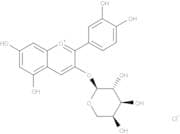
CAS 27214-72-8
:Cyanidin 3-arabinoside
Description:
Cyanidin 3-arabinoside is a flavonoid glycoside, specifically a type of anthocyanin, which is responsible for the red, purple, and blue colors in many fruits and flowers. It is characterized by its chemical structure, which includes a cyanidin aglycone linked to an arabinose sugar moiety. This compound is known for its antioxidant properties, contributing to various health benefits, including anti-inflammatory and potential anti-cancer effects. Cyanidin 3-arabinoside is commonly found in berries, such as blackcurrants and blueberries, as well as in other plant-based foods. Its stability can be influenced by factors such as pH, temperature, and the presence of light, which can affect its color and bioactivity. In addition to its nutritional significance, cyanidin 3-arabinoside is of interest in food science and nutrition for its potential health-promoting properties and its role in the sensory attributes of food products.
Formula:C20H19O10·Cl
Synonyms:- 1-Benzopyrylium, 3-(arabinosyloxy)-2-(3,4-dihydroxyphenyl)-5,7-dihydroxy-, chloride (1:1)
- Cyanidin 3-arabinoside
- 1-Benzopyrylium, 3-(arabinosyloxy)-2-(3,4-dihydroxyphenyl)-5,7-dihydroxy-, chloride
- Flavylium, 3-(arabinosyloxy)-3′,4′,5,7-tetrahydroxy-, chloride
- 3-(Arabinosyloxy)-3′,4′,5,7-tetrahydroxyflavylium chloride
Sort by
Purity (%)
0
100
|
0
|
50
|
90
|
95
|
100
Found 4 products.
Cyanidin-3-O-arabinoside chloride
CAS:Cyanidin-3-O-arabinoside chloride analytical standard provided with w/w absolute assay, to be used for quantitative titration.Formula:C20H19O10ClPurity:(HPLC) ≥95%Color and Shape:PowderMolecular weight:454.81Cyanidin 3-arabinoside
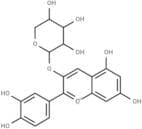
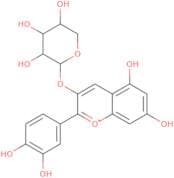
CAS:Cyanidin 3-arabinoside (Cyanidin 3-monoarabinoside) is an anthocyanin extracted from blueberries and is a PTP1B inhibitor with anticancer activity.Formula:C20H19O10Purity:99%Color and Shape:SolidMolecular weight:419.36Cyanidin-3-O-arabinose chloride
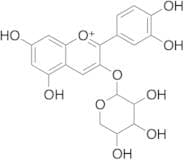
CAS:Cyanidin-3-O-arabinose chloride is an anthocyanin compound, which is a type of flavonoid pigment found in various fruits and vegetables. These pigments are sourced primarily from plant materials such as berries, red cabbage, and certain cereals. The extraction often involves methods like solvent extraction or chromatography to isolate the specific anthocyanins from other plant compounds.Formula:C20H19O10ClPurity:Min. 95 Area-%Color and Shape:Red PowderMolecular weight:454.81 g/molCyanidin-3-O-arabinose Chloride
CAS:Controlled ProductFormula:C20H19O10·ClColor and Shape:NeatMolecular weight:454.812