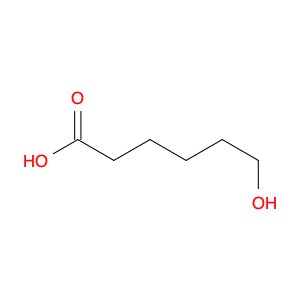
CAS 28158-18-1
:ε-Hydroxycaproic acid polymer
Description:
ε-Hydroxycaproic acid polymer, also known as poly(ε-hydroxycaproic acid) or PHCA, is a biodegradable polymer derived from the polymerization of ε-hydroxycaproic acid. This polymer exhibits several notable characteristics, including biocompatibility and biodegradability, making it suitable for various biomedical applications, such as drug delivery systems and tissue engineering. PHCA has a relatively low melting point and can be processed into various forms, including films and fibers. Its mechanical properties can be tailored through copolymerization or blending with other materials, enhancing its versatility. The polymer's hydrophilic nature allows for good water absorption, which can be advantageous in certain applications. Additionally, PHCA can undergo hydrolytic degradation, breaking down into non-toxic byproducts, which is a significant advantage in medical and environmental contexts. Overall, ε-Hydroxycaproic acid polymer is a promising material in the field of sustainable and biocompatible polymers.
Formula:(C6H12O3)x
InChI:InChI=1S/C6H12O3/c7-5-3-1-2-4-6(8)9/h7H,1-5H2,(H,8,9)
InChI key:InChIKey=IWHLYPDWHHPVAA-UHFFFAOYSA-N
SMILES:C(CC(O)=O)CCCO
Synonyms:- ε-Hydroxycaproic acid polymer
- 6-Hydroxyhexanoic acid homopolymer
- ε-Hydroxycaproic acid oligomer
- Hexanoic acid, 6-hydroxy-, polyesters
- Hexanoic acid, 6-hydroxy-, homopolymer
Filter by
The purity filter is not visible because current products do not have associated purity data for filtering.
Found 1 products.
- Lower prices
- Higher prices
- Lower purities
- Higher purities
- Faster estimated delivery