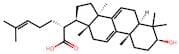
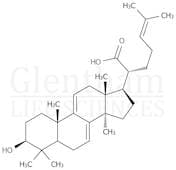
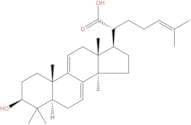
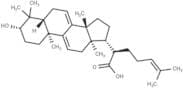
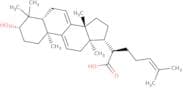
CAS 29220-16-4
:Dehydrotrametenolic Acid
Description:
Dehydrotrametenolic acid is a triterpenoid compound primarily derived from various species of the genus *Ganoderma*, commonly known as reishi mushrooms. This compound is characterized by its complex molecular structure, which includes multiple rings and functional groups typical of triterpenes. It exhibits a range of biological activities, including anti-inflammatory, antioxidant, and potential anticancer properties, making it of interest in pharmacological research. Dehydrotrametenolic acid is often studied for its effects on immune modulation and its potential therapeutic applications in traditional medicine. Its solubility properties can vary, typically being more soluble in organic solvents than in water, which influences its extraction and formulation in herbal supplements. The compound's safety profile and efficacy are subjects of ongoing research, and while it shows promise, further studies are necessary to fully understand its mechanisms of action and potential health benefits.
Sort by
Purity (%)
0
100
|
0
|
50
|
90
|
95
|
100
Found 6 products.
3β-Hydroxy-5α-lanosta-7,9(11),24-trien-21-oic acid
CAS:Formula:C30H46O3Purity:98%Color and Shape:SolidMolecular weight:454.6844Dehydrotrametenolic acid
CAS:Dehydrotrametenolic acid is a promising candidate for a new type of insulin-sensitizing drug; it can be a potential anticancer agent against H-ras transformed tumor.Formula:C30H46O3Purity:95%~99%Color and Shape:PowderMolecular weight:454.6953-Dehydrotrametenolic acid
CAS:3-Dehydrotrametenolic acid is a potential anticancer agent against H-ras transformed tumor and a promising candidate for a new type of insulin-sensitizing drug.Formula:C30H46O3Purity:98.5% - 99.25%Color and Shape:SolidMolecular weight:454.68Ref: TM-T5S0620
1mg46.00€5mg92.00€1mL*10mM (DMSO)108.00€10mg147.00€25mg241.00€50mg349.00€100mg479.00€200mg657.00€3-Dehydrotrametenolic acid
CAS:Controlled Product3-Dehydrotrametenolic acid is a bioactive triterpenoid compound, which is derived from various fungal sources, particularly those belonging to the Trametes genus. The compound displays a range of biological activities due to its ability to interact with specific molecular pathways. Its mode of action involves modulation of cellular processes like inflammation and metabolism, potentially through influencing the pathways related to insulin signaling and glucose regulation.Purity:Min. 95%