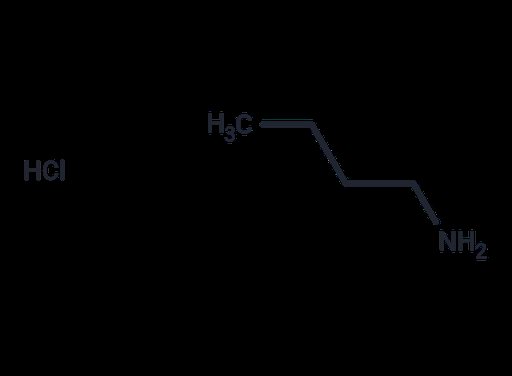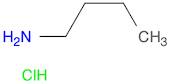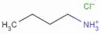
CAS 3858-78-4
:1-Butanamine, hydrochloride (1:1)
- 1-Butanamine, hydrochloride
- Butylamine, hydrochloride
- 1-Butanamine, hydrochloride (1:1)
- n-Butylamine hydrochloride
- n-Butylammonium chloride
- Lower prices
- Higher prices
- Lower purities
- Higher purities
- Faster estimated delivery
Butylamine Hydrochloride
CAS:Formula:C4H11N·HClPurity:>98.0%(T)Color and Shape:White to Almost white powder to crystalMolecular weight:109.60Butan-1-amine hydrochloride
CAS:1-Butylamine hydrochloride,butylamine, a potential agonist of Nrf2/ARE (Nuclear Factor Erythroid 2 Associated Factor 2/Antioxidant Response Element).Formula:C4H12ClNColor and Shape:SolidMolecular weight:109.598n-Butylamine-d11 DCl
CAS:Formula:CD3CD2CD2CD2ND2DClPurity:98 atom % DColor and Shape:White SolidMolecular weight:121.14115n-Butylamine-ND2 DCl
CAS:Formula:CH3CH2CH2CH2ND2DClPurity:98 atom % DColor and Shape:White SolidMolecular weight:112.08466n-Butyl-d9-amine HCl
CAS:Formula:CD3CD2CD2CD2NH2HClPurity:98 atom % DColor and Shape:White SolidMolecular weight:118.12232Butan-1-amine hydrochloride
CAS:Formula:C4H12ClNPurity:97%Color and Shape:SolidMolecular weight:109.5978Butylamine hydrochloride
CAS:Butylamine hydrochlorideFormula:·ClH·C4H11NPurity:>98%Color and Shape:SolidMolecular weight:109.59777Butylamine hydrochloride
CAS:Butan-1-amine hydrochlorideFormula:C4H12ClNPurity:98%Molecular weight:109.6Butylamine Hydrochloride
CAS:Controlled ProductApplications Butylamine Hydrochloride is a miscellaneous reagent used in the synthesis of benzamides for the synthesis of various drugs and polymers.
References Bantreil, X. et al.: Eur. J. Org. Chem., 2015, 416 (2015);Formula:C4H12ClNColor and Shape:NeatMolecular weight:109.6Butylamine hydrochloride
CAS:Butylamine hydrochloride is a colorless, volatile liquid that has a strong ammonia odor. It is soluble in water and reacts with acids to form salts. This compound is a tertiary amine that is used as an intermediate for the synthesis of other organic compounds. Butylamine hydrochloride can also be obtained by the hydrolysis of butyraldehyde, which is produced from the oxidation of propylene glycol. This compound has been shown to react with malonic acid and amines to form methyl ethyl ketones and secondary amines respectively. The following are descriptions for the product: - Rifapentine is an anti-tuberculosis drug that belongs to the class of rifamycins. It is the most active of the rifamycins for the treatment of tuberculosis.br> - Tilmicosin is a macrolide antibiotic that inhibits the growth of bacteria by binding to the 50
Formula:C4H11N·HClPurity:Min. 95%Molecular weight:109.6 g/mol