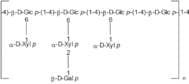
CAS 39386-78-2
:Tamarind gum
Description:
Tamarind gum, also known as tamarind seed polysaccharide, is a natural gum derived from the seeds of the tamarind tree (Tamarindus indica). It is primarily composed of polysaccharides, particularly xyloglucan, which contributes to its thickening and gelling properties. This substance is characterized by its ability to form viscous solutions in water, making it useful as a thickening agent, stabilizer, and emulsifier in various food and pharmaceutical applications. Tamarind gum is known for its biocompatibility and biodegradability, which makes it an attractive alternative to synthetic gums. It exhibits good film-forming properties and can enhance the texture and mouthfeel of food products. Additionally, tamarind gum has potential applications in the cosmetic industry due to its moisturizing properties. Its safety profile is generally favorable, but like any natural product, it may cause allergic reactions in sensitive individuals. Overall, tamarind gum is valued for its multifunctional properties and versatility across different industries.
Formula:Unspecified
Synonyms:- Cmt 80
- Ex 100S
- Ex 200
- Food Made TA 100
- Glyloid
- Glyloid 2A
- Glyloid 3C
- Glyloid 3S
- Glyloid 4S
- Glyloid 5S
- Glyloid 6C
- Gum Tamarind
- Gums, tamarind-seed
- Inagel V 250
- Inagel V 250L
- Jellose
- Jelose
- Polyrose
- TG 120 (polysaccharide)
- Tamarind gum
- Tamarind seed gum
- Tamrilose
- Tg 120
- Tg 500
- Tikemose
- Vis Top D 2032
- Vis Top D 2033
- See more synonyms
Sort by
Purity (%)
0
100
|
0
|
50
|
90
|
95
|
100
Found 3 products.
Tamarind Gum from Tamarind seed, Polysaccharide
CAS:Color and Shape:White to Light yellow powder to crystalineTamarind gum
CAS:Tamarind gum comes from the seed of the tamarind tree Tamarindus indica and is used in the food industry as a stabiliser and an emulsifier. It has been suggested that the structure is a main chain of cellulose with frequent branching at the O-6 positions with short side chains of one or two D-xylopyranosyl capped with D-xylopyranosyl, D-galactopyranosyl or L-arabinofuranosyl units. In application, tamarind finds use in the sizing of jute and as a stabilizer and thickener in the food industry.Color and Shape:Powder