CAS 47592-59-6
:D-Xylose, O-b-D-xylopyranosyl-(1®4)-O-b-D-xylopyranosyl-(1®4)-
Description:
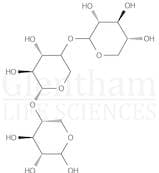
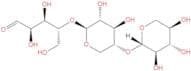
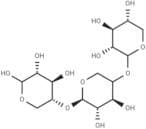
D-Xylose, O-b-D-xylopyranosyl-(1→4)-O-b-D-xylopyranosyl-(1→4)-, with the CAS number 47592-59-6, is a disaccharide composed of two D-xylose units linked by glycosidic bonds. This compound features a specific linkage pattern, where each D-xylose unit is in the pyranose form, indicating a six-membered ring structure. The (1→4) notation signifies that the glycosidic bond connects the first carbon of one D-xylose to the fourth carbon of the adjacent D-xylose. D-Xylose itself is a pentose sugar, naturally occurring in various plants and is important in carbohydrate metabolism. This disaccharide is soluble in water and exhibits typical properties of sugars, such as sweetness and the ability to undergo fermentation. Its structural characteristics contribute to its functionality in biological systems, including its role in polysaccharide formation and potential applications in food and pharmaceutical industries. Understanding its properties can aid in exploring its uses in various biochemical and industrial processes.
Formula:C15H26O13
Synonyms:- Xylotriose(6CI,7CI,8CI)
Sort by
Purity (%)
0
100
|
0
|
50
|
90
|
95
|
100
Found 9 products.
XYLOTRIOSE
CAS:XYLOTRIOSE is a natural xylooligosaccharide, acts as a bifidogenic factor.Formula:C15H26O13Purity:99.84% - ≥95%Color and Shape:SolidMolecular weight:414.36Xylotriose
CAS:Controlled ProductApplications Xylotriose is a newly developed xylo-oligosaccharide, usually produced from xylan by enzymic hydrolysis, with many beneficial biomedical and health effects.
References Zhu, Z., et al.: Eur. Food Res. Technol., 241, 27 (2015)Formula:C15H26O13Color and Shape:NeatMolecular weight:414.361,4-β-D-Xylotriose
CAS:1,4-β-D-Xylotriose is a pentose sugar that is the main component of hemicellulose. It is found in plant cell walls and has been studied using surface methodology to determine the covalent linkages and structure of 1,4-β-D-Xylotriose. Xylotrioses are also used as a substrate for enzyme reactions and have shown to have a number of enzymatic activities, including glycosidases, cellulases, xylanases, and arabinofuranosidases. Xylotrioses are also part of complex enzyme models that can be used to study disulfide bonds. Xylotrioses are polymers that are important for structural analysis due to the presence of β-1,4 links. The genome DNA has been found to contain many genes coding for xylanase enzymes.Formula:C15H26O13Purity:Min. 95 Area-%Color and Shape:White PowderMolecular weight:414.36 g/mol