CAS 481-74-3
:Chrysophanol
Description:
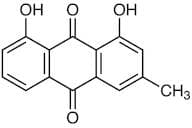
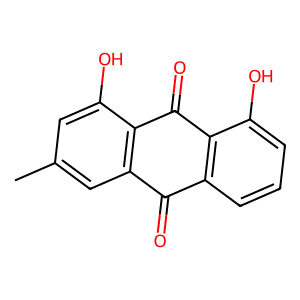
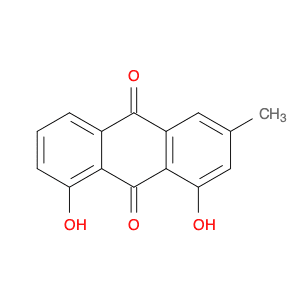
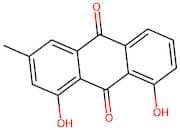
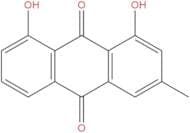
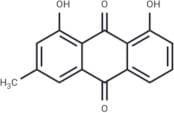
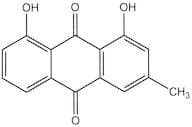
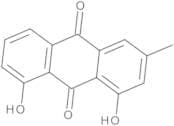
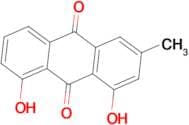
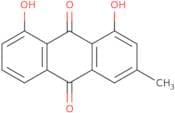
Chrysophanol, with the CAS number 481-74-3, is a naturally occurring anthraquinone compound primarily found in various plants, including rhubarb and certain species of the genus Rheum. It exhibits a yellow to orange crystalline appearance and is known for its potential therapeutic properties, including anti-inflammatory, antimicrobial, and anticancer activities. Chrysophanol is soluble in organic solvents such as ethanol and acetone but has limited solubility in water. Its chemical structure features a hydroxyl group, which contributes to its biological activity and reactivity. In addition to its medicinal properties, chrysophanol is also studied for its role as a dye and pigment in various applications. Due to its bioactive nature, it has garnered interest in pharmacological research, although further studies are needed to fully understand its mechanisms of action and potential applications in medicine. As with many anthraquinones, chrysophanol may also exhibit cytotoxic effects, necessitating careful consideration in therapeutic contexts.
Formula:C15H10O4
InChI:InChI=1S/C15H10O4/c1-7-5-9-13(11(17)6-7)15(19)12-8(14(9)18)3-2-4-10(12)16/h2-6,16-17H,1H3
InChI key:InChIKey=LQGUBLBATBMXHT-UHFFFAOYSA-N
SMILES:O=C1C=2C(C(=O)C=3C1=CC=CC3O)=C(O)C=C(C)C2
Synonyms:- 1,8-Dihidroxi-3-Metilantraquinona
- 1,8-Dihydroxy-3-Methylanthracene-9,10-Dione
- 1,8-Dihydroxy-3-Methylanthraquinone
- 1,8-Dihydroxy-3-methyl-9,10-anthracenedione
- 1,8-Dihydroxy-3-methyl-9,10-anthraquinone
- 1,8-Dihydroxy-3-methyl-anthraquinone
- 1,8-Dihydroxy-3-methylanthrachinon
- 2-Methyl-4,5-dihydroxyanthraquinone
- 3-Methyl-1,8-dihydroxyanthraquinone
- 3-Methylchrysazin
- 4,5-Dihydroxy-2-methylanthraquinone
- 9,10-Anthracenedione, 1,8-dihydroxy-3-methyl-
- Anthraquinone, 1,8-dihydroxy-3-methyl-
- Chrysophanic acid
- Nsc 37132
- Nsc 646567
- Turkey Rhubarb
- See more synonyms
Sort by
Purity (%)
0
100
|
0
|
50
|
90
|
95
|
100
Found 13 products.
Chrysophanic Acid
CAS:Formula:C15H10O4Purity:>98.0%(T)(HPLC)Color and Shape:Light yellow to Brown powder to crystalMolecular weight:254.24Chrysophanol
CAS:Chrysophanol analytical standard provided with w/w absolute assay, to be used for quantitative titration.Formula:C15H10O4Purity:(HPLC) ≥99%Color and Shape:PowderMolecular weight:254.25Chrysophanol
CAS:Chrysophanol has anti-inflammatory activity through the suppression of NF-κB/caspase-1 activation in vitro and in vivo.Formula:C15H10O4Purity:95%~99%Color and Shape:Yellow powderMolecular weight:254.241Chrysophanol
CAS:Formula:C15H10O4Purity:≥ 98.0%Color and Shape:Orange to yellow or yellow-brown powder or crystalsMolecular weight:254.24Chrysophanol
CAS:Chrysophanol (Turkey Rhubarb) is an EGFR/mTOR pathway inhibitor, which can be found in rhubarb, and sorrel.Formula:C15H10O4Purity:99.44% - 99.91%Color and Shape:Physical Description Golden Yellow Plates Or Brown Powder Melting Point 196°CMolecular weight:254.24Chrysophanol
CAS:QuinoneFormula:C15H10O4Purity:≥ 95.0 % (HPLC)Color and Shape:PowderMolecular weight:254.24Chrysophanic Acid
CAS:Applications A topical ointment used in the treatment of dermal conditions such as eczema and herpes.
References McDougall, G., et al.: Food Chem., 119, 758 (2009), Lu, B., et al.: Phytochem. Anal., 20, 385 (2009), Liang, X., et al.: J. Pharm. Biomed. Anal., 51, 565 (2010),Formula:C15H10O4Color and Shape:NeatMolecular weight:254.24Chrysophanic acid
CAS:Chrysophanic acid is a naturally occurring anthraquinone compound, which is typically extracted from plants such as rhubarb and senna. It is commonly found in species within the Polygonaceae family. This compound functions primarily through mechanisms that involve modulating cellular pathways, possessing anti-inflammatory, antimicrobial, and potential anticancer properties.
Formula:C15H10O4Purity:Min. 95 Area-%Color and Shape:PowderMolecular weight:254.24 g/mol