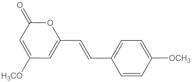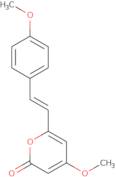
CAS 500-62-9
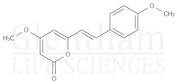
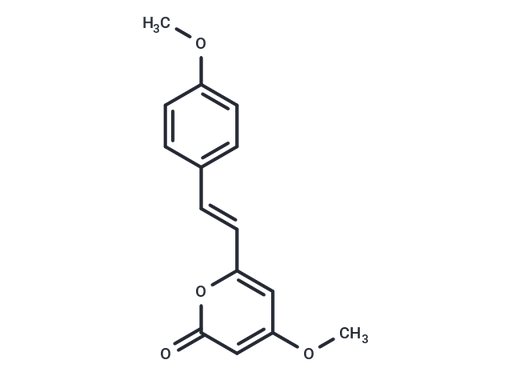
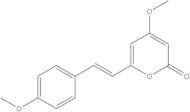
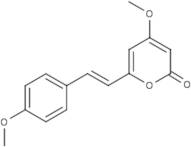
:Yangonin
- (E)-4-Methoxy-6-[2-(4-methoxyphenyl)ethenyl]-2H-pyran-2-one
- 2H-Pyran-2-one, 4-methoxy-6-(p-methoxystyryl)-
- 2H-Pyran-2-one, 4-methoxy-6-[(1E)-2-(4-methoxyphenyl)ethenyl]-
- 2H-Pyran-2-one, 4-methoxy-6-[2-(4-methoxyphenyl)ethenyl]-, (E)-
- 2H-pyran-2-one, 4-methoxy-6-[(E)-2-(4-methoxyphenyl)ethenyl]-
- 4-Methoxy-6-[(1E)-2-(4-methoxyphenyl)ethenyl]-2H-pyran-2-one
- 4-Methoxy-6-[(E)-2-(4-methoxyphenyl)vinyl]-2H-pyran-2-on
- 4-Methoxy-6-[(E)-2-(4-methoxyphenyl)vinyl]-2H-pyran-2-one
- 4-Methoxy-6-[b-(p-anisyl)vinyl]-a-pyrone
- 4-Méthoxy-6-[(E)-2-(4-méthoxyphényl)éthènyl]-2H-pyran-2-one
- 5-Hydroxy-3-methoxy-7-(p-methoxyphenyl)-2,4,6-heptatrienoic Acid d-Lactone
- 6-(p-Methoxystyryl)-4-methoxy-a-pyrone
- See more synonyms
- Lower prices
- Higher prices
- Lower purities
- Higher purities
- Faster estimated delivery
yangonin (Standard)
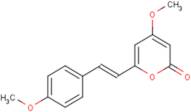
CAS:yangonin (Standard) is a reference standard for research and analysis in studies involving yangonin. Yangonin (Y100550) is a novel CB receptor ligand, it exhibits affinity for the human recombinant CB receptor. Yangonin (Y100550) could be a valuable candidate for the intervention of NF-κB-dependent pathological conditions such as inflammation.Formula:C15H14O4Molecular weight:258.2693Yangonin
CAS:Yangonin analytical standard provided with chromatographic purity, to be used as reference material for qualitative determination.Formula:C15H14O4Purity:(HPLC) ≥95%Color and Shape:PowderMolecular weight:258.27Yangonin-d3
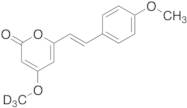
CAS:Controlled ProductApplications Isotope labelled analog of Yangonin (Y100550), a lactone isolated from the Kava plant (Piper methysticum). The active constituents of Kava are a group of approx. 18 compounds collectively referred to as kavalactones or kava pyrones. Kawain, dihydrokawain, methysticin, dihydromethysticin, yangonin, and desmethoxyyangonin are the six major kavalactones. Kava beverages and other preparations are known to be anxiolytic and are used for anxiety disorders. Dietary supplements containing the root of the kava shrub have been implicated in several cases of liver toxicity in humans, including several who required liver transplants after using kava supplements.
References Keledjian, J., et al.: J. Pharm. Sci., 77, 1003 (1988), Clouatre, D., et al.: Toxicol. Lett., 150, 85 (2004), Mathews, J., et al.: Drug Metab. Dispos., 33, 1555 (2005), Clayton, N., et al.: Exp. Toxicol. Pathol., 58, 223 (2007),Formula:C15H11D3O4Color and Shape:NeatMolecular weight:261.29Yangonin
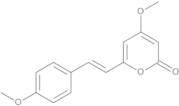
CAS:Controlled ProductApplications A lactone isolated from the Kava plant (Piper methysticum). The active constituents of Kava are a group of approx. 18 compounds collectively referred to as kavalactones or kava pyrones. Kawain, dihydrokawain, methysticin, dihydromethysticin, yangonin, and desmethoxyyangonin are the six major kavalactones. Kava beverages and other preparations are known to be anxiolytic and are used for anxiety disorders. Dietary supplements containing the root of the kava shrub have been implicated in several cases of liver toxicity in humans, including several who required liver transplants after using kava supplements.
References Keledjian, J., et al.: J. Pharm. Sci., 77, 1003 (1988), Clouatre, D., et al.: Toxicol. Lett., 150, 85 (2004), Mathews, J., et al.: Drug Metab. Dispos., 33, 1555 (2005), Clayton, N., et al.: Exp. Toxicol. Pathol., 58, 223 (2007),Formula:C15H14O4Color and Shape:NeatMolecular weight:258.27yangonin
CAS:Yangonin (Y100550) is a novel CB1 receptor ligand with affinity for human recombinant CB1 receptors.Formula:C15H14O4Purity:98.82% - 99.55%Color and Shape:SolidMolecular weight:258.2693Yangonin
CAS:LactoneFormula:C15H14O4Purity:≥ 95.0 % (HPLC)Color and Shape:PowderMolecular weight:258.27Yangonin
CAS:Yangonin is a kavalactone, which is a type of compound found in the roots of the Piper methysticum plant, commonly known as kava. This product is derived through the extraction of kavalactones from the kava root, a process that isolates its active psychoactive components. Yangonin is known for its interaction with the brain's neuroreceptor systems, particularly the cannabinoid CB1 receptors. This interaction may contribute to its psychoactive effects, influencing mood and perception.Formula:C15H14O4Purity:Min. 95%Color and Shape:PowderMolecular weight:258.27 g/mol