


CAS 51-15-0
:Pralidoxime chloride
Description:
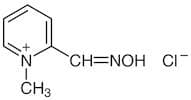
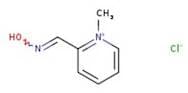
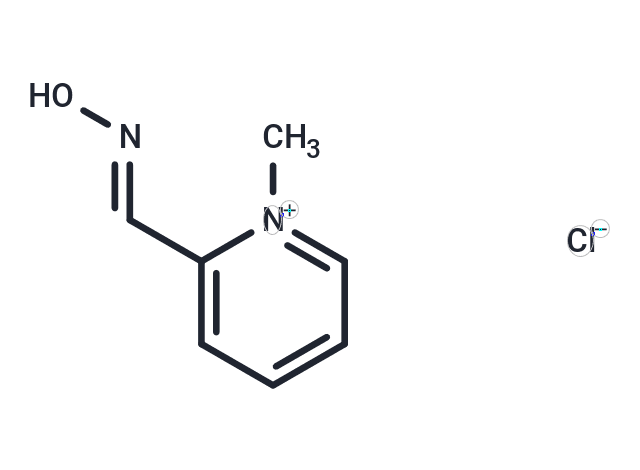
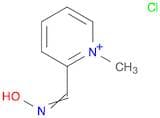
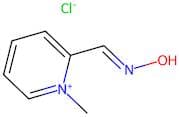
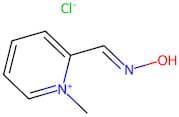
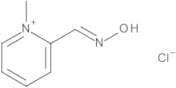
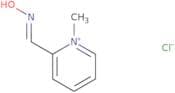
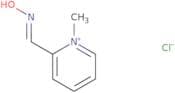
Pralidoxime chloride, with the CAS number 51-15-0, is a chemical compound primarily used as an antidote for organophosphate poisoning, particularly in cases of nerve agent exposure. It functions by reactivating acetylcholinesterase, an enzyme inhibited by organophosphates, thus restoring normal neurotransmission. The compound is a quaternary ammonium salt, which contributes to its solubility in water and limits its ability to cross the blood-brain barrier. Pralidoxime chloride is typically administered via injection and is often used in conjunction with atropine to counteract the effects of cholinergic toxicity. Its chemical structure includes a pyridine ring and a hydroxyl group, which are essential for its reactivation mechanism. The substance is generally considered to have a low toxicity profile when used appropriately, but it can cause side effects such as muscle weakness or respiratory issues if misused. Proper storage and handling are crucial, as it should be kept in a cool, dry place away from incompatible substances.
Formula:C7H9N2O·Cl
InChI:InChI=1S/C7H8N2O.ClH/c1-9-5-3-2-4-7(9)6-8-10;/h2-6H,1H3;1H
InChI key:InChIKey=HIGSLXSBYYMVKI-UHFFFAOYSA-N
SMILES:C(=NO)C=1[N+](C)=CC=CC1.[Cl-]
Synonyms:- (E)-(1-methylpyridin-2(1H)-ylidene)-N-oxomethanaminium chloride
- 1-Methyl-2-aldoximinopyridinium chloride
- 1-Methylpyridinium-2-aldoxime chloride
- 2-Formyl-1-methylpyridinium chloride oxime
- 2-Hydroxyiminomethyl-1-Methylpyridinium Chloride
- 2-PAM chloride
- 2-Pralidoxime chloride
- 2-[(E)-(hydroxyimino)methyl]-1-methylpyridinium chloride
- 2-[(Hydroxyimino)methyl]-1-methylpyridin-1-ium chloride
- N-Methylpyridinium-2-aldoxime chloride
- N-Methylpyridinium-2-carboxaldoxime chloride
- Pralidoxime chloride
- Protopam chloride
- Pyraloxime Methylchloride
- Pyridine-2-aldoxime methochloride
- Pyridine-2-carbaldoxime methochloride
- Pyridinium, 2-[(hydroxyimino)methyl]-1-methyl-, chloride
- Pyridinium, 2-[(hydroxyimino)methyl]-1-methyl-, chloride (1:1)
- Pyridinium, 2-formyl-1-methyl-, chloride, oxime
- See more synonyms
Sort by
Purity (%)
0
100
|
0
|
50
|
90
|
95
|
100
Found 14 products.
1-Methylpyridinium-2-aldoxime Chloride
CAS:Formula:C7H9ClN2OPurity:>98.0%(T)(HPLC)Color and Shape:White to Almost white powder to crystalMolecular weight:172.61Pyridine-2-carboxaldoxime methochloride, 97%
CAS:This Thermo Scientific Chemicals brand product was originally part of the Alfa Aesar product portfolio. Some documentation and label information may refer to the legacy brand. The original Alfa Aesar product / item code or SKU reference has not changed as a part of the brand transition to Thermo SciFormula:C7H9ClN2OPurity:97%Color and Shape:Crystals or powder or crystalline powder or fused/lumpy solid, White to pale creamMolecular weight:172.61Pralidoxime Chloride
CAS:Pralidoxime Chloride (2-PAM chloride) is a agent in the treatment of organophosphate poisoning, which binds to organophosphate-inactivated acetylcholinesterase.Formula:C7H9ClN2OPurity:99.84%Color and Shape:SolidMolecular weight:172.611-Methylpyridinium-2-aldoxime chloride
CAS:Formula:C7H9ClN2OPurity:98%Color and Shape:SolidMolecular weight:172.6122Pyridine-2-aldoxime methochloride
CAS:Formula:C7H9N2O·ClPurity:≥ 98.0%Color and Shape:White to off-white or light yellow crystalline powderMolecular weight:172.612-((Hydroxyimino)Methyl)-1-Methylpyridin-1-Ium Chloride
CAS:2-((Hydroxyimino)Methyl)-1-Methylpyridin-1-Ium ChloridePurity:99%Molecular weight:172.61g/molPralidoxime Chloride
CAS:Controlled ProductApplications This compound binds to inactivated acetylcholinesterases and is used to combat poisoning from organophosphates and nerve agents
References Lajmanovich, R., et al.: Toxicol. Env. Chem., 90, 1145 (2008), Eyer, P., et al.: Brit. J. Clin. Pharmacol., 66, 450 (2008), Goncalves, L., et al.: J. Pharm. Sci., 98, 1040 (2009),Formula:C7H9N2O·ClColor and Shape:White SolidMolecular weight:172.61Pralidoxime chloride - Bio-X ™
CAS:Pralidoxime is a cholinesterase reactivator that is used for the treatment of organophosphate poisoning. When organophosphate binds to the esteratic site of acetylcholinesterase, it results in a reversible inactivation of the enzyme. However, by rupturing the phosphate-ester link that has been formed between the organophosphate and acetylcholinesterase, pralidoxime is able to reactivate the cholinesterase enzyme.Formula:C7H9ClN2OPurity:Min. 95%Color and Shape:PowderMolecular weight:172.61 g/molPralidoxime chloride
CAS:Reactivates acetylcholinesterases; treats organophosphate poisoningFormula:C7H9ClN2OPurity:Min. 95%Color and Shape:PowderMolecular weight:172.61 g/mol2-[(1E)-(hydroxyimino)methyl]-1-methylpyridin-1-ium chloride
CAS:Formula:C7H9ClN2OPurity:≥98%(HPLC)Molecular weight:172.61










![2-[(1E)-(hydroxyimino)methyl]-1-methylpyridin-1-ium chloride](/_next/image/?url=https%3A%2Fstatic.cymitquimica.com%2Fproducts%2F10%2Fthumb%2FF358359.jpg&w=3840&q=75)


