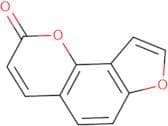
CAS 523-50-2
:angelicin
Description:
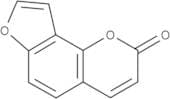
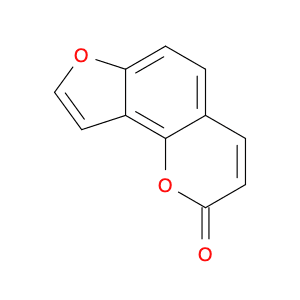
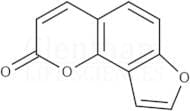
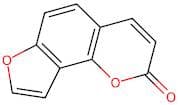
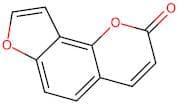
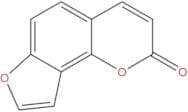
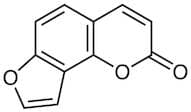
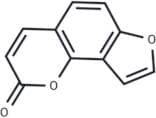
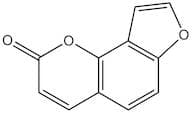
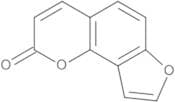
Angelicin, with the CAS number 523-50-2, is a naturally occurring compound classified as a furanocoumarin. It is primarily derived from plants in the Apiaceae family, such as Angelica archangelica. This compound is characterized by its unique chemical structure, which includes a furan ring fused to a coumarin moiety. Angelicin exhibits a range of biological activities, including phototoxicity, which means it can cause skin reactions upon exposure to ultraviolet light. Additionally, it has been studied for its potential anti-cancer properties, as it may inhibit the growth of certain cancer cells. The substance is also known for its role in traditional herbal medicine, where it has been used for various therapeutic purposes. In terms of physical properties, angelicin is typically a colorless to pale yellow crystalline solid, and it is soluble in organic solvents but has limited solubility in water. Its reactivity and interactions with biological systems make it a subject of interest in pharmacological research.
Formula:C11H6O3
InChI:InChI=1S/C11H6O3/c12-10-4-2-7-1-3-9-8(5-6-13-9)11(7)14-10/h1-6H
InChI key:InChIKey=XDROKJSWHURZGO-UHFFFAOYSA-N
SMILES:O=C1OC=2C3=C(C=CC2C=C1)OC=C3
Synonyms:- 2-Oxo-(2H)-Furo(2,3-H)-1-Benzopyran
- 2-Propenoic acid, 3-(4-hydroxy-5-benzofuranyl)-, delta-lactone
- 2-Propenoic acid, 3-(4-hydroxy-5-benzofuranyl)-, δ-lactone
- 2H-Furo(2,3-H)-1-benzopyran-2-one
- 2H-furo[2,3-h]chromen-2-one
- 3-(4-Hydroxy-5-benzofuranyl)-2-propenoic acid gamma-lactone
- 4-Hydroxy-5-benzofuranacrylic acid gamma-lactone
- Angecin
- Angelicin (VAN)
- Angelicin (coumarin deriv)
- Angelicin (coumarin derivative)
- Brn 0153970
- Ccris 4276
- Furo(2,3-h)coumarin
- Furo(5',4':7,8)coumarin
- Furo[5′,4′:7,8]coumarin
- Hsdb 3554
- Isopsoralen
- Isopsoralene
- Nsc 404563
- Angelicin
- 5-19-04-00447 (Beilstein Handbook Reference)
- Angelicin
- ANGELICINE hplc
- Isopsoralen (Angelicin)
- 3-(4-hydroxy-5-benzofuranyl)-2-propenoicacidgamma-lactone
- angelicin(coumarinderiv)
- 3-(4-hydroxy-5-benzofuranyl)-2-propenoicacidelta-lactone
- isopsoralin
- ANGELICINE
- ISOBERGAPTEN
- 4-hydroxy-5-benzofuranacrylicacidgamma-lactone
- furo(5’,4’,7,8)coumarin
- See more synonyms
Sort by
Purity (%)
0
100
|
0
|
50
|
90
|
95
|
100
Found 12 products.
Angelicin
CAS:Angelicin analytical standard provided with w/w absolute assay, to be used for quantitative titration.Formula:C11H6O3Purity:(HPLC) ≥98%Color and Shape:PowderMolecular weight:1862-Oxo-(2H)-furo(2,3-h)-1-benzopyran
CAS:Formula:C11H6O3Purity:98%Color and Shape:SolidMolecular weight:186.1635Angelicin
CAS:Formula:C11H6O3Purity:≥ 98.0%Color and Shape:White to off-white powderMolecular weight:186.16Angelicin
CAS:Angelicin is a furocoumarin found in Psoralea corylifolia L. fruit, can block the phosphorylation of IκBα, NFκBp65, p38 MAPK, and JNK in lipopolysaccharide-induced acute lung injury model, suggests that angelicin was potentially advantageous to prevent inflammatory diseases by inhibiting NF-κB and MAPK pathways, it might be a potential new agent for prevention of inflammatory reactions and diseases in the clinic.Formula:C11H6O3Purity:95%~99%Color and Shape:PowderMolecular weight:186.166Angelicin
CAS:Formula:C11H6O3Purity:>98.0%(GC)Color and Shape:White to Almost white powder to crystalMolecular weight:186.17Angelicin
CAS:Angelicin (Isopsoralen), is a furanocoumarin with anti-Y, antiviral, anti-inflammatory activity.Formula:C11H6O3Purity:99.86% - 99.89%Color and Shape:White SolidMolecular weight:186.16Angelicin
CAS:LactoneFormula:C11H6O3Purity:≥ 98.0 % (HPLC)Color and Shape:PowderMolecular weight:186.17Angelicin
CAS:Applications Antifungal.
References Sardari, S., et al.: Pharm. Pharmacol. Commun., 6, 455 (2000),Formula:C11H6O3Color and Shape:White SolidMolecular weight:186.16Angelicin
CAS:Angelicin is a furanocoumarin compound, which is derived from various plant sources, particularly within the Apiaceae family. The source of angelicin is often linked to traditional medicinal plants, where it is extracted and subsequently isolated for scientific investigation. Angelicin's mode of action involves intercalating within DNA strands, thereby affecting transcription and replication processes. This action is understood to be primarily photoactivated, leading to the formation of covalent bonds with DNA upon exposure to ultraviolet light, which can result in cross-linking.
Formula:C11H6O3Purity:Min. 95%Color and Shape:PowderMolecular weight:186.16 g/molRef: 3D-FA17920
Discontinued product









![2H-Furo[2,3-h]chromen-2-one](/_next/image/?url=https%3A%2Fstatic.cymitquimica.com%2Fproducts%2F10%2Fthumb%2FF239136.jpg&w=3840&q=75)