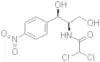
CAS 56-75-7
:(-)-Chloramphenicol
Description:
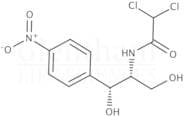
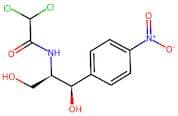
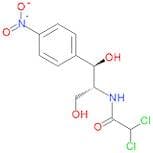
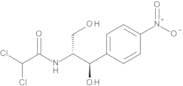
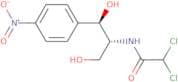
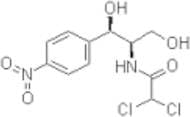
(-)-Chloramphenicol, with the CAS number 56-75-7, is a broad-spectrum antibiotic originally derived from the bacterium Streptomyces venezuelae. It is characterized by its ability to inhibit bacterial protein synthesis by binding to the 50S subunit of the bacterial ribosome, effectively blocking peptide bond formation. This compound is a white to off-white crystalline powder that is soluble in water and alcohol but has limited solubility in organic solvents. Its molecular formula is C11H12Cl2N2O5, and it has a molecular weight of approximately 323.13 g/mol. (-)-Chloramphenicol exhibits antibacterial activity against a wide range of Gram-positive and Gram-negative bacteria, making it useful in treating various infections. However, its use is limited due to potential side effects, including aplastic anemia and gray baby syndrome in newborns. As a result, it is often reserved for serious infections where other antibiotics are ineffective. Proper handling and dosage are crucial to minimize adverse effects and ensure therapeutic efficacy.
Formula:C11H12Cl2N2O5
InChI:InChI=1/C11H12Cl2N2O5/c12-10(13)11(18)14-8(5-16)9(17)6-1-3-7(4-2-6)15(19)20/h1-4,8-10,16-17H,5H2,(H,14,18)/t8-,9?/m1/s1
InChI key:InChIKey=WIIZWVCIJKGZOK-RKDXNWHRSA-N
SMILES:[C@@H]([C@H](NC(C(Cl)Cl)=O)CO)(O)C1=CC=C(N(=O)=O)C=C1
Synonyms:- 2,2-Dichloro-N-(2-Hydroxy-1-(Hydroxymethyl)-2-(4-Nitrophenyl)Ethyl)-Acetamid
- 2,2-Dichloro-N-[(1R,2R)-2-hydroxy-1-(hydroxymethyl)-2-(4-nitrophenyl)ethyl]acetamide
- 2,2-Dichloro-N-[2-Hydroxy-1-(Hydroxymethyl)-2-(4-Nitrophenyl)Ethyl]Acetamide
- 2,2-dichloro-N-[(1R)-2-hydroxy-1-(hydroxymethyl)-2-(4-nitrophenyl)ethyl]acetamide
- 2,2-dichloro-N-[(1R,2S)-1,3-dihydroxy-1-(4-nitrophenyl)propan-2-yl]acetamide
- 2,2-dichloro-N-[(1S,2R)-1,3-dihydroxy-1-(4-nitrophenyl)propan-2-yl]acetamide
- Ak-Chlor
- Alficetyn
- Amphenicol
- Amphicol
- Amseclor
- Anacetin
- Aquamycetin
- Austracol
- Bradyoxetin
- CAF
- CAM
- CAP
- CPh
- Catilan
- Chemicetin
- Chemicetina
- Chlomycol
- Chloramex
- Chloramphenicol
- Chloramsaar
- Chlorasol
- Chlorcetin
- Chloricol
- Chlorocaps
- Chlorocid
- Chlorocide
- Chlorocin
- Chloromycetin
- Chloronitrin
- Chloroptic
- Ciplamycetin
- Cloramfen
- Cloramfenicol
- Cloramficin
- Cloramicol
- Clorocyn
- Cloromisan
- Cylphenicol
- D-(-)-Chloramphenicol
- D-(-)-Threo-2,2-Dichloro-N-[Beta-Hydroxy-Alpha-(Hydroxy-Methyl)-P-Nitrophenethyl]Acetamide
- D-(-)-threo-1-(4-Nitrophenyl)-2-dichloroacetamido-1,3-propanediol
- D-(-)-threo-1-p-Nitrophenyl-2-dichloracetamido-1,3-propanediol
- D-(-)-threo-1-p-Nitrophenyl-2-dichloroacetylamino-1,3-propanediol
- D-(-)-threo-2-Dichloroacetamido-1-p-nitrophenyl-1,3-propanediol
- D-(-)-threo-Chloramphenicol
- D-threo-(1R,2R)-1-p-Nitrophenyl-2-dichloroacetamido-1,3-propanediol
- D-threo-N-Dichloroacetyl-1-p-nitrophenyl-2-amino-1,3-propanediol
- Detreomycin
- Embacetin
- Enicol
- Enteromycetin
- Farmicetina
- Fenicol
- Globenicol
- Gloveticol
- Halcetin
- Intramycetin
- Ismicetina
- Juvamycetin
- Kamaver
- Kemicetine
- Klorita
- Leukomyan
- Leukomycin
- Levocin
- Levomicetina
- Levomitsetin
- Levomycetin
- Levoplast
- Levosin
- Levovetin
- Loromisin
- Mastiphen
- Micloretin
- Micoclorina
- Microcetina
- Mychel
- Mychel-Vet
- Mycinol
- Myclocin
- Mycochlorin
- Novomycetin
- Ocuphenicol
- Opclor
- Ophthochlor
- Pantovernil
- Paraxin
- Quemicetina
- Ronphenil
- Septicol
- Sintomicetin
- Sintomicetina
- Soluthor
- Stanomycetin
- Synthomycetin
- Synthomycin
- Tevcocin
- Tifomycine
- Treomicetina
- Unimycetin
- Veticol
- Viceton
- [R-(R*,R*)]-2,2-Dichloro-N-[2-hydroxy-1-(hydroxymethyl)-2-(4-nitrophenyl)ethyl]acetamide
- D,L-chloramphenicol
- Acetamide, 2,2-dichloro-N-[2-hydroxy-1-(hydroxymethyl)-2-(4-nitrophenyl)ethyl]-, [R-(R*,R*)]-
- nitrophenyl)ethyl]acetamide
- Acetamide, 2,2-dichloro-N-[(1R,2R)-2-hydroxy-1-(hydroxymethyl)-2-(4-nitrophenyl)ethyl]-
- Acetamide, 2,2-dichloro-N-[β-hydroxy-α-(hydroxymethyl)-p-nitrophenethyl]-, D-threo-(-)-
- 2,2-dichloro-N-[(1R)-2-hydroxy-1-(hydroxymethyl)-2-(4-
- D-THREO-2,2-DICHLORO-N-[BETA-HYDROXY-ALPHA-(HYDROXYMETHYL)-4-NITROPHENETHYL]ACETAMIDE
- D-THREO-(-)-2,2-DICHLORO-N-[BETA-HYDROXY-ALPHA-HYDROXYMETHYL-P-NITROPHENETHYL]ACETAMIDE
- D-THREO-2,2-DICHLORO-N-[BETA-HYDROXY-ALPHA-(HYDROXYMETHYL)-4-NITROPHENYL] ACETAMIDE
- D-THREO-2-DICHLOROACETAMIDO-1-(4-NITROPHENYL)-1,3-PROPANEDIOL
- D-2-DICHLOROACETAMIDO-1-P-NITRO-PHENYL-1,3-PROPANEDIOL
- [R-(R*,R*)]-2,2-dichloro-N-[2-hydroxy-1-(hydroxymethyl)-2-(4-nitrophenyl)ethyl]ethanamide
- D(-)-THREO-2,2-DICHLORO-N-[BETA-HYDROXY-ALPHA-(HYDROXYMETHYL)-BETA-(4-NITROPHENYL)ETHYL]ACETAMIDE
- D(-)-THREO-2,2-DICHLORO-N-[BETA-HYDROXY-ALPHA-(HYDROXY-METHYL)-P-NITROPHENYLETHYL]ACETAMIDE
- D-(-)-THREO-2-DICHLOROACETAMIDO-1-(4-NITROPHENYL)-1,3-PROPANEDIOL
- CHLORAMPHENICOLUM
- D-(-)-THREO-2-DICHLOROACETAMIDO-1-[P-NITRO-PHENYL]-1,3-PROPANEDIOL
- ,[theta-(theta,theta)]-
- D-THREO-2,2-DICHLORO-N-[BETA-HYDROXY-ALPHA(HYDROXYMETHYL)-BETA-(4-NITROPHENYL)ETHYL]ACETAMIDE
- See more synonyms
Sort by
Purity (%)
0
100
|
0
|
50
|
90
|
95
|
100
Chloramphenicol, USP grade
CAS:Formula:C11H12Cl2N2O5Purity:97.0 - 103.0 %Color and Shape:White to light-yellow crystalline powderMolecular weight:323.14Chloramphenicol
CAS:ChloramphenicolFormula:C11H12Cl2N2O5Purity:>99%Color and Shape: solidMolecular weight:323.13g/molChloramphenicol (10mg/ml)
CAS:Chloramphenicol (10mg/ml)Color and Shape:SolutionMolecular weight:323.13g/molChloramphenicol-d5
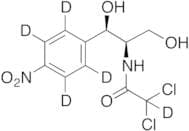
CAS:Controlled Product<p>Applications Chloramphenicol-d5, is the labeled analogue of Chloramphenicol (C325030), which has a broad spectrum of activity against Gram-positive and gram-negative bacteria. It is also antibacterial, and antirickettsial.<br>References Bartz, et al.: J. Biol. Chem., et al.: 172, 445 (1948), Gottlieb, et al.: J. Bacteriol., 55, 409 (1948), Szulczewski, D., et al.: Anal. Profiles Drug Subs., 4, 47 (1975), Price, A., et al.: J. Antibiot., 43, 118 (1981), Shalit, I., et al.: Drugs, 28, 281 (1984),<br></p>Formula:C11H7D5Cl2N2O5Color and Shape:Off-WhiteMolecular weight:328.16Chloramphenicol
CAS:Controlled Product<p>Applications Broad spectrum antibiotic obtained from cultures of the soil bacterium Streptomyces venezuelae. It has a broad spectrum of activity against Gram-positive and gram-negative bacteria. Antibacterial; antirickettsial.<br>References Bartz, et al.: J. Biol. Chem., et al.: 172, 445 (1948), Gottlieb, et al.: J. Bacteriol., 55, 409 (1948), Szulczewski, D., et al.: Anal. Profiles Drug Subs., 4, 47 (1975), Price, A., et al.: J. Antibiot., 43, 118 (1981), Shalit, I., et al.: Drugs, 28, 281 (1984),<br></p>Formula:C11H12Cl2N2O5Color and Shape:NeatMolecular weight:323.13Chloramphenicol-d5 (100Mug/mL in Acetonitrile)
CAS:Controlled ProductFormula:C11H7D5Cl2N2O5Color and Shape:ColourlessMolecular weight:328.16Chloramphenicol
CAS:<p>Chloramphenicol is produced by Streptomyces venezuelae. It is a broad-spectrum antibiotic with bacteriostatic properties. It interferes with bacterial protein synthesis by reversibly binding to the 50S ribosome unit. Used as substrate in the CAT (chloramphenicol acetyl transferase) assay, where the CAT gene expression is monitored by the ability of a system to transform chloramphenicol into acetyl chloramphenicol, which can be followed by simple thin layer chromatography. It is employed in VTM to prevent bacterial growth during specimen storage and transportation.</p>Formula:C11H12Cl2N2O5Purity:Min. 98 Area-%Color and Shape:PowderMolecular weight:323.13 g/molChloramphenicol (CFP) for tissue culture, 98-102%
CAS:Formula:C11H12Cl2N2O5Purity:98 - 102%Color and Shape:White to pale yellow, Crystalline powder, ClearMolecular weight:323.1Chloramphenicol (CFP), 98-102%
CAS:Formula:C11H12Cl2N2O5Purity:min. 98-102%Color and Shape:White to pale yellow, Crystalline powder, ClearMolecular weight:323.1Chloramphenicol cell culture, 99%, Endotoxin (BET) 0.2 EU/mg
CAS:Formula:C11H12Cl2N2O5Molecular weight:323.1Chloramphenicol (CFP) ExiPlus, Multi-Compendial, 98.0-102%
CAS:Formula:C11H12Cl2N2O5Purity:98.0-102%Color and Shape:White to pale yellow, Crystalline powder or fine crystals, ClearMolecular weight:323.1