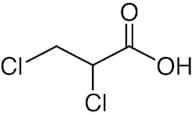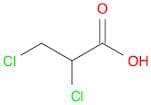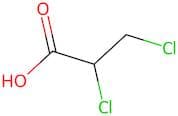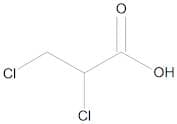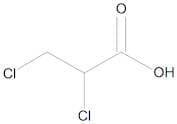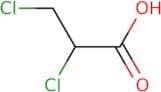
CAS 565-64-0
:2,3-Dichloropropionic acid
- 2,3-Dichloropropanoic acid
- Brn 1721427
- Ccris 7753
- Nsc 60521
- Propanoic acid, 2,3-dichloro-
- Propanoic acid, 2,3-dichloro- (9CI)
- Propionic acid, 2,3-dichloro-
- alpha,beta-Dichloropropionic acid
- α,β-Dichloropropionic acid
- 2,3-Dichloropropionic acid
- 4-02-00-00756 (Beilstein Handbook Reference)
- See more synonyms
2,3-Dichloropropionic Acid
CAS:Formula:C3H4Cl2O2Purity:>98.0%(GC)(T)Color and Shape:White to Almost white powder to crystalMolecular weight:142.962,3-Dichloropropionic Acid
CAS:Formula:C3H4Cl2O2Purity:98%Color and Shape:SolidMolecular weight:142.96872,3-Dichloropropionic acid
CAS:Controlled ProductFormula:C3H4Cl2O2Color and Shape:NeatMolecular weight:142.962,3-Dichloropropanoic Acid
CAS:Controlled ProductApplications 2,3-Dichloropropanoic acid is an organochlorine herbicide
References Okochi, Yumiko, et al.: Kankyo Gijutsu, 26(4), 225-228 (1997)Formula:C3H4Cl2O2Color and Shape:NeatMolecular weight:142.962,3-Dichloropropionic acid
CAS:2,3-Dichloropropionic acid is a chemical compound that has been studied as an inhibitor of plant and animal enzymes. The enzyme-inhibiting properties of 2,3-dichloropropionic acid have been well documented in studies with kinetic data and chemical stability. This agent inhibits the activity of carbonic anhydrase, which is involved in catalysis of the conversion of CO2 to bicarbonate. It also inhibits the activity of aminopeptidase, which is important in protein synthesis. 2,3-Dichloropropionic acid also inhibits the activity of succinic dehydrogenase, which catalyzes the oxidation of succinate to fumarate in the citric acid cycle. 2,3-Dichloropropionic acid has been shown to be toxic to a number of bacterial strains including Escherichia coli and Bacillus subtilis; however it does not inhibit growth in Saccharomyces cerevis
Formula:ClCH2CHClCOOHPurity:Min. 95%Molecular weight:142.97 g/molRef: 3D-AAA56564
Discontinued product