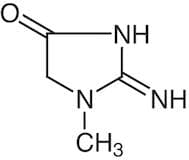
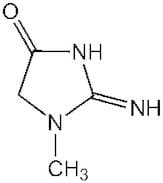
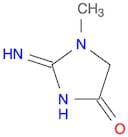
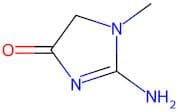
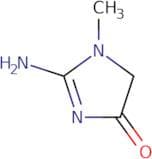
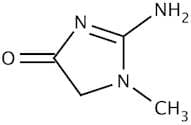
CAS 60-27-5
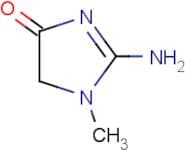
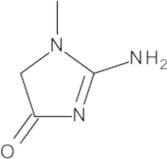
:Creatinine
- 1-Methylglycocyamidine
- 1-Methylhydantoin-2-imide
- 2-Amino-1,5-dihydro-1-methyl-4H-imidazol-4-one
- 2-Amino-1-methyl-1,5-dihydroimidazol-4-one
- 2-Amino-1-methyl-4,5-dihydro-1H-imidazol-4-one
- 2-Amino-1-methylimidazolidin-4-one
- 2-Amino-1-methylimidazolin-4-one
- 2-Imino-1-Methylimidazolidine-4-One
- 2-Imino-1-Metilimidazolidin-4-Ona
- 2-Imino-1-methyl-imidazolidin-4-one
- 2-Imino-1-methylimidazolidin-4-on
- 2-Imino-1-methylimidazolidin-4-one
- 2-amino-1-methyl-1,5-dihydro-4H-imidazol-4-one
- 2-amino-3-methyl-5-oxo-4,5-dihydro-1H-imidazol-3-ium
- 4H-Imidazol-4-one, 2-amino-1,5-dihydro-1-methyl-
- Kreatinine
- Nsc 13123
- TEGO Cosmo C 250
- See more synonyms
Creatinine
CAS:Formula:C4H7N3OPurity:>99.0%(T)(HPLC)Color and Shape:White to Almost white powder to crystalMolecular weight:113.12Creatinine, 98%
CAS:Creatinine levels in blood and urine may be used to calculate the creatinine clearance (CrCl), which reflects the glomerular filtration rate (GFR), an important clinical index of renal function. It is a substrate for creatininase. This Thermo Scientific Chemicals brand product was originally part ofFormula:C4H7N3OPurity:98%Color and Shape:White, Crystals or powder or crystalline powderMolecular weight:113.12Creatinine (2-Imino-1-methylimidazolidin-4-one)
CAS:Compounds containing an unfused imidazole ring, whether or not hydrogenated, in the structure, nesoiFormula:C4H7N3OColor and Shape:White Off-White Crystalline PowderMolecular weight:113.05891Ref: IN-DA003P2T
10kgTo inquire25g25.00€50g25.00€100g36.00€200g58.00€250g60.00€500g80.00€1kg115.00€5kg534.00€Creatinine
CAS:Creatinine (NSC-13123), a creatine byproduct from muscles, is excreted by kidneys; its serum level indicates renal function.Formula:C4H7N3OPurity:97.20% - 99.36%Color and Shape:Colourless Solid PowderMolecular weight:113.12Creatinine
CAS:Formula:C4H7N3OPurity:98.0 - 102.0 % (dried basis)Color and Shape:White to almost white crystalline powderMolecular weight:113.122-Amino-3-methyl-4H-imidazol-5-one
CAS:2-Amino-3-methyl-4H-imidazol-5-oneFormula:C4H7N3OPurity:97%Color and Shape: white solidMolecular weight:113.12g/molCreatinine
CAS:Stability Light Sensitive
Applications Creatinine is the end product of creatine catabolism. Creatinine is a normal constituent of urine. Also found together with creatine in muscle tissues and blood. Creatinine is found in all soils and in grain seeds and other vegetable matter as well as in certain fish and in crab meat extract.
References Folin, et al.: J. Biol. Chem., 17, 463 (1914);Formula:C4H7N3OColor and Shape:NeatMolecular weight:113.118Creatinine-d5 (N-methyl-d3; imidazolidinone-5,5-d2)
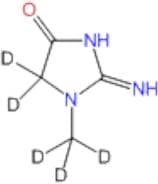
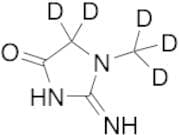
CAS:Controlled ProductFormula:C4D5H2N3OColor and Shape:NeatMolecular weight:118.149Creatinine
CAS:Creatinine is a normal breakdown product of creatine, which is a natural substance found in the body. Creatinine is used as an indicator of kidney function and is routinely measured in the blood to test for kidney disease. Creatinine levels are often elevated with the use of nonsteroidal anti-inflammatory drugs (NSAIDs) such as ibuprofen or naproxen, but these drugs also increase creatinine values. Creatinine levels are also elevated in people with high body mass index (BMI). Creatinine can be measured in urine or blood serum samples. There are many causes of high creatinine levels, including congestive heart failure, HIV infection, and various cancers.
Formula:C4H7N3OColor and Shape:White PowderMolecular weight:113.12 g/molCreatinine extrapure CHR, 99%
CAS:Formula:C4H7N3OPurity:min. 99%Color and Shape:White, Crystalline powder, Clear, ColourlessMolecular weight:113.12Creatinine for cell culture, 99%, Endotoxin (BET) 0.05EU/mg
CAS:Formula:C4H7N3OPurity:min. 99%Color and Shape:White, Crystalline powder, Clear, ColourlessMolecular weight:113.12Creatinine extrapure AR, 99%
CAS:Formula:C4H7N3OPurity:min. 99%Color and Shape:White, Crystalline Powder, Clear, ColourlessMolecular weight:113.122-Imino-1-methylimidazolidin-4-one
CAS:Formula:C4H7N3OPurity:95.0%Color and Shape:SolidMolecular weight:113.12