CAS 60153-92-6
:Propanoic-d5 acid (9CI)
Description:
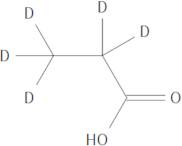
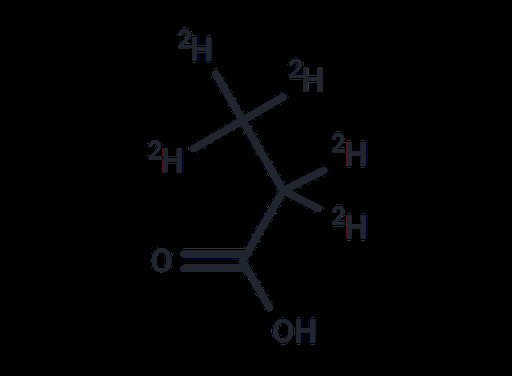
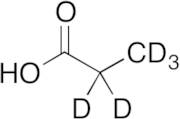
Propanoic-d5 acid, also known as 2-propanoic acid or propionic acid-d5, is a deuterated form of propanoic acid, where five hydrogen atoms are replaced by deuterium, a stable isotope of hydrogen. This compound has the molecular formula C3H6O2 and is characterized by its carboxylic acid functional group, which imparts acidic properties. It typically appears as a colorless liquid with a pungent odor and is soluble in water, alcohol, and ether. The presence of deuterium makes it useful in various applications, particularly in nuclear magnetic resonance (NMR) spectroscopy and other analytical techniques, as it allows for the tracing of molecular pathways and the study of reaction mechanisms. Propanoic-d5 acid is also utilized in the synthesis of deuterated compounds for pharmaceutical research and development. Its physical and chemical properties, such as boiling point and density, are similar to those of its non-deuterated counterpart, but the isotopic substitution can influence reaction kinetics and thermodynamics.
Formula:C3HD5O2
Synonyms:- Propionic-D5 Acid
- Propionic Acid (D5)
Sort by
Purity (%)
0
100
|
0
|
50
|
90
|
95
|
100
Found 5 products.
Propionic-d5 Acid
CAS:Formula:CD3CD2COOHPurity:98 atom % DColor and Shape:Colorless LiquidMolecular weight:79.06816Propionicacid-D5
CAS:Propionicacid-D5 is a deuterated compound of Propionicacid. Propionicacid has a CAS number of 79-09-4. Propionic acid (PA) is widely used as an antifungal agent in food. It is present naturally at low levels in dairy products and occurs ubiquitously, together with other short-chain fatty acids (SCFA), in the gastro-intestinal tract of humans and other mammals as an end-product of the microbial digestion of carbohydrates. It has significant physiological activity in animals. PA is irritant but produces no acute systemic effects and has no demonstrable genotoxic potential.Propionic aciduria is one of the most frequent organic acidurias, a disease that comprise many various disorders. The outcome of patients born with Propionic aciduria (genetic disorder) is poor intellectual development patterns, with 60% having an IQ less than 75 and requiring special education. Successful liver and/or renal transplantations, in a few patients, have resulted in better quality of life but have not necessarily prevented neurological and various visceral complications. These results emphasize the need for permanent metabolic follow-up whatever the therapeutic strategy. Decreased early mortality, less severe symptoms at diagnosis, and more favorable short-term neurodevelopmental outcome were recorded in patients identified through expanded newborn screening.Formula:C3D5H1O2Color and Shape:SolidMolecular weight:79.11