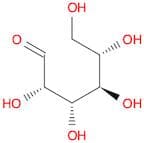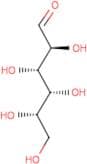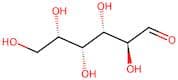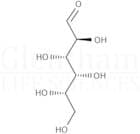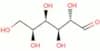
CAS 6027-89-0
:L-Gulose
Description:
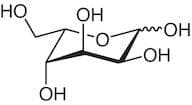
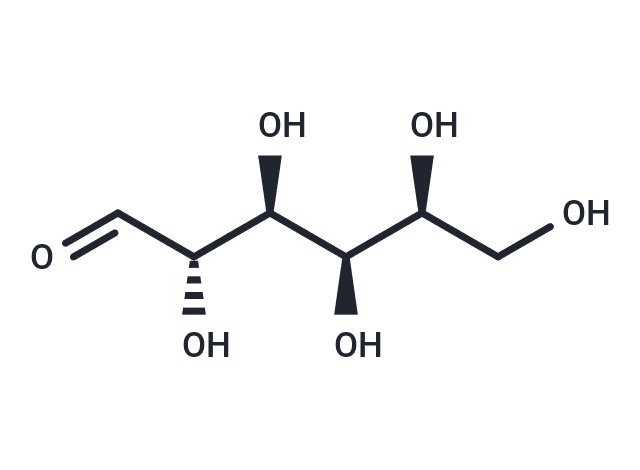
L-Gulose is a sugar alcohol and an aldohexose, classified as a monosaccharide. It is a stereoisomer of D-gulose, differing in the configuration around specific carbon atoms. L-Gulose is typically found in trace amounts in nature and is not as widely studied as its D counterpart. It is a white crystalline solid that is soluble in water, making it suitable for various biochemical applications. The molecule features six carbon atoms, with hydroxyl groups (-OH) attached to several of them, contributing to its hydrophilicity. L-Gulose can participate in various chemical reactions typical of sugars, including oxidation and reduction, and can serve as a substrate for specific enzymes. Its potential applications include use in food science, pharmaceuticals, and as a research tool in carbohydrate chemistry. However, due to its limited availability and less common occurrence, research on L-gulose is not as extensive as that of more prevalent sugars.
Formula:C6H12O6
InChI:InChI=1S/C6H12O6/c7-1-3(9)5(11)6(12)4(10)2-8/h1,3-6,8-12H,2H2/t3-,4+,5-,6-/m1/s1
InChI key:InChIKey=GZCGUPFRVQAUEE-JGWLITMVSA-N
SMILES:[C@H]([C@@H]([C@@H](C=O)O)O)([C@H](CO)O)O
Synonyms:- <span class="text-smallcaps">L</span>-Gulose
- Gulose, <span class="text-smallcaps">L</span>-
- L-gulopyranose
- alpha-L-gulopyranose
- beta-L-gulopyranose
- Gulose, L-
- L-Gulose
Sort by
Purity (%)
0
100
|
0
|
50
|
90
|
95
|
100
Found 9 products.
L-Gulose
CAS:Formula:C6H12O6Purity:≥ 98.0%Color and Shape:White to almost white powder or crystalsMolecular weight:180.16L-Gulose
CAS:Formula:C6H12O6Purity:>98.0%(HPLC)Color and Shape:White to Almost white powder to crystalMolecular weight:180.16L-Gulose
CAS:L-Gulose: unnatural L-hexose, sweet syrup, vitamin C biosynthesis intermediate.Formula:C6H12O6Purity:99.84%Color and Shape:SolidMolecular weight:180.16L-Gulose
CAS:Controlled ProductApplications L-Gulose is an aldohexose sugar. L-Gulose very rarely occurs in nature but has been found in archaea, bacteria and eukaryotes. L-Gulose is not fermentable by yeast. L-Gulose also serves as a direct precursor of L-ascorbic acid in plant cells.
References Swain, M. et al.: Biochim. Biophys. Acta, 1345, 56 (1997); Wolucka, B.A. et al.: J. Biol. Chem., 278, 47483 (2003);Formula:C6H12O6Color and Shape:NeatMolecular weight:180.16L-Gulose
CAS:L-Gulose is a carbohydrate that is used in biochemical research. It can be found in plant sources such as sugar cane, sugar beet, and fruit, but it is not naturally present in mammals. L-Gulose has antioxidant properties and can act as an antiviral agent. It also has some structural similarities to vitamin C. L-Gulose can be synthesized from D-glucose by oxidation of the hydroxyl group with sodium hypochlorite or hydrogen peroxide. L-Gulose is a structural analog of D-mannitol, which has been shown to have transcriptional regulation activity. L-Gulose has been shown to inhibit the growth of tumor cells and induce apoptosis in vitro by increasing intracellular reactive oxygen species (ROS) levels.Formula:C6H12O6Purity:Min. 98 Area-%Color and Shape:PowderMolecular weight:180.16 g/mol