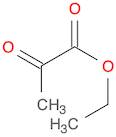
CAS 617-35-6
:Ethyl pyruvate
Description:
Ethyl pyruvate is an organic compound with the molecular formula C5H8O3, classified as an ester derived from pyruvic acid. It is characterized by its colorless to pale yellow liquid form and has a fruity odor. Ethyl pyruvate is soluble in water, ethanol, and other organic solvents, making it versatile in various applications. It is known for its role in metabolic processes and has garnered interest in research for its potential therapeutic properties, including anti-inflammatory and antioxidant effects. The compound is also utilized in the synthesis of other chemicals and as a reagent in organic chemistry. Its stability under normal conditions is notable, although it should be handled with care due to its potential reactivity with strong oxidizing agents. Ethyl pyruvate's CAS number, 617-35-6, is a unique identifier that facilitates its recognition in chemical databases and regulatory frameworks. Overall, ethyl pyruvate is a significant compound in both industrial and research settings, contributing to various fields, including biochemistry and pharmaceuticals.
Formula:C5H8O3
InChI:InChI=1/C5H8O3/c1-3-8-5(7)4(2)6/h3H2,1-2H3
InChI key:InChIKey=XXRCUYVCPSWGCC-UHFFFAOYSA-N
SMILES:C(OCC)(C(C)=O)=O
Synonyms:- 2-Oxopropanoic acid ethyl ester
- 2-Oxopropionic acid ethyl ester
- Brenztraubensaeure-ethylester
- Ethyl pyruvate,(Pyruvic acid ethyl ester)
- Ethyl 2-Oxopropanoate
- Ethyl 2-oxopropionate
- Ethyl methylglyoxylate
- Ethylpyruvat
- Methyl ethoxycarbonyl ketone
- Nsc 48386
- Piruvato De Etilo
- Propanoate, 2-Oxo-, Ethyl
- Propanoic acid, 2-oxo-, ethyl ester
- Pyruvate d'ethyle
- Pyruvate, Ethyl
- Pyruvic acid ethyl ester
- Ethyl pyruvate
- 2-oxo-propanoic acid ethyl ester
- 2-oxo-propanoicaciethylester
- Propanoicacid,2-oxo-,ethylester
- RARECHEM AL BI 0116
- ETHYL 2-OXOPROPRIONATE
- Propanoic acid, 2-oxo-, ethyl ester (9CI)
- FEMA 2457
- ETHYL PYRUVATE, NATURAL
- PYR ET
- PAEE
- Ethylpyruvate,98%
- ETHYL PYRUVATE NATURAL 97+%
- 2-oxo-propionicacidethylester
- 2-Oxpropanoicacidethylester
- See more synonyms
Filter by
Purity percentage
0
100
|
0
|
50
|
90
|
95
|
100
Found 16 products.
- Lower prices
- Higher prices
- Lower purities
- Higher purities
- Faster estimated delivery
Ethyl Pyruvate
CAS:Formula:C5H8O3Purity:>97.0%(GC)Color and Shape:White - Yellow LiquidMolecular weight:116.12Ethyl pyruvate, 98%
CAS:Ethyl pyruvate is used as a flavoring agent in food and anti-inflammatory agent for the treatment of critical inflammatory conditions. It is used in the treatment of critical illnesses such as severe sepsis, acute respiratory distress syndrome, burn injury, acute pancreatitis and stroke. It plays anFormula:C5H8O3Purity:98%Color and Shape:Clear colorless to pale yellow, LiquidMolecular weight:116.12Ethyl pyruvate
CAS:Formula:C5H8O3Purity:≥ 98.0%Color and Shape:Colourless to light yellow liquidMolecular weight:116.12Ethyl Pyruvate-3,3,3-d3
CAS:Formula:CD3COCOOCH2CH3Purity:98 atom % DColor and Shape:Colorless LiquidMolecular weight:119.06617Ethyl 2-oxopropanoate
CAS:Ethyl 2-oxopropanoateFormula:C5H8O3Purity:98%Color and Shape:Pale yellow LiquidMolecular weight:116.11522Ethyl pyruvate
CAS:Ethyl pyruvate: aliphatic ester, neuroprotective, anti-inflammatory, antioxidative, and anti-apoptotic properties.Formula:C5H8O3Purity:99.86%Color and Shape:SolidMolecular weight:116.1152Pyruvic acid ethyl ester
CAS:Ethyl pyruvate, also known as 2-oxo-propionic acid ethyl ester, is a colourless transparent liquid at room temperature with a fresh, sweet, floral aroma. Ethyl pyruvate is a novel anti-inflammatory agent for the treatment of critical inflammatory conditions as it has potent anti-inflammatory properties and tissue protection activity, in multiple animal models of disease including: pancreatitis, ischemia-reperfusion injury, sepsis, renal injury, and endotoxemia.Formula:C5H8O3Purity:Min. 95%Color and Shape:Colorless Clear LiquidMolecular weight:116.12 g/molPyruvic Acid Ethyl Ester
CAS:Controlled ProductApplications Ethyl pyruvate (EP) has demonstrated neuroprotective effects against acute brain injury through its anti-inflammatory action.
References Feeney, D., et al.: Brain Res., 211, 67 (1981), Scaffidi, P., et al.: Nature, 418, 191 (2002), Kim, J., et al.: J. Neurosci. Res., 86, 1125 (2008),Formula:C5H8O3Color and Shape:NeatMolecular weight:116.12