CAS 624-67-9
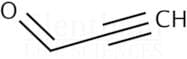
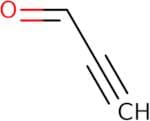
:Propynal
- 2-Propyn-1-one
- 2-Propynal
- Acetylenecarboxaldehyde
- Brn 1098318
- Formylacetylene
- Prop-2-Ynal
- Propargylaldehyde
- Propioaldehyde
- Propiolaldehyde
- Propiolaldehye
- Propiolic aldehyde
- Propyn-3-al
- 4-01-00-03537 (Beilstein Handbook Reference)
- See more synonyms
2-Propynal (>85%, stabilized with Hydroquinone)
CAS:Controlled ProductApplications 2-Propynal is hypothesized to be a possible metabolite of pargyline, a monoamine oxidase inhibitor that is used as an antihypertensive agent. 2-Propynal is also known to induce hepatocyte toxicity in vivo in rats.
Not a dangerous good if item is equal to or less than 1g/ml and there is less than 100g/ml in the package
References DeMaster, E., et al.: Res. Comm. Chem. Pathol. Pharm., 21, 497 (1978); Langston, J., et al.: Science, 225, 1480 (1984); Moridani, M., et al.: Chem.-Biol. Interact, 130-132, 931 (2001)Formula:C3H2OColor and Shape:NeatMolecular weight:54.05Propynal, stabilised with Hydroquinone
CAS:Propynal, stabilised with Hydroquinone is a drug that is used for the treatment of autoimmune diseases. It is an irreversible inhibitor of monoamine oxidase-A (MAO-A) and MAO-B and inhibits the activity of these enzymes in rat liver microsomes. Propynal, stabilised with Hydroquinone also inhibits mitochondrial membrane potential. The thermodynamic data show that propynal has a high affinity for hydroxyl groups. The reactivity of propynal is determined by the nucleophilic character of the hydroxyl group, which can be either electrophilic or nucleophilic in nature. The reaction mechanism involves a transfer reaction between methyl ethyl trifluoroacetate and propynol to form methyl ethyl trifluoroacetate hydroquinone oxime. This type of reaction is reversible and can be inhibited by pargyline.
Formula:C3H2OPurity:(%) Min. 85%Color and Shape:Clear LiquidMolecular weight:54.05 g/mol