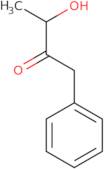
CAS 62763-33-1
:3-hydroxy-1-phenylbutan-2-one
Description:
3-Hydroxy-1-phenylbutan-2-one, also known as phenylbutanone or by its CAS number 62763-33-1, is an organic compound characterized by its ketone functional group and a hydroxyl group. This compound features a phenyl group attached to a butanone backbone, which contributes to its aromatic properties. It typically appears as a colorless to pale yellow liquid with a sweet, pleasant odor. The presence of both the hydroxyl and carbonyl groups in its structure allows for hydrogen bonding, influencing its solubility in polar solvents like water and its reactivity in various chemical reactions, such as oxidation and reduction. This compound is of interest in organic synthesis and may be utilized in the production of pharmaceuticals, fragrances, and other chemical intermediates. Its stability and reactivity can vary depending on environmental conditions, such as temperature and pH. Safety data should be consulted for handling and storage, as with any chemical substance.
Formula:C10H12O2
InChI:InChI=1/C10H12O2/c1-8(11)10(12)7-9-5-3-2-4-6-9/h2-6,8,11H,7H2,1H3
InChI key:RFHRXUDEWBOJCW-UHFFFAOYSA-N
SMILES:CC(C(=O)Cc1ccccc1)O
Synonyms:- 2-Butanone, 3-Hydroxy-1-Phenyl-
Filter by
Purity percentage
0
100
|
0
|
50
|
90
|
95
|
100
Found 1 products.
- Lower prices
- Higher prices
- Lower purities
- Higher purities
- Faster estimated delivery
3-Hydroxy-1-phenylbutan-2-one
CAS:3-Hydroxy-1-phenylbutan-2-one is a precursor to the synthetic chemical phenylacetonitrile, which is used in the production of polymers, pharmaceuticals, and fragrances. 3-Hydroxy-1-phenylbutan-2-one can be decarboxylated by heating it with a strong base to form an aldehyde. The enzyme extracts from pollinating insects have been shown to have high efficiency for this reaction. 3-Hydroxyphenylacetonitrile has been synthesized using Grignard reagent in an asymmetric synthesis reaction. The process for converting this compound into phenylacetonitrile involves oxidation of the alcohol groups using oxidizing agents such as nitric acid or hydrogen peroxide. This reaction also produces volatile compounds such as acetaldehyde and acetic acid that are responsible for the characteristic odor of many fruits and flowers.Formula:C10H12O2Purity:Min. 95%Molecular weight:164.2 g/mol