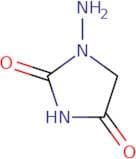
CAS 6301-02-6
:1-Aminohydantoin
- 1-Amino-2,4-imidazolidinedione
- 1-Aminohydantoin
- 2,4-Imidazolidinedione, 1-amino-
- Hydantoin, 1-amino-
- Nsc 44144
1-Amino-imidazolidine-2,4-dione
CAS:Applications 1-Amino-imidazolidine-2,4-dione (cas# 6301-02-6) is a useful research chemical.
Formula:C3H5N3O2Color and Shape:NeatMolecular weight:115.091-Aminohydantoin
CAS:1-Aminohydantoin is an aminohydantoin derivative with the molecular formula CHN. It has a number of industrial uses, including as a raw material for the production of other chemicals, such as acrylamide, N-acetylcysteine and citric acid. 1-Aminohydantoin is also used in medicine to treat chronic bronchitis and infectious diseases. 1-Aminohydantoin inhibits bacterial growth by interfering with DNA synthesis and repair. The drug binds to the enzyme dna polymerase and prevents its activity, thereby inhibiting DNA replication. This drug is not effective against either Gram-negative or acid-fast bacteria. 1-Aminohydantoin can be detected in urine using an analytical method that involves measuring the amount of hydrazine formed after the reaction between 1-aminohydantoin and hydrochloric acid in alkaline media at pH 9.5. A monoclonal antibody can be used
Formula:C3H5N3O2Purity:Min. 95%Color and Shape:White PowderMolecular weight:115.09 g/mol