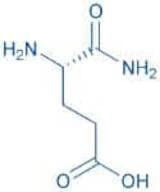
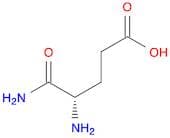
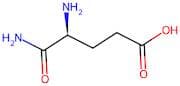
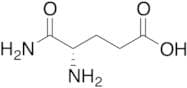
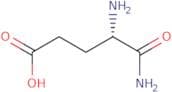
CAS 636-65-7
:L-glutamic acid amide
Description:
L-glutamic acid amide, also known as L-glutamine, is an amino acid that plays a crucial role in various biological processes. It is a non-essential amino acid, meaning that the body can synthesize it, and it is vital for protein synthesis, cellular metabolism, and nitrogen transport. L-glutamine is characterized by its amide functional group, which distinguishes it from its parent amino acid, glutamic acid. This compound is soluble in water and exhibits a neutral pH in solution, making it biologically compatible. L-glutamine is particularly important in the metabolism of rapidly dividing cells, such as those in the immune system and the gastrointestinal tract. It also serves as a precursor for the synthesis of nucleotides and neurotransmitters. In addition to its physiological roles, L-glutamine is often used in dietary supplements and clinical nutrition to support recovery and immune function, especially in patients undergoing stress or illness. Its stability and solubility make it a valuable compound in both research and therapeutic applications.
Formula:C5H10N2O3
InChI:InChI=1/C5H10N2O3/c6-3(5(7)10)1-2-4(8)9/h3H,1-2,6H2,(H2,7,10)(H,8,9)/t3-/m0/s1
SMILES:C(CC(=O)O)[C@@H](C(=N)O)N
Synonyms:- H-Glu-NH2
- L-alpha-glutamine
- L-Isoglutamine
Sort by
Purity (%)
0
100
|
0
|
50
|
90
|
95
|
100
Found 8 products.
H-Glu-NH₂
CAS:Bachem ID: 4001132.
Formula:C5H10N2O3Purity:> 99%Color and Shape:White PowderMolecular weight:146.15(S)-4,5-diamino-5-oxopentanoic acid
CAS:(S)-4,5-diamino-5-oxopentanoic acidFormula:C5H10N2O3Purity:98%Molecular weight:146.14L-Glutamic acid α-amide
CAS:Controlled ProductFormula:C5H10N2O3Color and Shape:NeatMolecular weight:146.14(S)-4,5-Diamino-5-oxopentanoic acid
CAS:Formula:C5H10N2O3Purity:95%Color and Shape:SolidMolecular weight:146.146L-Glutamic acid alpha-amide
CAS:L-Glutamic acid alpha-amide is an ester hydrochloride that is a tissue culture amide. It is a cyclic peptide analog and a hydroxyl group. L-glutamic acid alpha-amide has been shown to inhibit the inflammatory response in the bowel disease, Crohn's disease, by blocking the toll-like receptor 4 and 5. This drug also inhibits protein synthesis, which may be due to its ability to bind to fatty acids, thereby inhibiting the production of proteins vital for cell division.Formula:C5H10N2O3Purity:Min. 95%Color and Shape:White PowderMolecular weight:146.14 g/mol