CAS 6850-28-8
:Tris-acetate
Description:
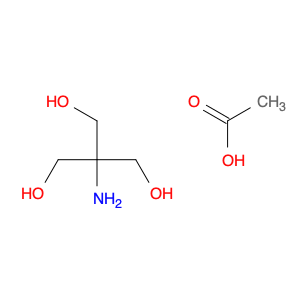
Tris-acetate, also known as tris(acetate) or tris(2-acetoxyethyl)amine, is a chemical compound characterized by its structure, which includes three acetate groups attached to a central nitrogen atom. It is commonly used as a buffering agent in biochemical and molecular biology applications, particularly in electrophoresis and chromatography. The compound is soluble in water and exhibits a neutral pH, making it suitable for maintaining stable conditions in various biological experiments. Tris-acetate is known for its ability to stabilize proteins and nucleic acids, which is crucial in laboratory settings. Additionally, it has low toxicity, making it a safer alternative to some other buffering agents. Its stability under a range of temperatures and pH levels further enhances its utility in research. Overall, tris-acetate is valued for its effectiveness in maintaining the integrity of biological samples during analysis and experimentation.
Formula:C4H11NO3·C2H4O2
InChI:InChI=1S/C4H11NO3.C2H4O2/c5-4(1-6,2-7)3-8;1-2(3)4/h6-8H,1-3,5H2;1H3,(H,3,4)
InChI key:InChIKey=PIEPQKCYPFFYMG-UHFFFAOYSA-N
SMILES:C(CO)(CO)(CO)N.C(C)(O)=O
Synonyms:- 1,3-Dihydroxy-2-(Hydroxymethyl)Propan-2-Aminium Acetate
- 1,3-Propanediol, 2-amino-2-(hydroxymethyl)-, acetate
- 1,3-Propanediol, 2-amino-2-(hydroxymethyl)-, acetate (1:1)
- 1,3-Propanediol, 2-amino-2-(hydroxymethyl)-, acetate (salt)
- TAE
- Tris acetate
- Tris acetate salt
- Tris(hydroxymethyl)amino methane acetate
- Trizma Acetate
Filter by
Purity percentage
0
100
|
0
|
50
|
90
|
95
|
100
Found 10 products.
- Lower prices
- Higher prices
- Lower purities
- Higher purities
- Faster estimated delivery
Tris(hydroxymethyl)aminomethane Acetate
CAS:Formula:C4H11NO3·C2H4O2Purity:>99.0%(T)Color and Shape:White to Almost white powder to crystalMolecular weight:181.19TRIS acetate
CAS:Formula:C6H15NO5Purity:≥ 99.0%Color and Shape:White crystalline powderMolecular weight:181.192-Amino-2-(hydroxymethyl)propane-1,3-diol acetate salt
CAS:Formula:C6H15NO5Purity:97%Color and Shape:SolidMolecular weight:181.1870Tris-acetate
CAS:Tris-acetate is a buffer maintaining pH 7.0–9.2.Formula:C6H15NO5Purity:99.94%Color and Shape:White SolidMolecular weight:181.187Trizma acetate
CAS:2-Amino-2-(hydroxymethyl)propane-1,3-diol acetate saltFormula:C6H15NO5Purity:98%Molecular weight:181.19Tris Acetate extrapure AR, 99%
CAS:Formula:C4H11NO3·C2H4O2Purity:min 99%Color and Shape:White, Crystalline powder, Clear, ColourlessMolecular weight:181.19Tris Acetate for molecular biology, 99%
CAS:Formula:C4H11NO3·C2H4O2Purity:min. 99%Color and Shape:White, Crystalline powder, Clear, ColourlessMolecular weight:181.19Tris(hydroxymethyl)aminomethane acetate
CAS:Tris(hydroxymethyl)aminomethane acetate is a compound that binds to antigen binding molecules in biological samples. It is a polymerase chain reaction (PCR) reagent and is used to prepare samples for PCR analysis. Tris(hydroxymethyl)aminomethane acetate has been shown to bind with receptor activity in the treatment of infectious diseases and metabolic disorders, such as alopecia areata and diabetes mellitus. Tris(hydroxymethyl)aminomethane acetate also stabilizes DNA templates for PCR analysis by preventing dNTPs from hydrolyzing prematurely. This prevents the formation of stable complexes with nucleotides, which may be useful in clinical pathology or plant physiology.Formula:C4H11NO3·C2H4O2Purity:(Titration) Min. 98%Color and Shape:White PowderMolecular weight:181.19 g/molRef: 3D-FT47042
Discontinued product