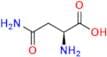
CAS 70-47-3
:(-)-Asparagine
Description:
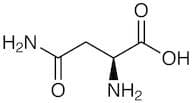
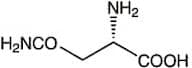
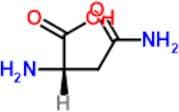
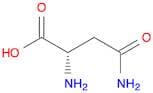
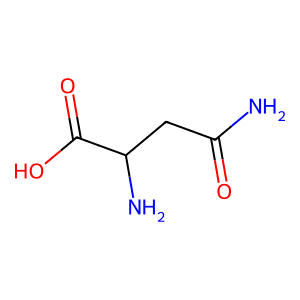
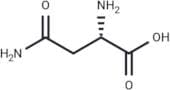
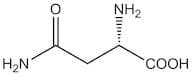
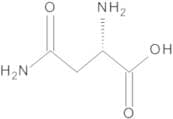
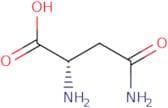
(-)-Asparagine is an amino acid that plays a crucial role in protein synthesis and metabolism. It is classified as a non-essential amino acid, meaning that the body can synthesize it from other compounds. The chemical formula of (-)-Asparagine is C4H8N2O3, and it features both an amino group (-NH2) and a carboxyl group (-COOH), characteristic of amino acids. This compound exists in two enantiomeric forms, with (-)-Asparagine being the naturally occurring form. It is soluble in water, which facilitates its role in biological systems. (-)-Asparagine is involved in various metabolic processes, including the synthesis of nucleotides and the regulation of nitrogen metabolism. Additionally, it can serve as a precursor for the synthesis of other amino acids and neurotransmitters. In terms of safety, while it is generally recognized as safe for consumption, excessive intake may lead to metabolic imbalances. Overall, (-)-Asparagine is essential for cellular function and growth, particularly in rapidly dividing cells.
Formula:C4H8N2O3
InChI:InChI=1/C4H10N2O3/c5-2-9-1-3(6)4(7)8/h3H,1-2,5-6H2,(H,7,8)/t3-/m0/s1
InChI key:InChIKey=DCXYFEDJOCDNAF-REOHCLBHSA-N
SMILES:[C@H](CC(N)=O)(C(O)=O)N
Synonyms:- (2S)-2-Amino-3-carbamoylpropanoic acid
- (2S)-2-amino-3-(aminomethoxy)propanoic acid
- (2S)-4-Amino-2-azaniumyl-4-oxobutanoate
- (S)-(+)-2-Aminosuccinamic acid
- (S)-(+)-Asparagine
- (S)-2,4-Diamino-4-oxobutanoic acid
- (S)-2-AMINOSUCCINIC ACID 4-AMIDEl-aspargine
- 4-AMIDE-2-aminosuccinamic acid
- <span class="text-smallcaps">L</span>-2,4-Diamino-4-oxobutanoic acid
- <span class="text-smallcaps">L</span>-Asparagine
- <span class="text-smallcaps">L</span>-Aspartamine
- <span class="text-smallcaps">L</span>-β-Asparagine
- Agedoite
- Altheine
- Asn
- Asparagin
- Asparagine
- Asparagine L-, Anhydrous
- Asparagine acid
- Asparagine, <span class="text-smallcaps">L</span>-
- Asparagine, L-
- Asparaginic Acid
- Asparamide
- Asparraguina
- Aspartamic acid
- Aspartic Acid
- Aspartic acid amide
- Aspartic acid β-amide
- Butanoic acid, 2,4-diamino-4-oxo-, (S)-
- Crystal VI
- H-Asn-OH
- L-2,4-Diamino-4-oxobutanoic acid
- L-2-Aminobutanedioic Acid
- L-2-Aminosuccinamic acid
- L-Aspartamine
- L-β-Asparagine
- Nsc 82391
- α-Aminosuccinamic acid
- L-Asparagine
- L-(+)-Asparagine anhydrous
- ALPHA-AMINOSUCCINAMIC ACID
- (S)-2-AMINOSUCCINIC ACID 4-AMIDE
- L-ASPARTIC ACID 4-AMIDE
- Aspartic acid beta amide
- alpha Amminosuccinamic acid
- L-beta-Asparagine
- See more synonyms
Sort by
Purity (%)
0
100
|
0
|
50
|
90
|
95
|
100
Found 16 products.
L-Asparagine Anhydrous
CAS:Formula:C4H8N2O3Purity:>98.0%(T)Color and Shape:White to Almost white powder to crystalMolecular weight:132.12L-(+)-Asparagine, 99%
CAS:L-(+)-Asparagine acts as a precursor to aspartate. It is also used as a diuretic. It is also employed in the biosynthesis of glycoproteins and proteins. It acts as a food additive. It reacts with reducing sugar to yield acrylamide, which finds application in french fries, potato chips, and toasted bFormula:C4H8N2O3Purity:99%Color and Shape:White, Powder or crystalline powder or crystalsMolecular weight:132.12Asparagine Anhydrous
CAS:Acyclic amides (including acyclic carbamates) and their derivatives and salts thereof, nesoiFormula:C4H8N2O3Color and Shape:White PowderMolecular weight:132.05349L-Asparagine, anhydrous
CAS:Formula:C4H8N2O3Purity:98.0 - 102.0 % (dried basis)Color and Shape:White crystalline powderMolecular weight:132.12L-Asparagine, anhydrous, USP-NF grade
CAS:Formula:C4H8N2O3Purity:98.0 - 101.5 %Color and Shape:White crystalline powderMolecular weight:132.12L-Asparagine
CAS:L-AsparagineFormula:C4H8N2O3Purity:99%Color and Shape: white powderMolecular weight:132.12g/molL-Asparagine
CAS:L-Asparagine, a non-essential amino acid, is made from aspartic acid and ammonia for brain and nerve function.Formula:C4H8N2O3Purity:99.95%Color and Shape:Orthorhombic Bisphenoidal Crystals SolidMolecular weight:132.12L-asparagine
CAS:Amino acidFormula:C4H8N2O3Purity:≥ 98.0 % (HPLC)Color and Shape:PowderMolecular weight:132.12L-Asparagine
CAS:Controlled ProductApplications L-Asparagine is one of the precursors for acrylamide formation. Added asparagine dramatically increased the content of acrylamide in crusts dry matter.
References Surdyk, N., et al.: J. Agric. Food Chem., 52, 2047 (2004);Formula:C4H8N2O3Color and Shape:NeatMolecular weight:132.12L-Asparagine anhydrous
CAS:L-Asparagine anhydrous is a guanine nucleotide-binding protein that binds to the response element of the human serum albumin gene. It has been shown to stimulate liver enzymes and increase the synthesis of low-density lipoprotein (LDL) cholesterol, which may lead to atherosclerosis. L-Asparagine anhydrous has been used in wastewater treatment as a nitrogen source for nitrification and denitrification. The enzyme activity of L-asparagine anhydrous has been shown to be high in tumour cells and is also present in solid tumours. This protein can be used as a model system for studying oligosaccharides because it is able to produce these molecules from glucose. L-Asparagine anhydrous is not active against carcinoma cell lines, but it does have some activity against solid tumours.Formula:C4H8N2O3Color and Shape:White Off-White PowderMolecular weight:132.12 g/molH-Asn-OH
CAS:M02999 - H-Asn-OH
Formula:C4H8N2O3Purity:98%Color and Shape:Crystalline Powder,PowderMolecular weight:132.119